
Residents clean up town
Three truckloads and two bakkieloads of litter were collected and removed.
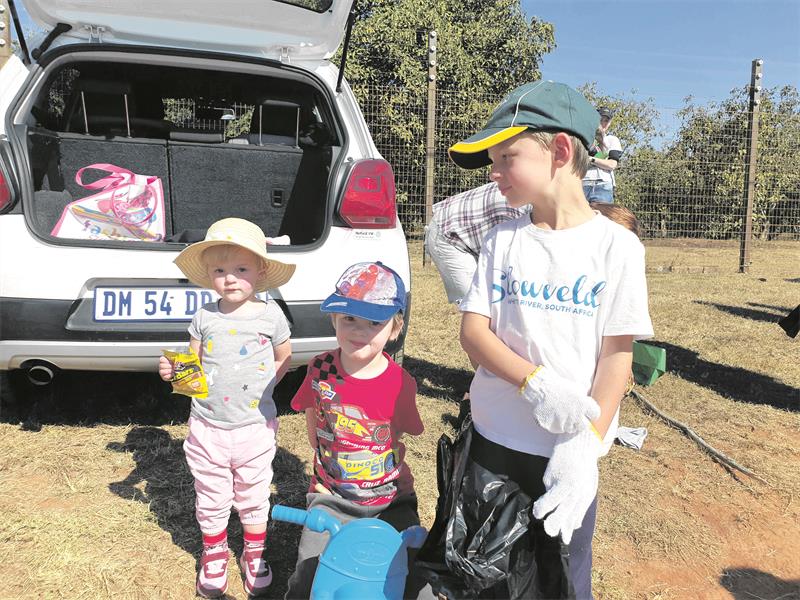
Residents of White River celebrated Youth Day with a major clean-up.
Tired of seeing streets littered with takeaway containers, broken glass and plastic bags, instead of just muttering to each other about it, a group of people took to the streets themselves to clean it up.
The drive was coordinated by Secret Sunrise, the newly established White River Nature Reserve and We Are White River.
About 60 residents took the opportunity to actively do something positive and gathered outside 64 Coolmore restaurant.
The committee that runs the drive to revive the White River Nature Reserve welcomed the initiative, since it tied in with the reserve’s initiative to ensure green spaces are protected – and of course cleaned of pollution – for future generations.
From the restaurant they split up in groups and covered one-kilometre sections in groups of two or three and cleaned up Danie Joubert Street between the Oaks road (rugby club) and Longmere Road or Pinelake Drive.
Being a volunteer event, each participant brought bags to fill with litter. Shortly before the event Subaru Nelspruit announced that it would donate bottles of water, a few baseball caps and R500’s worth of black and green refuse bags.
Three truckloads and two bakkieloads of litter were collected and removed from that stretch of road.
Meanwhile a fair amount of progress has been made in plans for the nature reserve. According to committee ecologist, Franz Relling they started by addressing the first and most pressing environmental obligations.
A draft reserve management plan was submitted to the executive committee for review and it was decided to address a few primary priorities like plotting the exact boundary coordinates of the reserve, sourcing funding, erecting a boundary fence and clearing alien and invasive plant species.
This will ensure that indigenous plant species get a chance to recover and the habitat becomes favourable again for bird, small mammal and insect species.
Sanbi and Working for Water will assist with the removal of alien plant species and also help develop a long-term alien plant management plan.
A fire management plan is also being developed in conjunction with Working on Fire to ensure that adequate fire breaks are put in place and only certain sections of the reserve be burned on a rotational basis.
The study will also try to determine what impact fire might have on sensitive wetland plant communities like the endangered Aloe simii.