Project manager answers KNP train questions
They decided on a stationary option because of a lower impact and better utilisation of space.
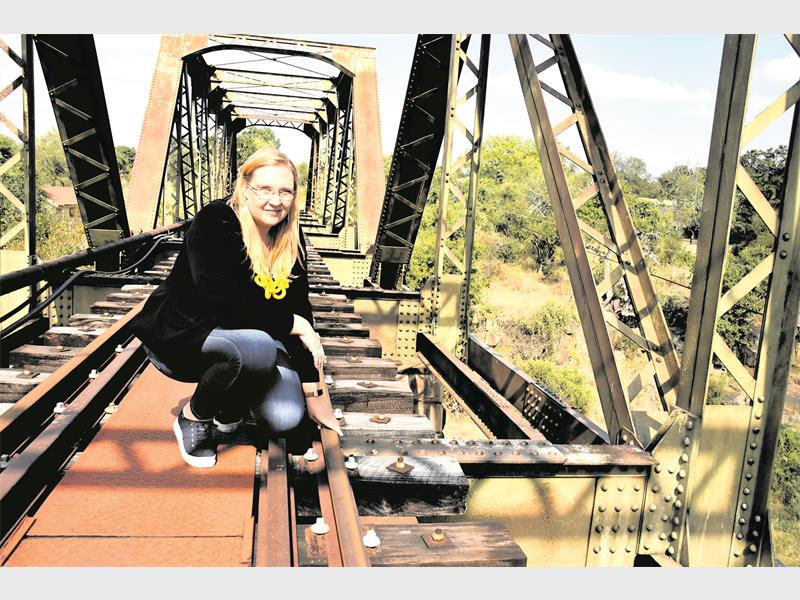
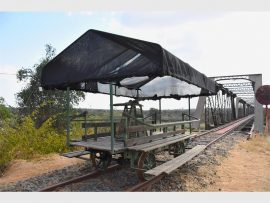
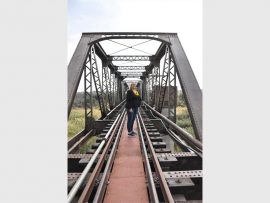
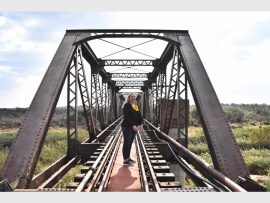
SKUKUZA – Will a train on the almost 100-year-old bridge over the Sabie River at Skukuza influence the experience of other visitors to the camp and the Kruger National Park (KNP)?
This and other concerns about the Kruger Shalati Train on the Bridge project have been aired since its formal launch at the Tourism Indaba in Durban.
Judiet Barnes, manager of the project, answered some of these questions.
The project originated around 2014, when the KNP was forced to start funding itself after government contribution trickled down to insufficient drops. The idea of “putting a train back where one used to be” was just one way of doing it.
As it coincided with the then-closure of the Selati Restaurant, it was decided to expand the operation to make better use of available premises.
Environmental impact
Tenders for a suitable project opened in 2016 and according to Barnes, the Thebe Tourism Group was interested from the start. “We realised the park’s need for income and felt that any further demise of the park would be far worse than a train on an already-existing bridge.”
After tender deadline in January 2017, and environmental impact studies by Mpumalanga environmental consultancy Emross Consulting, Thebe received the green light to proceed.
Strict regulations regarding impact on the environment, light pollution and other conditions were set and the company will be strictly monitored for adherence, Barnes said. “We are fully committed to the EIA and welcome regular scrutiny by the Department of Environmental Affairs (DEA). It was a tedious process to get to where we are and we will not endanger it in any way.”
Regarding the safety of the bridge and project, she said two sets of engineers had assessed the bridge. The first was appointed by SANParks during tender stage and a second by Thebe Tourism Group. “Both found the bridge was still very solid. Some rust has to be removed and we will reinforce it where we find it necessary.”
Concerns raised by citizens
About concerns raised by the public regarding the impact of the river during floods, Barnes said available info shows that water levels have never before reached the bridge. The closest was during the floods of 2000, when the water level reached up to three metres below the track. “But we will always put human lives first and would evacuate people if necessary.”
The misconception also exists that it will be a moving train. “The original concept was open for both options, but we decided on the stationary option because of a lower impact and better utilisation of space.”
As for safety of guests, she promised that ample barriers and safety measures would be put in place. Only children older than
12 years will be allowed to accompany parents in bridge accommodation.
Waterkant Guesthouse
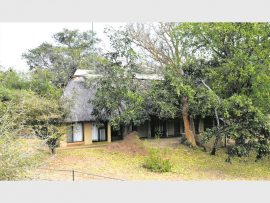
The current Waterkant Guesthouse and Selati Station Restaurant will form part of project, with a future renaming to Kruger Station.The complex will be accessed via an existing road from the Skukuza day visitors’ side. It will be upgraded and ample parking space created east of the station. Buses and OSVs can also park there, since the restaurant and public areas will be open to all visitors. This separate entrance and parking space may lift some pressure off the current camp traffic.
During the night the access gate will be closed to keep the perimeter safe. Only staying guests would then have access.
The accommodation in the current Waterkant house as well as the first room on the bridge will be wheelchair-friendly and a golf cart will be available should guests prefer not to walk to the furthest rooms.
Thebe Tourism will also build new rooms for SANParks to replace those taken away by the utilisation of Waterkant Guesthouse.
The DEA conditions on light pollution are very strict, hence all the western windows of the train carriages are permanently closed off. Instead, bigger windows are being installed on the eastern side. Walkway lights will be installed on ground level and be motion-activated. “This means that light will only be emitted on the eastern side of the train and from the camp only a faint glow might be seen beneath the train wheels,” Barnes said.
Sophisticated target market
As the fairly high rates target a more sophisticated market, it is expected that noise would not be an issue.
The expensive rates publicised also attracted negative reaction, but Barnes said rates had been calculated scientifically. “A very large investment goes into the project, so return on the investment and equity payback was taken into account.”
She emphasised that Shalati is not just another lodge or camp, but a “bucket list” item for discerning guests. Several enquiries and even bookings prove that. “We realise this experience is probably out of the reach of most South Africans, but we will offer special discounted rates as soon as we can establish when low season occupancies would occur.”
With work on track and on time, she foresees that a few rooms will already be open by December, so bookings for that will open soon. The project will operate as a normal concession, with the only difference that they would not own private vehicles for game drives, but make use of public ones. Monthly rental and a percentage of revenue will be paid to SANParks.
The railway carriages are old ones, currently being adapted in Johannesburg, once again to minimise the impact on the environment and in accordance with the EIA. Parts of the carriage are cut out and “blisters” added to accommodate a king-size bed, bath and very narrow outside balcony so guests can step out for a better view. The old blockhouse (used to fill the train with water) on the eastern side of the bridge will house a little pool.
Thebe Group
The Thebe Group itself has also been under scrutiny. It was originally started by Nelson Mandela, Walter Sisulu, Beyers Naudé and Enos Mabuza to build communities. According to Barnes, they were all people with integrity and the current CEO of Thebe Tourism, Jerry Mabena, is a good leader and avid KNP enthusiast.
“The company runs under strong fundamentals and also holds a concession at the Table Mountain National Park,” Barnes said. “Building communities is not just painting schools, but creating sustainable projects that enhance lives through employment.”
With this said, they will employ mainly local people, perhaps bringing experts in specialised fields with the mandate to train employees until the staff would consist completely of locals.