
Early life in ancient Barberton rock researched
This research is, surprisingly, in relation to future planetary missions to Mars.
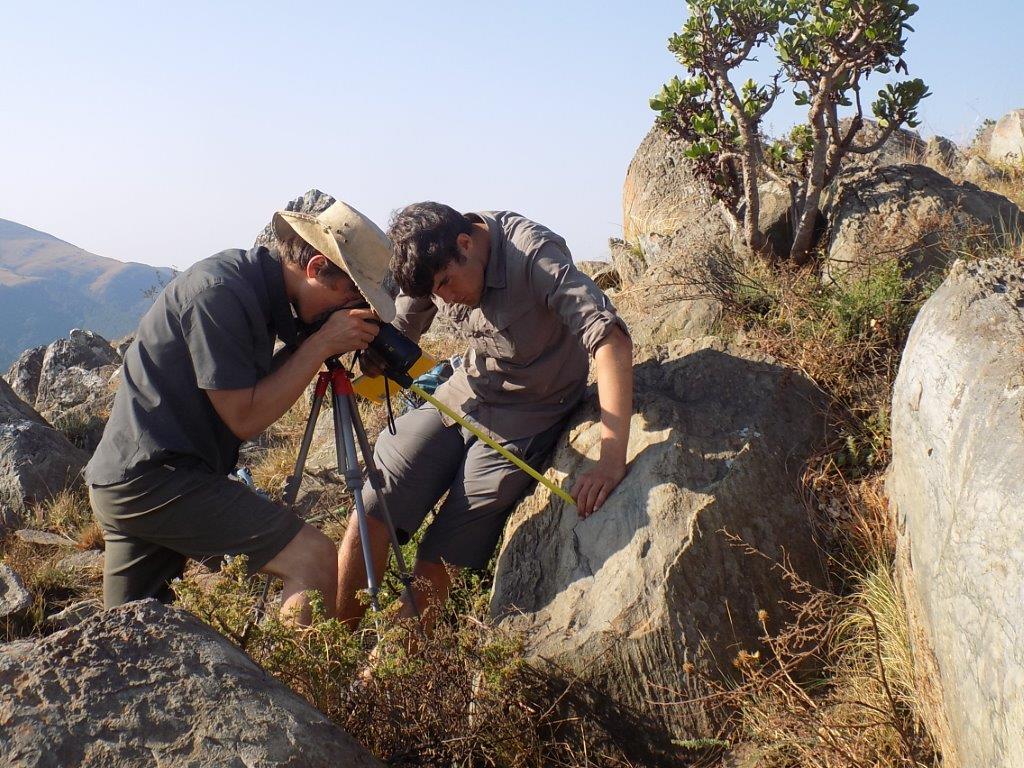
The new UNESCO World Heritage Site at the Barberton-Makhonjwa Mountains recently brought another pair of scientists to Barberton.
Lot Koopmans and Rory Changleng, geology students from the University of St Andrews in Scotland, spent the past two weeks studying and documenting traces of early life in ancient rocks along the R40 Geotrail.
This research is, surprisingly, in relation to future planetary missions to Mars.
Work was also performed on banded iron formations, with the objective of understanding how the unusual composition and chemistry of the earliest oceans may have influenced life’s evolution.
ALSO READ: PHOTOS: Erythristic leopard makes international waves
The two students were thrilled to be in the Barberton area. “The rocks here are utterly unique. It has been a privilege to be in Barberton, performing fieldwork and exploring the world-class geology,” explained Changleng.
“We are
building on the work of other geologists in the Barberton Greenstone Belt, to better understand what the rock record can tell us about how life has evolved through geological time, and what traces we can see of it today.”
ALSO READ: Thousands pilfered from GRIP
The pair had with them photographic equipment which mimics the properties of the camera that will be aboard the rover of the ExoMars 2020 mission to Mars, a joint European-Russian endeavor.
“By using this camera, we can copy exactly what the rover is capable of ‘seeing’ on the red planet, and provide scientists with a database to compare the information they will be receiving from Mars in the coming years,”
Koopmans explained. Prof Christoph Heubeck, of the University of Jena, and his team led the two on a field trip through the mountains, assisting them with finding key outcrops vital to understanding the mechanisms through which the rocks formed. “It is exciting!” said Koopmans.
“The potential for opening up new collaborations and bringing more scientists from the UK to study this region is high.”
Changleng added how impressed he has been with the new Geotrail in showcasing the area’s geology.
“I wish we had a trail this good back in Scotland to illustrate our geology! The Makhonjiwa Mountains and its Geotrail are truly a treasure of the world.”