Don’t blame the wet weather for an accident
Spring and summer showers may mean flowers, but wet surfaces contribute to nearly 1,2 million traffic accidents every year. Autodealer Lowveld asked Johan Grobler of EventsXtreme, one of highest- qualified and accredited 4x4 instructors in Africa, for some advice.
“Safety starts before your drive, and your goal should be to see and be seen,” Grobler begins.
Any windshield wiper inserts that leave streaks or don’t clear your windscreen in a single swipe, should be replaced.
Make sure all headlights, tail lights, brake lights and turn signals are properly functioning so other drivers will see you during downpours. Switch your headlights on earlier rather than later.
Next – “check your tyres”, says Grobler. Proper tyre tread depth and inflation are imperative to maintaining good traction on wet roadways. Check tread depth using the tread indicator on the tyre and check each one’s pressure, including the spare, at least once a month and be sure to do it when they are cold.
Avoid cruise control
Most modern cars feature cruise control. This works great in dry conditions, but when used in wet conditions, the chance of losing control of the vehicle can increase. To prevent loss of traction, you may need to reduce speed.
This cannot be accom-plished when cruise control is engaged.
So, it is best avoided during wet-weather driving.
Slow down and watch following distances
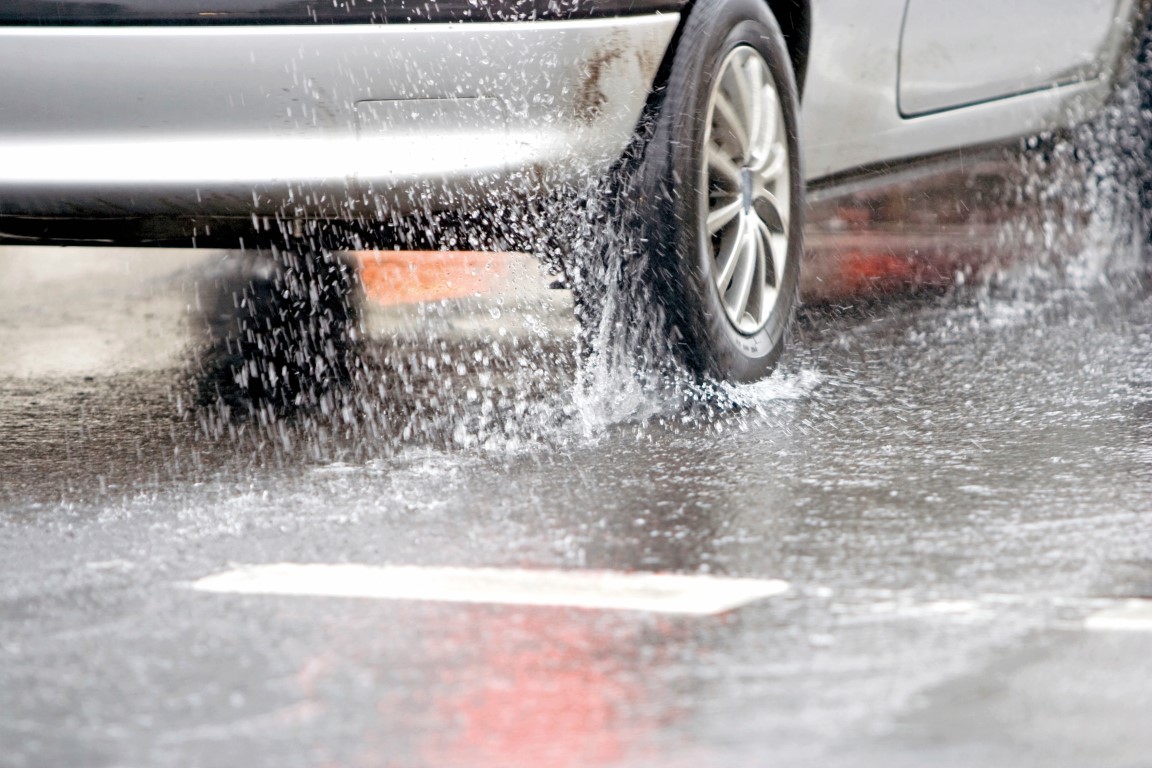
Slowing down during wet weather driving can be critical to reducing a car’s chance of hydroplaning. The latter happens when the tyres rise up on a film of water. With as little as three millimetres of water on the road, tyres have to displace approximately 3lt of water per second to keep the rubber meeting the road. Drivers should reduce their speed to correspond to the amount of water on the road. At speeds as low as 57km/h, new tyres can still lose some contact with the roadway.
To reduce chances of hydroplaning, you should slow down, avoid hard braking or turning sharply and drive in the tracks of the vehicle ahead of you.
Also, it’s important for motorists to allow ample stopping time between cars by increasing the following distance of the vehicle in front of them and beginning to slow down early to stop for intersections, turns and other traffic.
Responding to a skid
Even careful drivers can experience skids. If you feel the car begin to skid, it’s important not to panic. Continue to look and steer in the direction in which the you want the car to go. Do not step on the brakes as this will further upset the vehicle’s balance and make it harder to control.
Best practice
You should be extra cautious in wet weather. Slow down, avoid hard braking or turning sharply and allow ample stopping distance between you and the cars in front of you. Also, do these things one at a time. Brake, turn, then accelerate.