Barcelona – where two-wheelers roam
Barcelona, the beautiful, historic Spanish city nestled in the Catalan Mountains, turned out to be a place of wonderment and sadness for me when recently I went there on a business trip.
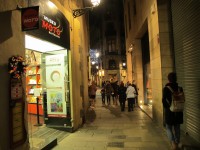
The wonderment came from witnessing a marvellously effective, integrated traffic system in which powered two-wheelers (PTW) played an important role in cutting down on traffic congestion.
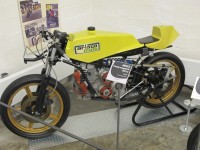
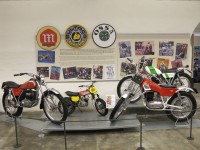
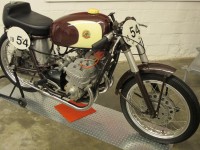
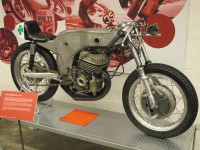
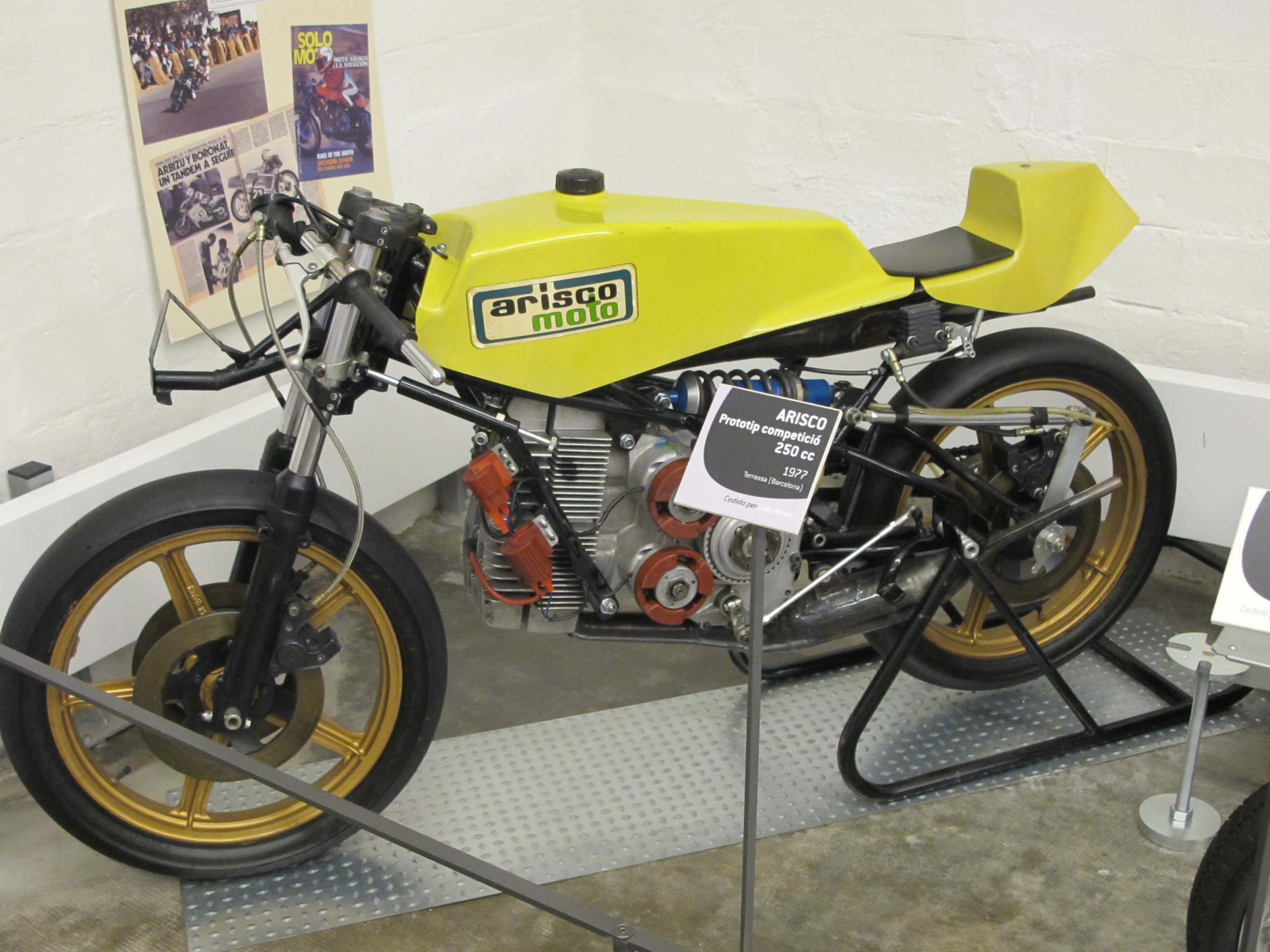
The sadness came from a visit to the Museu Moto, a tiny motorcycle museum tucked away down an alley leading off from a large square in the Barcelona CBD. The reason was that it showcased how the Catalan-based segment of the Spanish motorcycle and scooter manufacturing industry has virtually disappeared, which is a tragedy considering it supplied most of the region’s needs between 1905 and 2010 with 190 different brands being made there over the years.
Barcelona is proving a model of traffic control with its multi-modal approach. It uses a combination of bicycles, motorcycles, scooters, taxis, private cars, underground trains (Metro), buses, air transport (two airports), commuter and rapid rail trains. There are also three funiculars and a couple of cable-car routes in the city.
All these systems and vehicles are integrated to minimise traffic congestion. I saw it for myself recently and it works.
Barcelona is a big city too, being the capital of the Catalan region and the second largest city in Spain, as well as the sixth most populous city in Europe after Paris, London, The Ruhr, Madrid and Milan. The city’s population exceeds 1,6 million, with almost a million registered vehicles and the number of daily trips undertaken in the city and surrounding area exceeds 6,5 million.
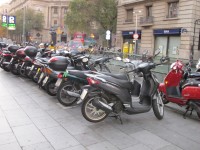
What is important is the big role played by two-wheelers – pedal cycles, powered motorcycles and scooters. In fact, there were already more than 300 000 motorcycles and scooters in Barcelona in 2010, which makes it the European city with the highest proportion of powered two wheelers related to the population; probably the reason Spaniards are so successful in two-wheel motorsport.
In addition, almost 200 000 residents of Barcelona make use of the biking communal cycle loan system which has more than 6 000 bicycles at 420 locations in the city.
Being a motorcycle enthusiast I was most impressed with the extensive use of powered two-wheelers in this beautiful city, where they park for free.
What was most impressive was the responsible manner in which the powered-two-wheelers were ridden. I saw no reckless riding but rather very responsible riders who obeyed traffic signs and did not weave through the traffic. I saw no accidents in a visit that lasted several days.
According to the Federation of European Motorcyclists Association (Fema) two-wheelers are the way to beat both traffic jams and pollution. A PTW takes about 16 to 46 per cent less time to cover the same urban trip as a car, due to congestion, while research shows that 17 out of 20 car trips in cities are made with only one occupant in the vehicle.
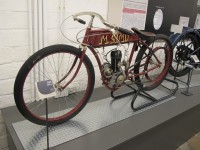
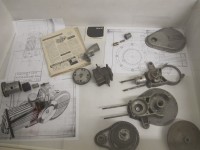
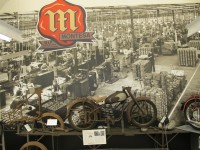
Now back to the very neat and organised motorcycle museum, where I was the only visitor in the early evening I went there. Generally the machines on display were in very good condition and most looked like runners. However, what they reflected was an industrial and economic tragedy for the region. The large, sepia photographic backdrop to the Montesa display provides a poignant reminder of how things used to be in this part of Spain in those heady post-war years. The photograph shows lots of machines, many people working industriously and piles of castings which symbolised economic activity and employment in Barcelona.
Hit by economic crises in Europe and a subsequent slowdown in demand, Montesa, one of the most- famous Spanish motorcycle makers, started selling shares to Honda, which eventually owned the company and stopped motorcycle production in Spain in 2009, while continuing to make a few specialist Montesa models at its factory in Italy.
Just think of the situation over the years as the scores of Catalan motorcycle factories were forced out of business; besides extensive manufacturing facilities and direct employees each of the companies had a host of suppliers and dealers, all of whom lost out causing a big impact on the overall Spanish manufacturing industry. How tragic!
Many of the motorcycle brand names were little known outside Catalonia, but others such as Bultaco, Montesa, OSSA, Sanglas and Derbi were sold internationally.
Sanglas sold out to Yamaha in 1985 and Derbi was sold to the Italian Piaggio Group in Italy in 2001, while the Bultaco factory closed for good in 1982 and after OSSA closed, also in 1982, it was reborn in 2010 when the brand was bought by a group of Spanish businessmen. It now makes a limited number of trials and enduro models.
GasGas, founded in 1986, is another specialist maker of trials and enduro machines which continues to operate on a small scale in Spain.
But Rieju, which produced its first motorcycle – a motorised bicycle – in 1945, is today the only 100 per cent Spanish-owned motorcycle manufacturer producing a full line of models – including the Mius electric scooter – and continuing to make reasonable numbers of powered two-wheelers today. It is still owned by the family of the founder.
Although the Catalan motorcycle industry dates back to 1904 when Miguel Villalbi started fitting engines – single-cylinder power units of 430cc capacity – to bicycles it was only after the second world war that the industry truly flourished, with start up brands such as Ardilla, Taber, Aleu, Gimson Rex, Mymsa and Ruter.
Most were two-strokes aimed at the commuter market, but several had reasonable performance and sporty looks. Several companies such as Mondial and MotoGuzzi, from Italy, set up assembly plants in Barcelona and contributed to making this a thriving regional industry.
The Spanish companies very soon saw the benefit of taking part in motorsport to promote their brands internationally and they did this with great success, both on tarred circuits and in motocross, trials and enduros. Spanish riders also excelled and continue to do so today with many top riders still coming from this country which produces an inordinate number of top competitors in all manner of sports, not only motorsport.
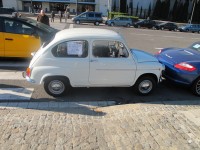
The big downturn for the Spanish motorcycle industry began in the 1960s with the arrival of the Seat 600 – the Spanish-built version of the Fiat 600. This car, which sold for the equivalent of an average year’s salary, created a social revolution in the country. Not only was it more practical, being able to carry four adults, but was also a step up the ladder in terms of social status. Only the strongest motorcycle manufacturers were able to survive, for a time.
Looking at the back wall of the Museu Moto and seeing long lists of Catalan motorcycle makers, together with those companies that made competition machines (56 of them) and one-offs or prototypes (45 of them) it is hard not to feel sad for all those dreams that were shattered, jobs and money lost by entrepreneurs as the industry collapsed. How tragic.
Museu Moto, located in the heart of Barcelona, was opened in 2011 as a permanent motorcycle museum (www.museumoto.com).
The man behind it is a devoted enthusiast and talented restorer, Mario Soler, who also set up the Bassella Motorcycle Museum, about 100km north-west of Barcelona.
www.museumoto.com.