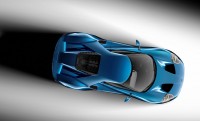
New Ford GT is built to perform
Ford unveiled the all-new GT, an ultra-high-performance supercar that serves as a technology showcase for top EcoBoost performance, aerodynamics and lightweight carbon-fibre construction.
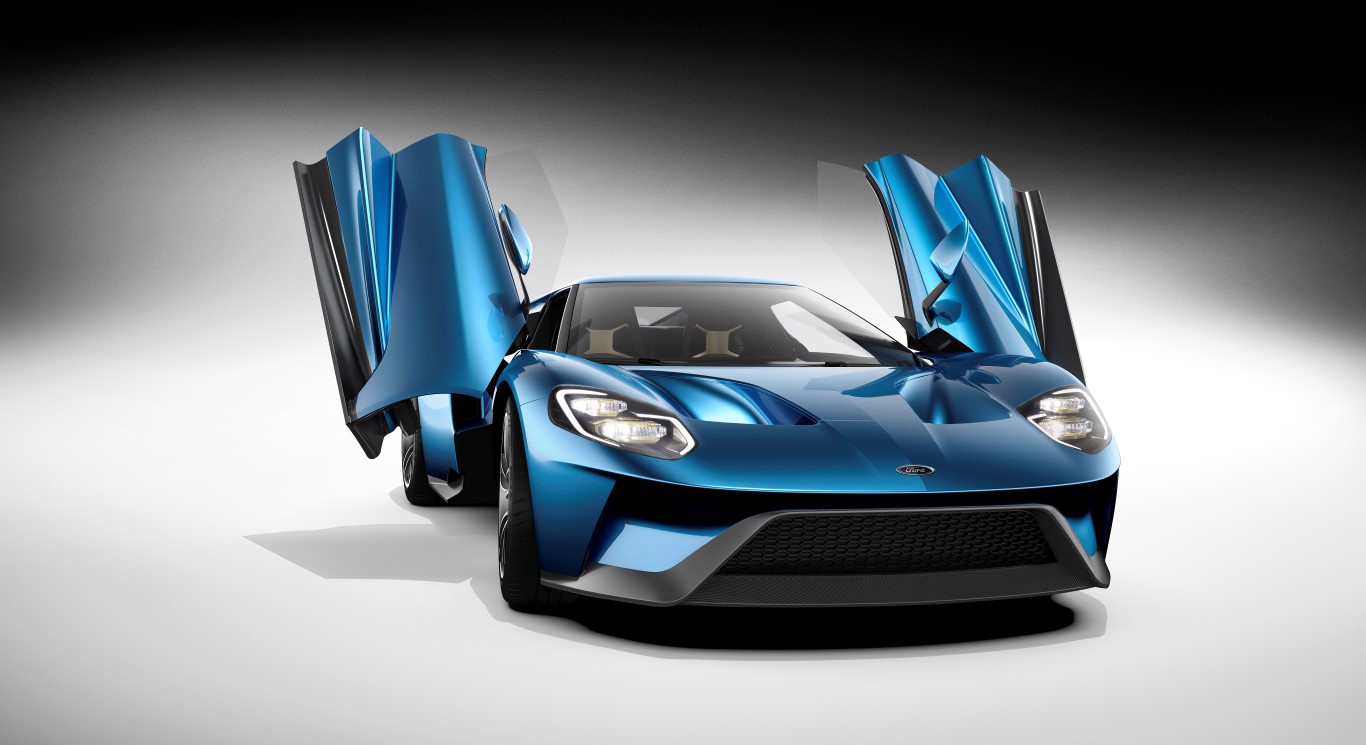
The GT is one of more than 12 new Ford Performance vehicles coming by 2020. It joins Focus RS, F-150 Raptor, Shelby GT350 and Shelby GT350R in the growing Ford Performance lineup.
Beginning production late next year, the GT hits the road in select global markets to celebrate the 50th anniversary of Ford GT race cars placing 1-2-3 at the 1966 24 Hours of Le Mans.
The all-new GT supercar features rear-wheel drive, a mid-mounted engine, and a sleek, aerodynamic, two-door coupé body shell. It is propelled by the most powerful EcoBoost production engine ever – a next-generation twin-turbocharged EcoBoost V6 producing more than 600 horsepower.
The GT makes extensive use of lightweight materials, including carbon fibre and aluminium – enabling outstanding acceleration and handling with improved efficiency.
“The GT is the ultimate execution of an enthusiast supercar,” said Raj Nair, Ford group vice-president, global product development. “GT includes innovations and technologies that can be applied broadly across Ford’s future product portfolio – another proof point that Ford continues raising the performance bar while ultimately improving vehicles for all of our customers.”
The all-new GT features advanced lightweight composites, which will help serve the entire product lineup moving forward. Anchored by a carbon-fibre passenger cell, the GT features aluminium front and rear subframes encapsulated in structural carbon-fibre body panels.
EcoBoost engines power a growing number of Ford performance models, including the new Mustang, just-announced F-150 Raptor, as well as Fiesta ST and Focus ST. The next-generation twin-turbocharged 3.5-liter EcoBoost V6 in the GT features a wide powerband with impressive time-to-torque characteristics.
The engine demonstrates remarkable efficiency – a key attribute of its endurance racing-derived power train, where exceptional performance combined with efficiency is a critical competitive advantage.
The GT features an all-new, port/direct dual fuel-injection set-up to improve engine response, plus a low-friction roller-finger-follower valve train. The twin-turbocharged EcoBoost V6 will be paired with a seven-speed dual-clutch transaxle for near-instantaneous gear changes and exceptional driver control.
Aerodynamic efficiency is at the heart of the GT design, actively reducing drag while aiding downforce and stability. Although each surface on the GT is functionally crafted to manage airflow, it also features fully active aerodynamic components to improve braking, handling and stability.
The state-of-the-art chassis is suspended by an active racing-style torsion bar and pushrod suspension, with adjustable ride height. The 20-inch wheels are shod with Michelin Pilot Super Sport Cup 2 tyres featuring a unique compound and structure designed specifically for the Ford GT. Multi-spoke wheels encircle carbon-ceramic brake discs at all four corners.
The narrow-profile canopy reduces frontal area and caps a purposeful interior that provides state-of-the-art technology to ensure control, comfort and safety. The two-seat cockpit is accessed by upward-swinging doors, and features driver and passenger seats integrated directly into the carbon-fibre passenger cell.
An F1-style steering wheel integrates all necessary driver controls, creating a stalkless steering column that allows uncluttered access to the transmission paddle-shift controls. A fully digital and configurable instrument cluster provides a wealth of driver-focused data. The display is configurable for multiple driving environments and different driving modes.
“While we hope enthusiasts rejoice about this all-new GT, all Ford customers will benefit from the ultimate performance Ford and its new-generation innovations,” said Nair.
Current plans for the Ford GT are for left-hand drive versions only.