Mambas more effective in preventing poaching
Group of women serious about their wishes to save the rhino and elephants for their children to see one day
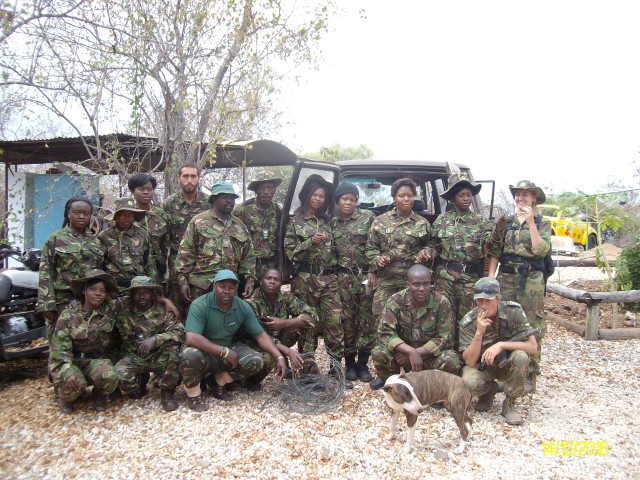
BALULE – A group of South African women are on a mission – to stop poaching so that their children and grandchildren are able to see Africa’s Big 5 roam free in the wild – elephant, cheetah, lion, buffalo and rhino.

They are part of the Black Mambas Anti-Poaching Unit of Transfrontier Africa. They operate in Balule Nature Reserve, between Hoedspruit and Phalaborwa, near the western border of the Kruger National Park.

The project administrator of Transfrontier Africa, Ms Amy Clark says, “Former soldiers and old-school conservationists had doubts that the Mambas could effectively protect wildlife, but the success of our female mambas has triumphed over the scepticism.”

Clark adds that the motivation most of the women share, is that they want their children to see rhino and elephant, and that is why they protect them. She says all of the Mambas have matriculated and come from the local community. “We started with only six women in 2013 and operated within the Olifants West region of Balule Nature Reserve. It is our second birthday next week and we have expanded to cover the whole of Balule. When management wanted to hire more women, they asked the existing members to source new applicants. The Mambas today are a respected group of women in their respective communities. They have had paramilitary training and are well versed in legal matters concerning anti-poaching. Although they have assisted in the arrest of six poachers, their mission is not to catch them but to prevent poaching altogether through early detection and visual policing. “We do not measure our success on the number of poachers caught, but on the number of weeks free of any poaching-related incidents.”

Clark compares this group to the traditional British police officers, Bobbies-on-the-beat, who patrol on foot to keep an eye on things. Their duties vary between sweeping an area for snares, fence patrols looking for tracks of either people breaking in or animals breaking out, manning observation posts during the day and night, and being aware of suspicious activity. They are very successful and have to date caught and destroyed over 350 snares, 13 fishing traps, five poachers’ camps and three bush-meat kitchens.


All the Mambas are qualified Grade E security and have been fully trained in the handling of weapons, but they are not an armed group. The Mambas gather intelligence and are constantly on the lookout for anything suspicious. Armed units take the lead once the Mambas have picked up the trail.”
Black Mamba APU was founded by Mr Craig Spencer, the managing director of the non-profit conservation and research organisation, Transfrontier Africa, when he realised that putting and end to poaching was no easy task. “For them the level-two and -three poachers are their modern-day Robin Hoods, putting food on their tables.”
The war against rhino poaching will not be won with bullets, Clark adds, “If awareness among the community rises and positions like the Black Mambas continue to be respected more than that of the poachers, then through education within their families, this will be a great step in the right direction for rhino conservation. We need to explain that poachers are killing off their own markets and in the end it is not sustainable.”