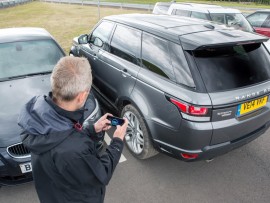
Get out of a tight spot by remote control
Jaguar Land Rover has revealed some of the prototype technologies that its UK-based research team is developing to deliver autonomous driving in the future.
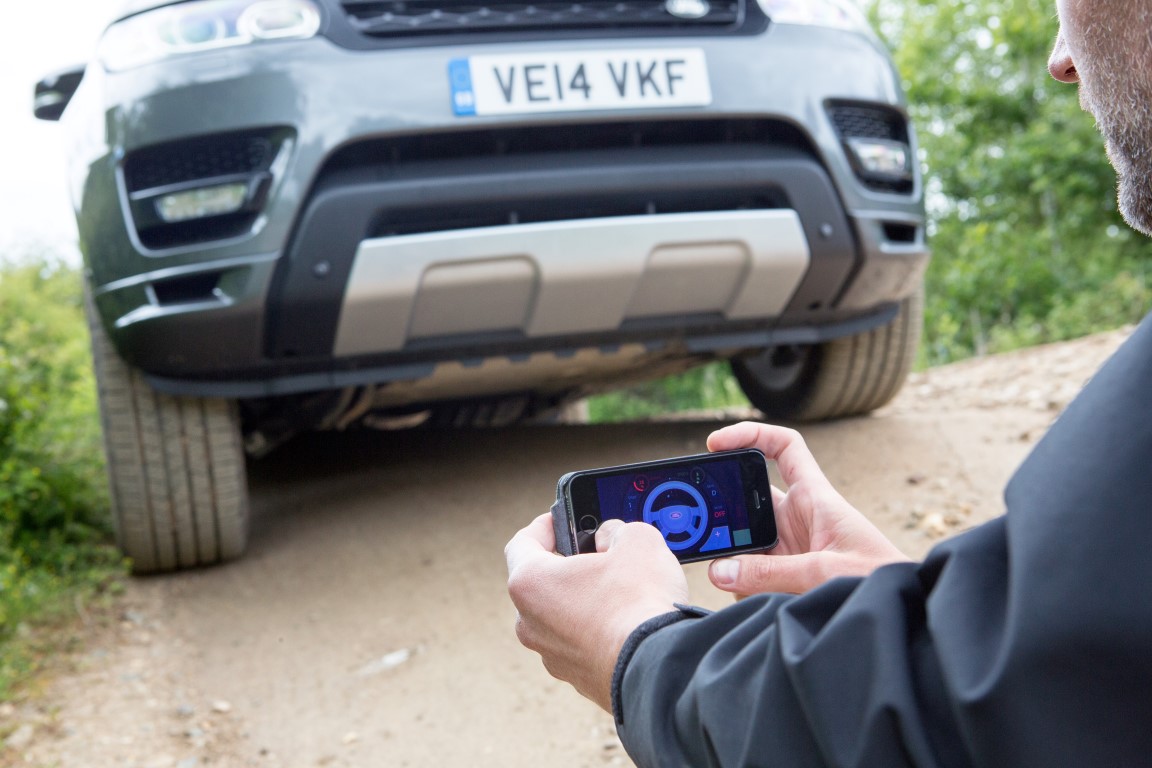
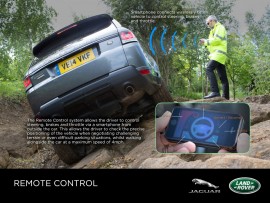
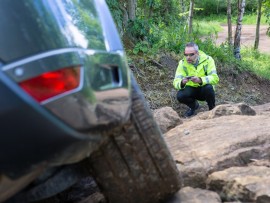
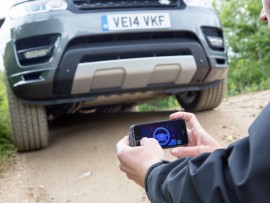
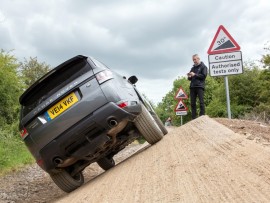
Can a driver drive a vehicle using his cellphone? Land Rover says yes. A smartphone app with controls for steering, acceleration and braking, as well as the ability to change between high- and low-range gears, is setting new benchmarks. This allows the driver to walk alongside the vehicle, at a maximum speed of 6km/h, to manoeuvre their vehicle out of challenging situations safely, or even to negotiate difficult off-road terrain.
The driver could use the smartphone to reverse out of a parking space if someone has parked too close for them to open the door, or allow the driver to become their own off-road spotter, to guide the vehicle over off-road obstacles from outside the vehicle.
The remote-control function will only operate if the user is within 10 metres of the vehicle and if the smart key can be detected. The system will stop the vehicle if the driver moves out of range or gets too close.
Future possibilities for this technology could include more autonomous functionality where the driver gives a simple command from the handset to traverse an obstacle or exit a parking space, and the vehicle does the rest.
Jaguar Land Rover’s multi-point turn Range Rover is capable of autonomously manoeuvring 180 degrees to turn the vehicle in the road and point it in the opposite direction. This autonomous vehicle could extricate itself from the most difficult situations, such as a dead-end roads or congested car parks, as well as perform many a driver’s least-favourite manoeuvre – the three-point turn in a busy street or car park.
The system uses sensors to assess available space and to avoid pedestrians, vehicles and other objects. It takes over gear selection, steering, braking and acceleration to make as many forward and backwards movements as necessary to execute the manoeuvre.
Dr Wolfgang Epple, director of research and technology, Jaguar Land Rover, said, “Getting a car out of a tricky parking manoeuvre can be a stressful experience for any driver. A remote-control car, or a vehicle that can autonomously turn in the road, demonstrates how we could use these new technologies to reduce the tedious parts of driving and improve road safety.
“Because our customers drive in all terrains and in all weathers, any future autonomous Jaguar or Land Rover must be as capable on rough tracks and unpaved roads as it would be on city streets,” added Epple. “We know our customers drive in heavy rain, and snow, and bright desert sunshine every day. We are working on an array of new sensors that will enable a car to operate in any environment, without any outside intervention or input from lane markings or roadside infrastructure like traffic lights. Our research engineers have a nickname for a car with this level of capability: the Solo Car.”
Creating a car capable of functioning autonomously in all situations requires a fusion of sensors with different attributes including radar, lidar, cameras, ultrasonics and structured light technology. Each of these is needed to enable an autonomous car to function in the real world and to ensure the car can make safe and accurate decisions anywhere.