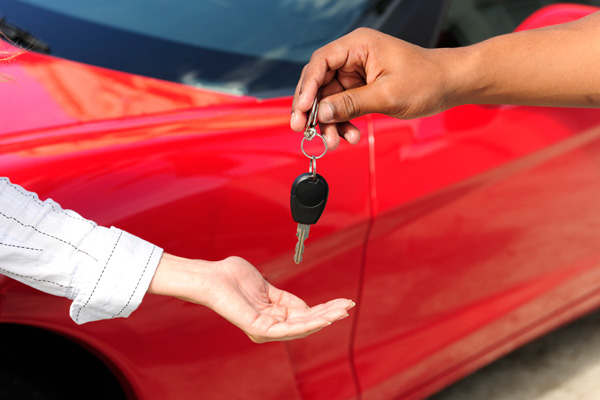
MBOMBELA – Without a registration certificate, that new set of wheels in your garage may not even belong to you. Although many Lowvelders are vaguely aware of the registration-of-ownership requirement when purchasing a vehicle, the regulations can, however, be confusing.

Lowvelder consulted regulations relevant to the registration of vehicle ownership. There are a number of things that need to be done before a registration certificate and licence disc can be issued for your new, used or built vehicle.
To register a new vehicle, the purchaser must submit the following along with the application for registration and licensing of motor vehicle (RLV) form:
• The new owner’s identity document (ID).
• The manufacturer’s certificate containing all the relevant details of the vehicle.
• A roadworthy certificate, if the vehicle is a heavy load or Road Transport Quality System (RTQS) vehicle.
Before a used vehicle can be registered, the seller must complete and submit a notification of change of ownership to the local registering authority.
The purchaser must then continue with the process by submitting the following along with an application for the RLV form:

• His identity document (ID).
• The vehicle registration certificate (which will be in the seller’s name).
• The certificate of roadworthiness if the current certificate is older than 60 days.
• Proof of purchase.
• A valid motor-vehicle licence (ensure that the licence fees for the vehicle are up to date).
To register a vehicle built up from parts, the builder must go to his nearest motor-registration authority and submit the following along with an application for the RLV form:

• His identity document (ID).
• An affidavit confirming where the parts came from and what was done to the car (form SOA).
• Request for police clearance (form RPC).
• Request for police identification (form RPI).
• Deregistration certificate (if the vehicle was deregistered).
• A weighbridge (mass measuring) certificate.
• Proof of title ownership.
• Letter of authority (if applicable).
• The provincial help desk will then introduce the vehicle record on eNaTIS.
• Request for police clearance (form RPC) must then be submitted.
• A roadworthy test must be performed on the vehicle.
Where it has been modified and has to be registered, the owner must submit the following along with an application for the RLV form:
• His identity document (ID).
• An affidavit confirming where the parts came from and what was done to the car (form SOA).
• Request for police clearance (form RPC).
• Request for police identification (form RPI).
• Deregistration certificate (if the vehicle was deregistered).
• A weighbridge (mass measuring) certificate.
• Proof of title of ownership.
• Roadworthy certificate.
• Letter of authority (if applicable).
• Manufacturer’s certificate or previous registration certificate or affidavit if the registration certificate cannot be provided
The introduction of the motor-vehicle record can take up to a few days. Costs vary and can be obtained from the various local licensing offices countrywide.
Download the forms from the eNaTIS website: https://www.enatis.com/index.php/downloads/cat_view/12-public/4-forms/8-road-traffic-related-forms
Penalties in case of default:
New motor vehicles must be registered and licensed within 21 days after a change of ownership. If registration is not done timeously, penalty fees may become payable. The motor-vehicle registration is recorded on the eNaTIS.
When do motor-vehicle registrations become inactive?
• If the vehicle’s licence disc has not been renewed for more than four years.
• If the vehicle was involved in an accident and has been declared permanently unfit for use.
• If a change of ownership took place. A new registration process needs to be launched,
• If a vehicle has been repossessed for more than 31 days.
• If a deregistration certificate has been issued.