MyPlanet ambassador donates R1,3 million towards conservation causes
MBOMBELA – World Rhino Day is celebrated by donations from MyPlanet Rhino Fund to the value of R1,3 million towards conservation causes across the country, from rhino protection and monitoring to saving and raising orphans. The MyPlanet ambassador and respected conservationist, Mr Braam Malherbe, initiated the fund in partnership with the Endangered Wildlife Trust and …
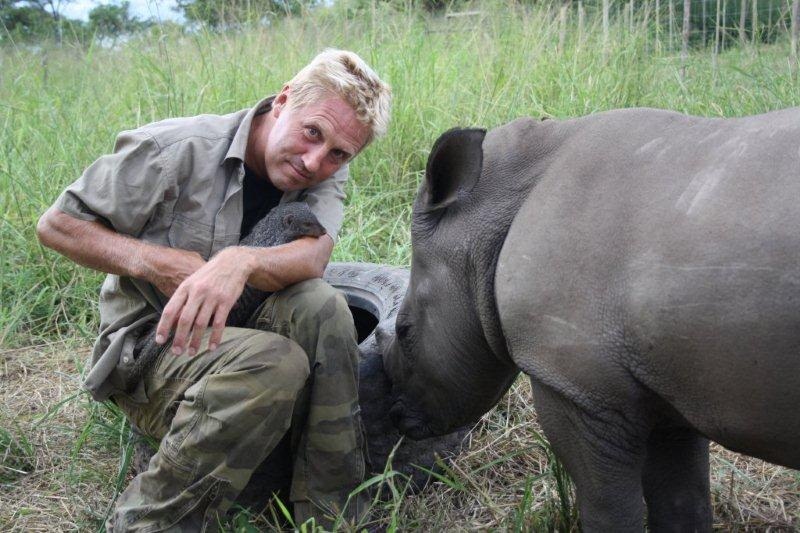
MBOMBELA – World Rhino Day is celebrated by donations from MyPlanet Rhino Fund to the value of R1,3 million towards conservation causes across the country, from rhino protection and monitoring to saving and raising orphans.
The MyPlanet ambassador and respected conservationist, Mr Braam Malherbe, initiated the fund in partnership with the Endangered Wildlife Trust and the MySchool MyVillage MyPlanet fund-raising programme, to help worthy causes. “There are many well-run and credible organisations raising money for rhino conservation, but there are also a lot of scams preying on human emotions,” Malherbe said.
“We started the fund, represented by a broad range of interested an affected parties, to help ensure funding is going where it’s needed most. Thanks to the overwhelming support of South African consumers and retail partners, we have already raised over R4 million for the conservation of this iconic species.”
Care for the Wild Africa just outside Mbombela will receive its share today. This wildlife-rehabilitation centre focuses on rescuing, stabilising and rehabilitating orphaned baby rhino. Once they have recovered or reached sub-adult age, they are then released into a breeding project on an adjoining game reserve where they will be protected from poaching. Ms Petronel Nieuwoudt, founder of Care for Wild, is encouraged by the donation and invites others to “keep fighting the good fight”.
The six other organisations receiving funding are:
- The Southern African Wildlife College (SAWC) which has become an acknowledged centre of specialisation in conservation education and wildlife-management training, not only in southern African but internationally. The project that will receive funding will see 137 people trained in 2015 and 120 people in 2016 on a full 12-month national certificate programme. This year-long programme is indicative of the additional skills needed to address poaching and the shortage of qualified field rangers and guides in wildlife areas as well as creating valuable jobs. It is located near Hoedspruit.
- Quemic provides integrated security solutions to the public and private sectors and is the preferred supplier of anti-poaching, field-ranger, firearm and related training in Southern Africa Environmental Crime Response Unit (ECRU) which is being deployed in a number of our large reserves. This funding will cover a three-month contract for Quemic’s Anti-Poaching Unit to be allocated to “hot poaching zones” to assist private-reserve owners to protect their rhinos.
- SANParks Addo Elephant National Park – funding will be used to purchase 20 camera traps to monitor their rhino population, which is desperately needed at this stage. Addo Elephant National Park conservation manager, Mr John Adendorff, says, “The monitoring of rhino forms an integral component of any protection and biological management plan for the species. It is vital that we continue monitoring these animals, and that we have in-depth knowledge of how the populations are reacting to the different environmental circumstances and also their demographic profiles. With limited resources and Addo’s thick vegetation, standard monitoring is more difficult. Camera trapping has proved to be an ideal, non-invasive form of monitoring rhino, providing ideal individual identification and condition monitoring capabilities.”
- Save Valley Conservancy Special Species Protection Unit (SSPU) is in the northernmost part of the Greater Limpopo Transfrontier Conservation Area. The unit was formed to specially tackle the type of high-level poaching which is associated with certain species whose parts, horns, scales, bones, tusks, have a high demand in illegal wildlife-trade markets. Currently the rhino top the list of animals threatened. Since the establishment of the unit the poaching mortality rate has decreased, allowing the natural breeding rate of the population to increase rhino numbers within the conservancy. The unit has also had a positive effect on lesser poaching crimes and thus contributed to the overall well-being of the conservancy as a whole.
- The Limpopo Rhino Security Group has been established by a group of private rhino owners in the Limpopo area to provide proactive security for their rhino. This funding is going to assist them with basic specialist equipment, crisis reaction teams and when required aerial support.
- The Endangered Wildlife Trust’s (EWT) Wildlife in Trade Programme (WIT) which incorporates its Rhino Project, was one of the first organisations to recognise the potential that dogs have in the fight against rhino poaching and has subsequently deployed tracker and sniffer dogs at a variety of parks and reserves. The effectiveness of tracker dogs as a tool in the fight against rhino poaching has been proven. In fact, one of the tracker dogs stationed in the Kruger National Park has already helped rangers to arrest more than 15 poachers in the first half of this year alone. Funding is going towards refresher training for these dogs and the training of two additional dogs & handlers for the Timbabvati area & the Limpopo Rhino Security Group
The MyPlanet Rhino Fund was established in April 2011 with just 15 supporters and raised a mere R83 in its first month. Now just over four years later it has raised over R4 million for rhino conservation and has over 40 000 supporters. The fund is administered by the EWT and the funding is allocated through a review process to worthy rhino conservation initiatives and organisations which are in desperate need of financial assistance and who have shown proven best practices and sustainability. The review panel consisting of independent interested and affected parties from various stakeholder groups.
In order to become a supporter, you need to be registered with MySchool MyVillage MyPlanet and select a school or charity to support. You can register online at www.myschool.co.za, call 0860-100-445, or get a card at your local Woolworths store. It’s quick and easy.