Sky is the limit for local radiologist
Fourie Bezuidenhout is making waves at Harvard Medical School, one of the most difficult universities to get accepted into in the world.
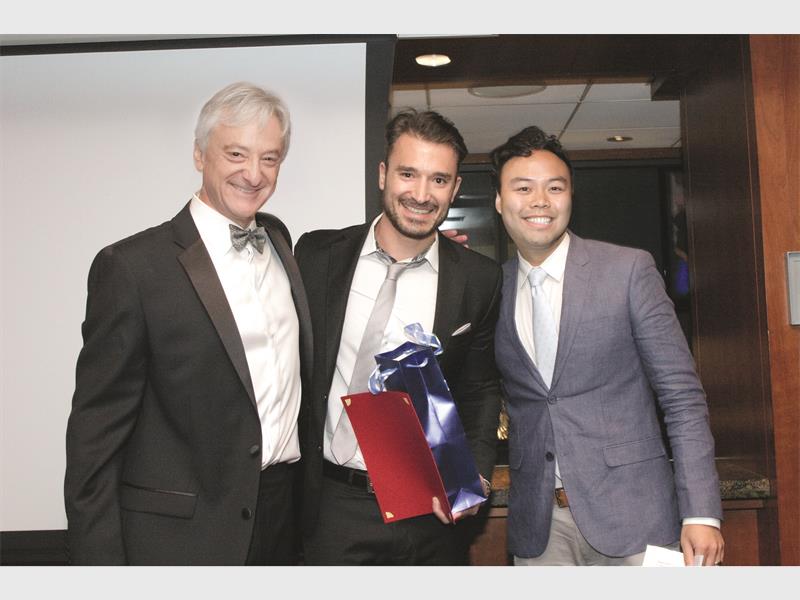
MBOMBELA – A so-called barefoot child from the Lowveld, and a product of its public schools can become the best in his field internationally.
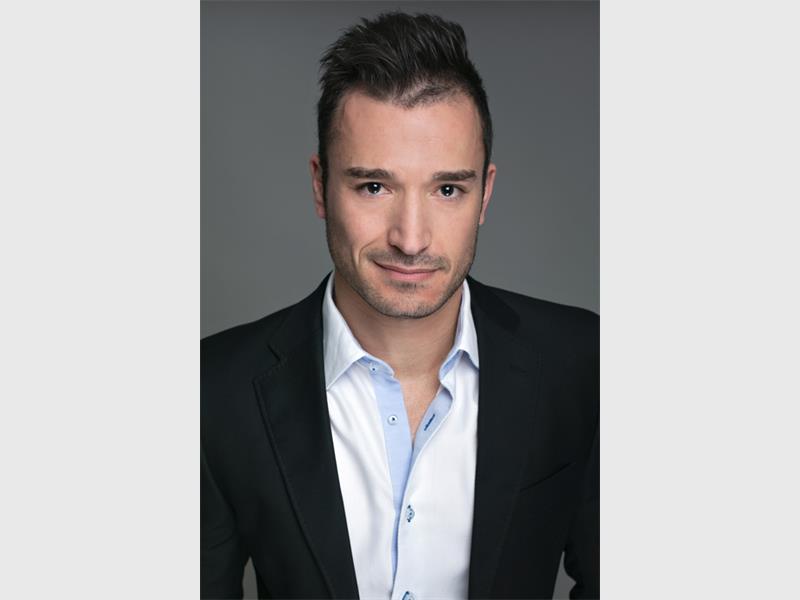
Fourie Bezuidenhout (34) is not immodest when he explains his achievements – and takes the trouble to publicly thank his public school teachers for helping him to get to where he is.
This radiologist works at Harvard Medical School, one of the most difficult universities to get accepted into in the world.
He attended Laerskool Laeveld before matriculating from Hoërskool Bergvlam in 2001, and he credits those teachers for his success. “I just want to thank them for inspiring me.
“My parents still live here. And my former teachers come up to them in the shops and ask about me.”
This touches him. “People think you have to attend a private school to make anything of yourself. It is not true.”
Bezuidenhout has made much of himself. He studied medicine at Tuks, completed his service years in Bloemfontein and went off to Stellenbosch to specialise in radiology. There he met the now late Prof Jan Lotz, who was particularly interested in the Chiari malformation. Bezuidenhout quickly became equally excited about it.
The cause of a Chiari malformation is believed to be genetic. It sees the cerebellar tonsils displaced downward to below the skull, causing terrible, constant headaches.
It is estimated to be prevalent in 0,56 to 0,77 per cent of people, 20 per cent of whom experience symptoms.
Their research into it led to Bezuidenhout being selected as one of 16 candidates (and the only African) to be invited to participate in the 2014 Radiological Society of North America’s conference.
This, in turn, led to him being offered a position at Harvard Medical School, where he was named the Beth Israel Deaconess Medical Center Fellow of the Year 2017, made in recognition of dedicated and inspirational teaching of residents by a fellow in the radiology department.
Bezuidenhout’s research aims to determine for which patients surgery will work – and for which cutting into their brains can make the pain worse.
Surgical treatment has an unfavourable outcome for an estimated 30 per cent of patients diagnosed with Chiari malformation: for 50 per cent it improves, and for the rest surgery makes no difference.
Yet two schools of thought exist: some neurosurgeons believe that you need to operate always. Others, never opening up the area would relieve some pressure, he explained.
“(As) there is no reliable objective test available that correlates with the severity of clinical findings, the treatment of these patients largely depends on the management philosophy of the treating neurosurgeon. For now nobody knows. We want to give them real science and good research.”
To this end he is writing a textbook on the subject. He has also published 15 papers, also on cardio and thoracic complications, his other love and interest and the topic on which he will speak at the upcoming American Roentgen Ray Society conference.
Through working with people from all over the world he has learned that South Africans are different from others. “We really recognise and appreciate such opportunities. We work hard. We are friendly and don’t step on other people to get to the top.”
ALSO SEE: The advantages of time management
For doctors, training in South Africa is great. “We are more exposed to real medical cases as students. As a result we can do everything. I’ve worked with a doctor who is the absolute best in his field, but he can’t put a drip in someone’s arm.”
Bezuidenhout mentions that he thinks it is a result of the high medical liability culture in the USA: patients will sue you if anyone other than a qualified person inserted a drip into your arm.
Long hours and little sleep are nothing funny. “You are competing with the world’s best,” he pointed out. He does have fun though – golf and cycling being his favourites to get him outside.
He still comes to visit his parents once a year, usually in February, to escape the harsh Boston winter, visit the KNP and soak up some sun.
Now, for the first time he is not sure if he will return to South Africa permanently.
He still does it for Lotz. “I hope my work can honour him. I want to finish what he couldn’t because he ran out of time because research takes such a long time.”
But he has an important message for his school teachers. “Thank you. You’ve shown me that the sky is the limit.”
ALSO READ: Finding the right studying technique