European influence in the Onderberg
This then concludes the first current series which ends before the first European settlement in the 1870s, that forever changed the face of the Onderberg.
This is the seventh instalment in a short series on the documented history of the Onderberg, once a very scarcely populated area and one of the last regions for Europeans to settle in all of South Africa.
The first known signs of development by Europeans in the Onderberg was the original tracks of the first wagon roads. In the far south of the Kruger National Park east of Kwaggaspan one can still see deep gouges into the base of a leadwood tree (Combretum imberbe). This is where Carolus Trichardt, the son of the Voortrekker leader Louis Trichardt, created a waymarker to show the route of the original Oude Wagen Weg between the settlement of Ohrigstad and Delagoa Bay. Still visible after 180 years, this is the oldest sign of European presence in the Onderberg.
They followed the route that was later named the Voortrekker Road by early Kruger Park historians.
In a previous instalment we mentioned one Emil Cohen who in 1972 walked this way from Lydenburg, through the Onderberg to Delagoa Bay. He kept a journal. The first business transaction in the Onderberg to ever to be documented in history was by him after crossing Crocodile directly opposite Ungegane’s (Mjejane) kraal and fields in the vicinity of the current Hectorspruit.
Having crossed the river, he was hospitably received and treated with beer (his first taste of the local brew) at the kraal. Cohen managed to exchange nine copper rings for four chickens, a large basket of meal, one pumpkin and some dagga, which the porters smoked.
After the discovery of gold in 1874, the Old Harbour Road, a very rudimentarily made road, was financed by the government of President Burgers of the old Transvaal Republic before the first British occupation in 1877 by Sir Theophilus Shepstone.
It is this road that was to become the Nellmapius Road. The crossing of this road in the Crocodile River between Hectorspruit and Mjejane Lodge is also called Nellmapius Drift, making it to my mind the oldest European name given to any place in the Onderberg outside the Kruger National Park. One could argue that the name of the Krokodilrivier (Crocodile River) is the oldest, but that was just a translation of its original Swazi name – Ngwenya.
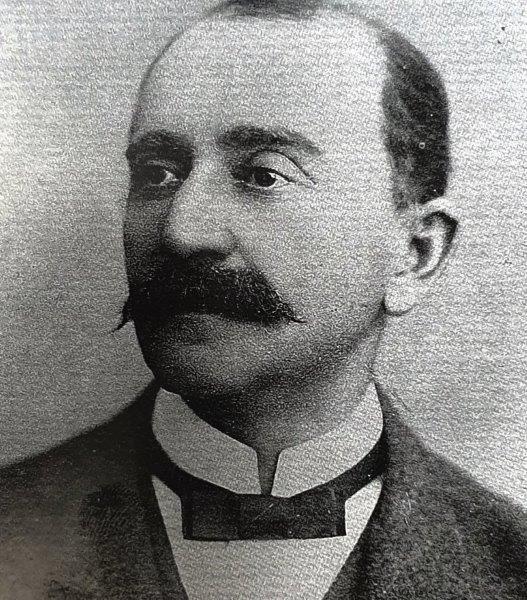
Alois Hugo Nellmapius (1847-1893), a businessman and industrialist originally from Hungary, adopted the old Transvaal as his new homeland. In 1875 he landed himself the concession to better operate and to maintain this road originally financed by the Transvaal government.
This concession included some loose-standing farms along the way, of which those in the Onderberg were Lodwich Lust, (where Nellmapius Drift is), Coopersdal and Castilhopolis, closer to the border with Mozambique. These farms became postings where single European traders were posted to operate trading posts along the way, which was the first formal trade ever to happen in the Onderberg. More on this when we continue this series on the local history later this year.
This then concludes the first current series which ends before the first European settlement in the 1870s, that forever changed the face of the Onderberg.