One on one with Vincent Siphithi Malaza one of the unsung struggle heroes
Malaza said he would love to see the ANC honouring the rest of the veterans and struggle heroes, including himself, while they are still alive other than commemorating them when they are no more.
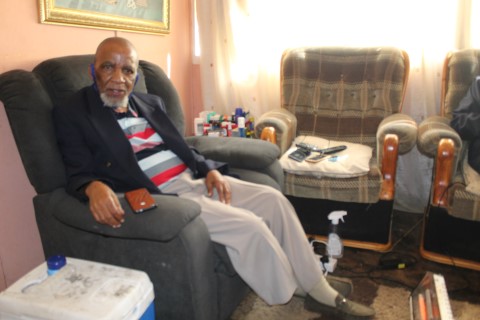
One of the unsung struggle heroes from the province is the humble, Vincent Siphithiphithi (meaning “confusion”) Malaza.
In an interview with Lowvelder, the 72-year-old relived his role during apartheid.
He joined the South African Police Force in 1968 and was in the same platoon with other comrades from the Lowveld. After graduating he was posted as a member of the raiding squad in Nelspruit, after which he was transferred to the Nelspruit Security Branch in 1971.
Read: In the heat of the moment, farmers act like heroes
Malaza said the Soweto uprising of June 16, 1976 was what made him join the ANC.
“I was moved when students from Thembeka High School were tortured as they attempted to flee the country to join the ANC or the Pan Africanist Congress of Azania (PAC), or further their studies abroad,” he recalled.
Malaza became emotional when narrating the events of that fateful day. “They were brutally tortured and some bitten by police dogs at Lochiel on the N17 highway while they tried to cross the Oshoek Border Post to Swaziland. I clearly remember seeing one of the students who was brutally assaulted and a dog handler led his dog to bite him. The young man cried for mercy and I failed to come to his rescue. His screams still haunt me.
“From that day forth I made it my duty to save the lives of struggle fighters, especially those crossing to Swaziland,” he said.
Also read: “Enough I say, enough! – Phosa
After joining the ANC, Malaza became one of the underground operatives.
His first code name was David Nightingale. He was tasked to recruit, smuggle top-secret materials, reconnaissance, save lives of political activists and report about planning of attacks inside the country and abroad.
After the first democratic elections, Malaza was offered a temporary job as a chauffeur to the United Nation’s observer mission in South Africa’s 1994 elections. He received only a R1 000 salary per month. He then applied for a special and military pension, but was declined.
“My application was rejected by the Governement Employees Pension Fund. I was told that I did not complete a five-year period in exile. My leader, comrade Mathews Phosa, and comrade Willie Willie Williams, accompanied by comrade Ambrose Ndlovu, tried a number of avenues to assist me, but it was all in vain,” he said.
Also read: Honouring our local heroes
Eliot Tsamela, one of his colleagues, said, “We worked together in moving information in as far as Lesotho. Hard as it was, with our tactics we managed to transport top secrets to different parts of the country and the rest of southern African countries,” he said.
He appealed to the youth of today to be involved in the politics of the country and use technology to do so.