Reduce your risk through screening
It is of great concern that the number of men being diagnosed with late stage cancer is on the rise.
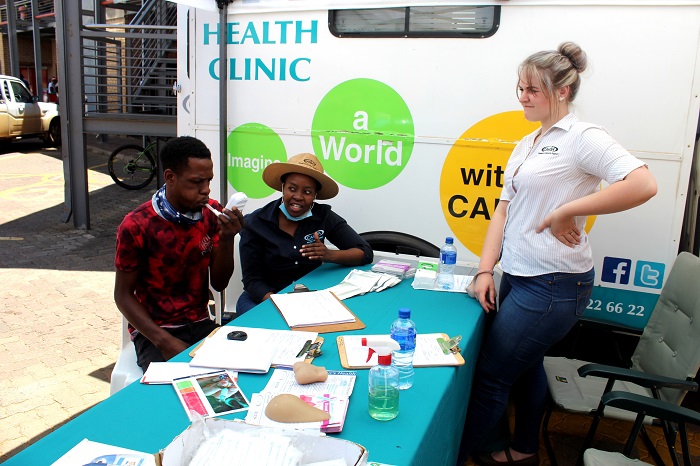
Recently, locals have been given the opportunity to be screened through CANSA mobile clinics at no cost.
The organisation shines the spotlight on prostate cancer, the most common male cancer globally and locally, and it shows a significant increase.
Speaking to Steelburger/Lydenburg News, Ramphosi Shawe, community mobiliser, said they recently saw a total of 20 people. Fifteen males underwent prostate specific antigen (PSA) tests and five females had breast exams. One breast abnormality was detected.
Read: New evidence shows missing boy’s remains not actually his
Cancer is a large group of diseases that can start in almost any organ or tissue of the body when abnormal cells grow uncontrollably, go beyond their usual boundaries to invade adjoining parts of the body and/or spread to other organs. The latter process is called metastasising and is a major cause of death.
A neoplasm and malignant tumour are other common names for cancer. This disease is the second leading cause of death globally, accounting for an estimated 9,6 million deaths, or one in six, in 2018.
Lung, prostate, colorectal, stomach and liver cancer are the most common types in men, while breast, colorectal, lung, cervical and thyroid are the most common among women. The scourge continues to grow globally, exerting tremendous physical, emotional and financial strain on individuals, families, communities and health systems.
Also read: Eskom paid R160 million by CMLM
Many health systems in low- and middle-income countries are least prepared to manage this, and large numbers of patients globally do not have access to timely quality diagnosis and treatment. In countries where they are strong, survival rates of many types of cancers are improving thanks to accessible early detection, quality treatment and survivorship care.
According to the National Cancer Registry, South African men have a 1:17 risk of being diagnosed in their lifetime.
International and local research indicates that the risk for aggressive prostate cancer is higher in black men and there are about 1,38 million new cases and 458 000 deaths from breast cancer each year, according to the International Agency for Research on Cancer (IARC Globocan, 2008).
CANSA said men need to be proactive about their health and should recognise warning signs. They are encouraged to do monthly testicular self-examinations, attend annual medical check-ups and cancer screening for early detection, as symptoms do not always present until the disease has spread. Men also need to lead a balanced lifestyle, cutting out factors that increase their risk.
“The most common risk factors include African ancestry, increasing age from 50s onwards and a family history on either the mother or father’s side. It might be that prostate cancer grows more rapidly in black men than in white men and that the transformation from latent to aggressive might occur earlier in black men.
“The numbers reported for it in South Africa are likely an underestimate of the real statistics. Annual PSA testing is essential to help detect prostate cancer early, through a simple blood test. This is currently not routinely measured in men presenting at public hospitals,” said Shawe.
Currently there is not sufficient knowledge regarding the causes of breast cancer. Early detection remains the cornerstone of controlling it. When it is detected early, and if adequate diagnosis and treatment are available, there is a good chance that it can be cured.
If detected late, however, curative treatment is often no longer an option. In such cases, palliative care to relieve the suffering of patients and their families is needed.
Also read: Initiative aims to give eMgwenya a clean sweep
The majority of deaths (269 000) occur in low- and middle-income countries, where most women are diagnosed in late stages mainly due to lack of awareness on early detection and barriers to health services; a situation that can be reverted if adequate public health programmes are put in place.
The World Health Organisation promotes comprehensive breast cancer control programmes as part of national cancer control plans. The recommended early detection strategies for low- and middle-income countries are awareness of early signs and symptoms and screening by clinical breast examination in demonstration areas.
Mammography screening is very costly and is feasible only in countries with good health infrastructure that can afford a long-term programme.