SPONSORED | UMP’s Research and Innovation Day focuses on sustainability and impact
This year’s UMP Research and Innovation Day was the second held.
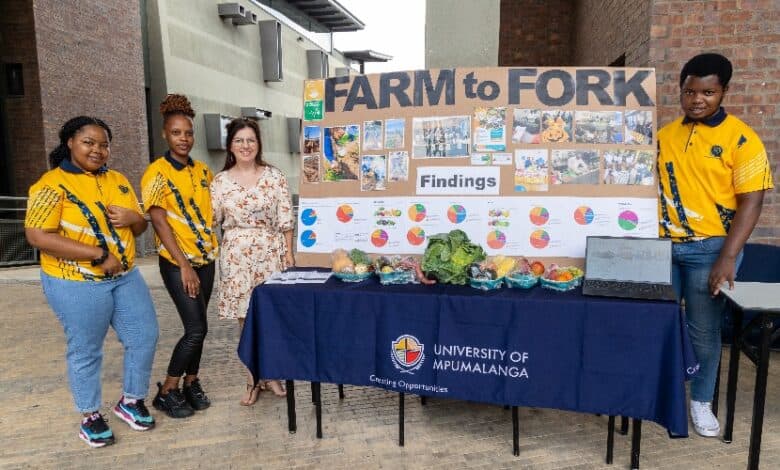
The University of Mpumalanga (UMP) hosted yet another great informative Annual Research and Innovation Day on November 27 under the theme ‘Sustainability and Impact’.
The second UMP Research and Innovation Day was bolstered by the strong trajectory of research established at the university and celebrated the significant achievements of researchers and postgraduate students. According to the UMP, the day aims to encourage academic staff and emerging researchers to be research-active and to demonstrate the UMP’s research to both internal and external stakeholders, especially those cognisant of the institutional research themes.
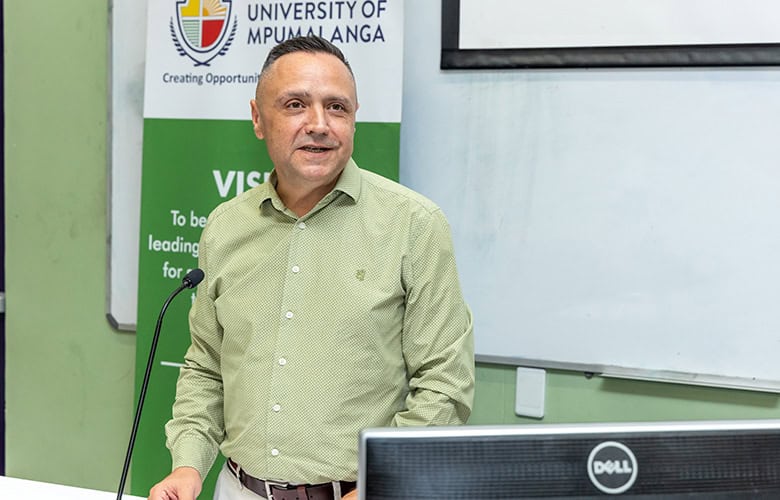
In his opening address, the Deputy Vice-Chancellor of Research, Innovation and Internationalisation, Prof Aldo Stroebel, described the Research Day as a celebration of UMP’s progress and a moment to reflect on strengthening its research capacity. “The Research and Innovation Day honours the accomplishments of UMP researchers and collaborators. It recognises their achievements and sets the stage for innovation and further development,” he remarked.
Our theme for this year’s Research and Innovation Day reflects our dedication to addressing local challenges while contributing to global sustainability goals. Guided by Agenda 2063 and aligned with the sustainable development goals, we aim to support research excellence and foster innovation that drives change. Together, we are building a future of impact and sustainability.
Stroebel emphasised that the theme strategically aligns with UMP’s mission and vision, positioning the institution as a key player in critical academic discourse and global research networks. “We constantly encourage our academic staff and emerging researchers to actively engage in research and foster a research culture across the institution. This positions UMP as a research partner of choice,” he explained.
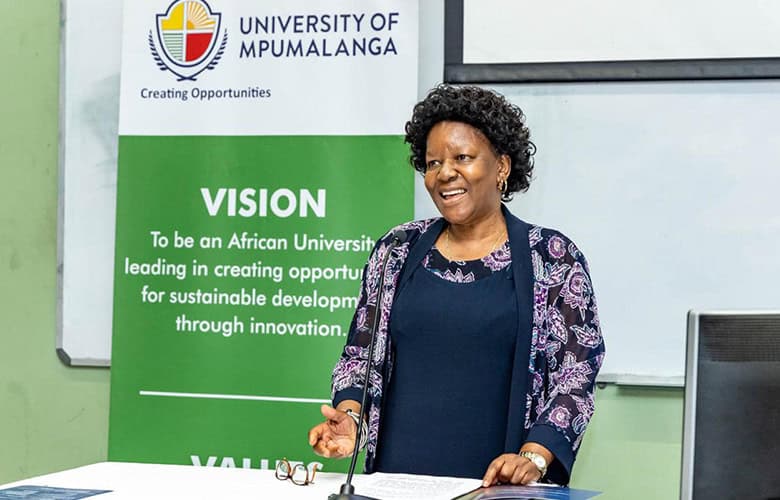
The UMP’s Vice-Chancellor, Prof Thoko Mayekiso, highlighted some insights about UMP’s excellence in sustainability and impact. “Our theme for this year’s Research and Innovation Day reflects our dedication to addressing local challenges while contributing to global sustainability goals. Guided by Agenda 2063 and aligned with the sustainable development goals, we aim to support research excellence and foster innovation that drives change. Together, we are building a future of impact and sustainability,” she said.
Mayekiso also highlighted the university’s achievements and growing recognition within South Africa and internationally, noting key milestones such as:
• Recognition through prestigious awards, including the NRF Acceleration Award and the NRF CEO Special Award.
• UMP researchers, Dr Dalu and Professor O’Brien, were named finalists in the National Science and Technology Forum (NSTF) Awards.
• Professors Ludidi and Mlambo were inducted into the Academy of Science of South Africa (ASSAf).
• UMP’s membership in the Sustainable Development Solutions Network (SDSN) underscores its commitment to sustainable development challenges.
Research impact in today’s context: Challenges and opportunities
Dr Heide Hackmann, the Chair in Science Futures at Stellenbosch University, delivered a presentation titled ‘Research Impact in Today’s Global Context: Challenges and Opportunities’. She explored the transformative role of universities in addressing pressing global challenges, urging them to embrace their role as agents of societal change. “Universities must become institutions for transformation, informing and involving society while supporting systemic change,” she said.
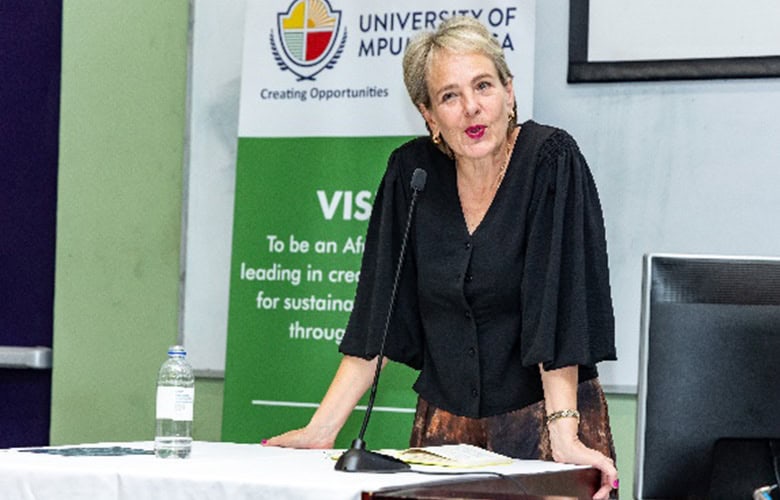
She called for building futures literacy, fostering collaboration and equipping teams with the skills to address interconnected global challenges. Reflecting on the 2030 Sustainable Development Goals (SDGs), she remarked: “The SDGs present a universal, indivisible agenda addressing intertwined global challenges. However, implementation has been hindered by a convergence of crises – a poly-crisis – spanning the pandemic, climate change and geopolitical tensions.” Hackmann also highlighted the importance of transitioning from ‘science for society’ to ‘science with society’, ushering in a new era of relevance and impact.
Farm to Fork project addresses sustainable development goals
The study on fruit and vegetable consumption at a higher education institution in Mbombela, Mpumalanga, aligns with the SDGs by addressing critical areas such as zero hunger (SDG 2), good health and well-being (SDG 3), quality education (SDG 4) and decent work and economic growth (SDG 8). By integrating agriculture, students’ ability to plant and grow fresh produce, marketing and commerce students’ ability to advertise and distribute products and hospitality students’ ability to source ingredients, create recipes and prepare a variety of dishes, the Farm to Fork concept could be applied.
The project emphasises practical education (SDG 4) while promoting healthy eating habits that contribute to better health outcomes (SDG 3). The initiative also highlights the economic and societal benefits of locally sourced produce, supporting sustainable food systems (SDG 2) and linking students’ educational experiences to real-world economic impacts (SDG 8). The research shows that the UMP community does not consume sufficient quantities and varieties of fruit and vegetables necessary for overall health. However, the participating students did indicate that the project made them aware of the health benefits of fruit and vegetables and that they have considered changing their eating habits to include more of them.
Enhancing community and farmers’ awareness on sustainable grain cowpea production practices
The UMP cowpea project aims to enhance community and farmers’ awareness through training and information dissemination on sustainable grain cowpea production practices and their nutritional benefits, as well as to establish on-station and on-farm cowpea trials. The project involves postgraduate students, academics and researchers from the Mpumalanga Department of Agriculture, Rural Development, Land and Environmental Affairs, as well as farmers as external stakeholders, and is led by Prof Funso Kutu, head of the School of Agricultural Sciences.
The study addresses several challenges, including farmers’ low productivity and income, hunger, poverty and unemployment in rural communities, food and nutrition insecurity exacerbated by climate change, and poorly secured food systems, as well as protein and micronutrient deficiencies.
Achievements of the project include the submission and presentation of four academic papers, increasing cowpea seed genotypes through seed multiplication from nine in 2021 to 20, establishing 10 on-farm demonstration sites, facilitating student participation of five postgraduate students and hosting three farmers’ information day sessions attended by over 120 farmers.
Continuous training support for farmers has been crucial for empowerment, covering areas such as disease management, agronomic practices, cultivar selection and postharvest processing. Additionally, consultations on the formation of a cowpea growers’ association are ongoing. These achievements have contributed to increased community and farmers’ awareness of sustainable grain cowpea production practices, cultivar selection and their nutritional benefits.