Could hydrogen fuel realistically become a thing in SA?
Three stakeholders have proposed an ecosystem which will make the more environmentally friendly output an option locally.
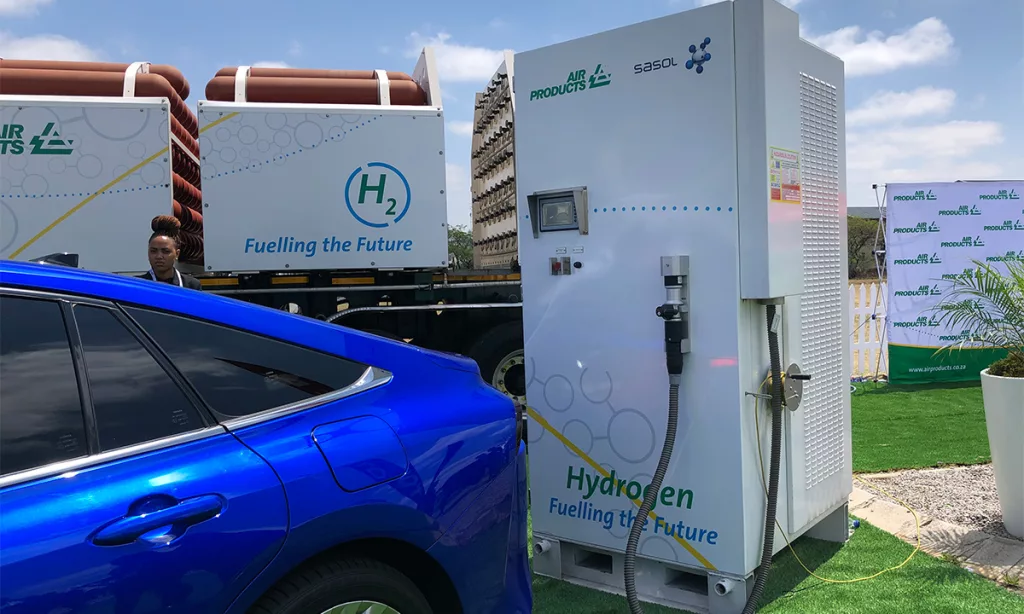
While MECs proposed bold plans of inter-provincial speed trains for the country, it was a hydrogen-powered Toyota, Sasol and Air Products that took the spotlight for real, tangible innovations that can align South Africa with a more environmentally friendly carbon dioxide output, but is it a realistic possibility? Alex Shahini unpacks the question.
Looking for your next new or used Toyota? Find it here with CARmag.
A week ago, Toyota, in partnership with Sasol and Air Products, took to the Smart Mobility Africa Summit to demonstrate their historic hydrogen ecosystem which had the three stakeholders collaborate for the proof of concept that led to the first hydrogen-powered drive on local soil. Toyota, with their two homologated hydrogen Mirais, is confident there is a future in the technology, but considering the challenges with a constrained grid, it may not be as easy as sprouting hydrogen refuelling stations in important hubs.
Related: Toyota Makes History with Hydrogen Mirai Ecosystem in Joburg
“Hydrogen, the most abundant element in the universe, has the potential to be a game-changer in the quest for sustainable transportation,” says Fleetwood Grobler, the president and CEO of Sasol.
While this is true, it is most commonly bonded to other elements and requires energy-intensive processes to bring it to its core, usable form. That being said, to cater to the zero emissions proof of concept, Sasol has specifically developed a green plant to produce the fuel, which is notorious for being energy-intensive to extract.
“Sasol is proud of this opportunity to showcase the potential of a hydrogen transportation system, which has been bolstered by our first green hydrogen production at our Sasolburg Operations where we have installed an initial 3MW solar farm in Sasolburg. This will be supplemented by a supply of 69MW of renewable energy from a wind farm in the Eastern Cape in 2024 to ramp up production to 3 500 tons a day. With both renewable resources on stream, we will have sufficient power to commercialise green hydrogen in South Africa, marking a significant step in our energy transition journey as a country and as Sasol,” explains Sasol executive vice-president for energy business Priscillah Mabelane.
With fuel production encompassing a truly green approach, the other important hurdle is offering it as an affordable and viable alternative to conventionally powered vehicles. The production of hydrogen seems to be covered but what about distribution? As with every network, nothing evolves overnight. Fuel stations, telephone towers and rail infrastructure took dozens of years to become viable for mass use. Air Products, a collaborator in the hydrogen ecosystem already has an impressive infrastructure for a potential future in the novel fuel and would presumably get the ball rolling for local distribution locally.
View this post on Instagram
“Air Products has a long history in South Africa as a leader in the local industrial gas market and related supply chain management. Globally we have been conducting safe hydrogen fuelling for more than 25 years and during that time have conducted an average of 1.5m hydrogen fuelling operations a year. Air Products has more than 250 hydrogen fuelling sites in 20 countries and holds 50 patents for hydrogen fuelling,” says Air Products South Africa’s managing director Rob Richardson.
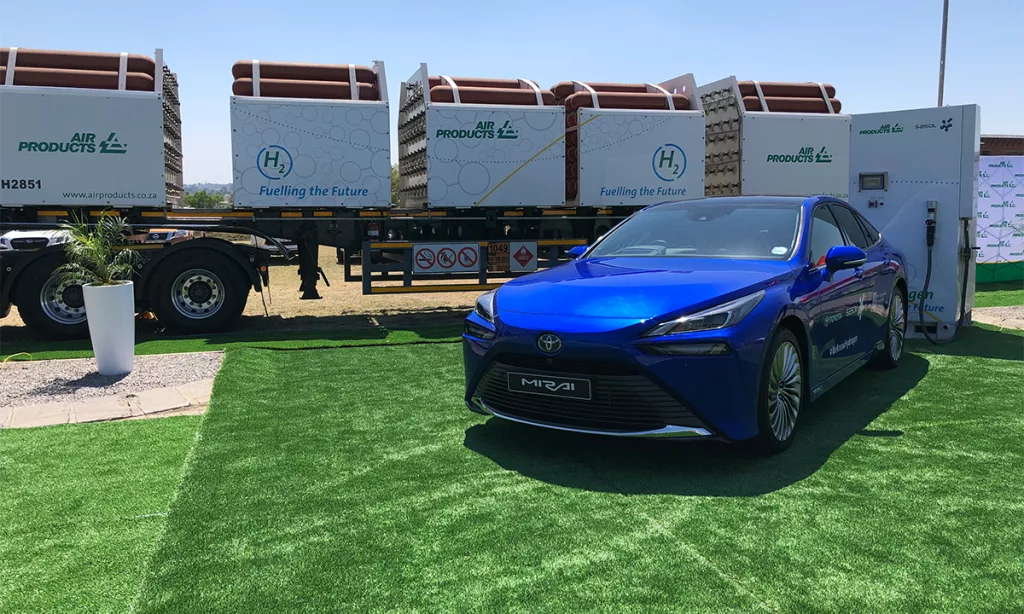
After completing the first few silent meters in the momentous drive, Toyota South Africa Motors president and CEO Andrew Kirby added that there are several hurdles that hydrogen would need to overcome before it could become truly viable. Commercialising hydrogen is a costly undertaking and ‘it now needs more partners, investors and support from the government’. This begs the question: Is it a viable future in South Africa?
Related: Toyota UK’s Hydrogen Hilux Started Life Out in South Africa
“The current partnership is looking at so-called eco-clusters as a start, ie high commercial traffic areas in the country. Initially, the Pretoria-Johannesburg region could be well-suited as these are high-volume routes which could justify investment in hydrogen refuelling infrastructure. Longer term the focus will be on expanding the hydrogen ecosystems along major long-haul routes such as the N3 between Johannesburg and Durban and later into other African countries,” explains Kirby.
The Toyota head honcho adds that the source of propulsion, for the time being at least, is better suited to long-distance commercial vehicles which takes us to the next hurdle. In order for this zero-emissions technology to succeed, it needs to be priced to logical affordability for consumers.
According to Kirby, businesses and fleets need to commit up-front to hydrogen FCEVs and substantial quantities of hydrogen to make the necessary infrastructure viable. When asked about the cost benefits of hydrogen in comparison to conventional ICEs, Kirby explains that it could be in the region of four to five times cheaper per 100km. This paired to the general maintenance-free operation of the electric powertrain would theoretically make it far more lucrative and attractive than current ICE solutions.
Retaining an electric motor, the hydrogen powertrains still bring doubt over mass adoption. One common argument against EVs in South Africa is their dependence on Eskom’s strained grid. FCEVs mitigate this by using hydrogen as fuel instead but their electric motors are still costly and difficult to produce, in comparison to a conventional ICE. As technology evolves and breakthroughs are made, this is expected to change. There is even the possibility that hydrogen can be used to fuel ICE-powered vehicles which would be as revolutionary as synthetic fuels.
The bottom line here is that with the right support and interest, hydrogen mobility could become South Africa’s salvation for moving towards a zero-emissions future.
Browse over 26 000 new and used cars here with CARmag.
The post Could Hydrogen Fuel Realistically Become a thing in SA? appeared first on CAR Magazine.