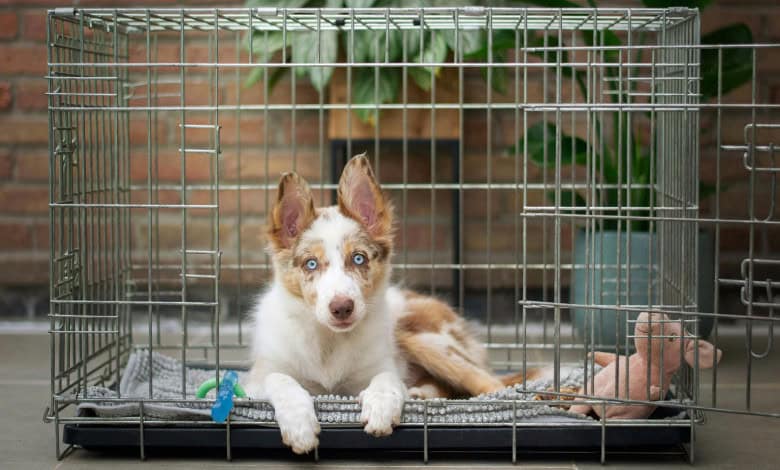
New year, new puppy? Teach your pup good habits and manners right from the start with these tips and tricks:
- Create a furry-friendly space
You might think a crate or cage seems cruel, but giving your pup a space that is contained and safe from the beginning is one of the most effective foundations for good behaviour. A crate provides your puppy with a personal sanctuary, where they can rest, recharge, and learn independence.
- Start with a small dog crate for training, as you want it to be cosy and not too big and position it in a quiet, protected place.
- Place a soft blanket and favourite toy inside, and let your puppy explore at their own pace.
- Add a training aid spray to help them associate the crate with calmness and security. With patience, your pup will learn that their crate isn’t confinement – it’s comfort.
- Potty training with patience and positivity
First off, potty training takes time…some get it in a week; others need a few months of gentle guidance. The key is routine and reassurance.
- Take your puppy outside frequently – after meals, naps, and playtime. When they go in the right spot, reward them immediately with liver training treats for dogs or soft training treats for puppies. This positive association teaches your dog where good things happen.
- Avoid punishment – it only confuses your pup. If accidents happen (and they will!), simply clean the area with an enzyme-based cleaner and try again.
- For families in small spaces, grass potty training patches offer a natural indoor option, perfect for how to potty train a puppy in an apartment with carpet.
- For nighttime training, use puppy training pads or a puppy potty training spray to guide them to the right spot. Remember, consistency builds confidence.
- Learning to walk together
Sign up for puppy school to master the basics and include a daily, short walk to start. Going for a walk is more than exercise – it’s a conversation. Leash pulling training teaches your pup how to walk calmly by your side, turning walks into a joyful bonding experience.
- Keep sessions short and fun, using a clicker to mark good behaviour, followed by treats from your dog treat pouch for training. Each “yes!” moment helps your dog feel proud and helps you both communicate better.
- If your dog tends to get distracted, try a dog training air spray to redirect focus gently, or a treat and train system for reinforcing good behaviour remotely.
Find out more from Canine & Co.