Is it time to make the switch to EV?
EV adoption in SA has long been hampered by many constraints, but are current fuel supply uncertainty and significant tech improvements about to change that?
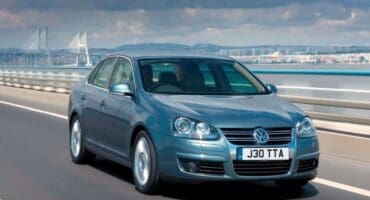
First impressions are widely regarded as the most enduring and, in many instances, the subsequent confirmation bias makes them very difficult to revisit or change. Many would argue that this is exactly what’s hindered the greater acceptance of EVs. For local motorists these impressions date back to 2013 when the first Nissan Leaf arrived, followed by the BMW i3 in 2015. With the Leaf priced from R446 000 and the i3 from R525 000, those early impressions would have been dominated by high pricing, limited driving range, almost non-existent charging infrastructure, and battery life concerns; all of which overshadowed the positives of their driving refinement and potentially lower running costs.
For many years, little changed to alter those first impressions. EV pricing remained high, driving range remained well below what customers were comfortable with, and in many markets, charging infrastructure remained inadequate. It didn’t help that some manufacturers decided that in addition to reducing drag and improving range, distinctive ‘EV styling’ would improve appeal and speed up adoption. If anything, it had exactly the opposite effect. In SA, the load-shedding crisis provided an additional obstacle, with motorists questioning how they would ever charge an EV when there was insufficient power available to keep the lights on.
For many, these largely negative impressions have overshadowed the recent and rapid improvements in EV technology, the substantial improvements in charging infrastructure, and availability of more affordable products. Will the current uncertainty around fuel supply and the concerns over fuel pricing become an inflection point for motorists putting aside their early impressions and re-evaluating EV ownership?
Battery tech improvements
The biggest advances have been in EV battery technology with lithium-ion costs plummeting 75–90% from up to $400 per kWh to under $100 per kWh, driven by changes in chemistry and manufacturing efficiencies. Energy density has doubled from ~150Wh/kg to ~350Wh/kg, enabling longer ranges and lighter battery packs, while charging speeds have improved thanks to higher voltages and faster chemistries.
The use of the previously dominant nickel-manganese-cobalt (NMC) chemistry has evolved, with a mix of improved, more energy-dense NMC batteries now preferred for high-performance, premium vehicles, while the share of lithium-iron phosphate (LFP) batteries now exceeds 50% and dominates the entry- and mid-range market segments. The recently announced Volkswagen ID. Polo is the perfect example; entry-level models utilising a lower cost 37kWh LFP battery, while the higher performance versions will use a 52kWh NMC battery to support their higher motor output and provide increased range.
While energy density is lower than NMC batteries, LFP batteries don’t use cobalt and nickel in their cathode material, cutting costs by 30% and avoiding the ethical and environmental concerns associated with those materials. They also last twice as long and are safer, being less prone to overheating and thermal runaway. Battery packaging has also improved, with cells being combined directly into the battery pack, eliminating module housings, reducing cost and increasing energy density.
- Also read: 5 Most affordable EVs in South Africa
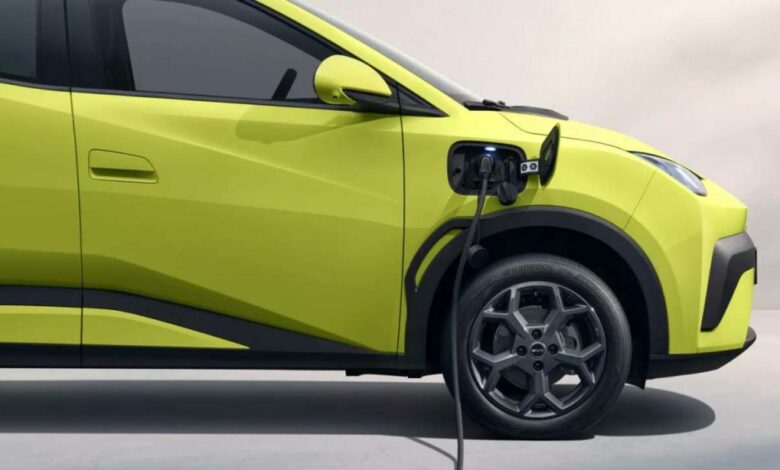
These advances in battery technology translate into significant benefits and convenience for EV owners. Cost reductions have narrowed the pricing gap between BEVs and their ICE equivalents, and with further technology advances like sodium-ion and solid-state lithium batteries already advanced in their development, it will not be long before pricing parity is achieved, charging time reduced and driving range further increased. The lower cost of LFP batteries, combined with increased energy density and improved packaging, has meant smaller and cheaper EVs are now viable, with compact EV hatchbacks now priced from R350 000 and SUVs from R500 000.
Range, possibly potential buyers’ biggest concern, has improved substantially, with entry-level cars now capable of 200–250km in city driving conditions, while family SUVs offer real-world ranges of up to 400km in mixed driving conditions. Premium SUVs using NMC batteries provide ranges of between 450 and 650km in mixed use.
Despite warranties of up to eight years, battery life has been a common concern owing to their high replacement cost. However, recent studies have shown that after an initial dip, battery capacity only drops by about 1% every 25 000km, meaning that nearly 90% of capacity is still available after 200 000 km, or eight years.
Charging improvements
Another benefit of improved battery technology has been charging capability, particularly DC fast charging which is required for top-ups on long-distance trips. Premium EVs now use 400 or 800V electric architectures capable of accepting maximum DC charging of 200 to 400kW. These vehicles achieve a typical 30 to 80% top-up in 20 to 30 minutes, while, more importantly, most EVs in SA can achieve this in less than 40 minutes on available 50-150kW fast chargers.
The public charging network has grown rapidly in recent years, up from about 140 in 2020 to an estimated 650 chargers currently installed. The majority of these are 7-22kW AC chargers located in urban areas, which can provide a 50% top-up in a few hours. The balance is mainly 50–150kW DC fast chargers, most of which are found on major national routes and some key urban hubs, where a limited number of >200kW chargers are also installed. Importantly, announcements from both existing and new operators indicate that the number of chargers will significantly increase over the next 12 months.
For most owners, longer trips and the reliance on public charging is relatively infrequent and home charging will be used more than 90% of the time. A standard 7.4kW single-phase AC wall charger allows most EVs to be charged overnight and at R3.50 to R4.00 per kWh; around half the price of public DC fast charging. The biggest saving, however, is when compared to an ICE vehicle, where the energy cost of an EV SUV charged at home and using 19kWh/100km, is less than 35% of the petrol cost of an ICE equivalent consuming 8.0L/100km.
Is this the ideal time for the motoring public to re-evaluate its opinion of EVs? If you’re one of the many vehicle owners driving primarily in a metro area and taking a few getaways a year, then it’s definitely time to consider an EV. Vehicle pricing has become more competitive, vehicle choices are expanding, battery longevity has proved to be a non-issue, driving range is much improved and running costs are considerably lower than ICE equivalents. Rural public charging is still a challenge, but it can be accommodated through careful planning. As a bonus, the smoothness, refinement and immediate throttle response of EVs make driving in urban environments far less stressful.
Browse thousands of new and used vehicles here with CARmag!
The post Feature: Is it time to make the switch to EV? appeared first on CAR Magazine.
Breaking news at your fingertips… Follow Caxton Network News on Facebook and join our WhatsApp channel.
Nuus wat saakmaak. Volg Caxton Netwerk-nuus op Facebook en sluit aan by ons WhatsApp-kanaal.