Refresh your patio!
Summer is here, and the patio is the place to be. Does yours need a refresh to make it more inviting?
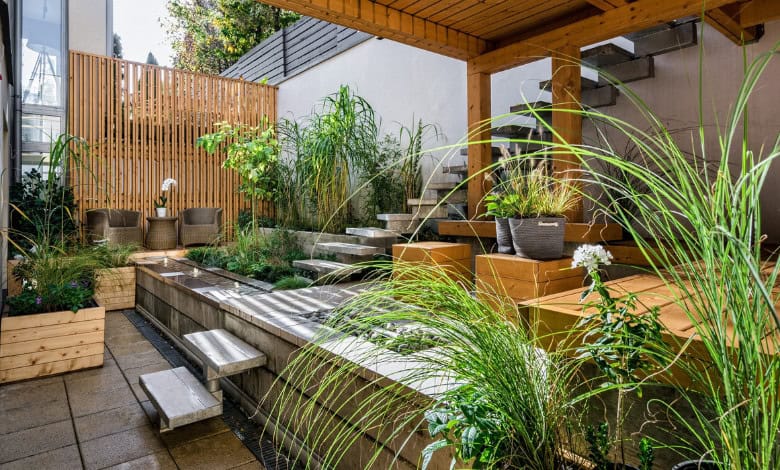
The patio is an essential part of outdoor summer living and entertaining. Like any other room in the home, it should be a welcoming space. Tweaking the décor and using plants for lushness, colour or fragrance can do the trick.
Making the green connection
- Using plants on the patio helps to integrate the house with the garden.
- Space is always an issue and there are many creeping plants to green up the wall or cascade out of hanging baskets.
- When selecting your patio plants match them with the conditions on the patio. Succulents may be better for a very sunny patio, while delicious monsters, calathea and peace lilies prefer bright filtered light or dappled sun. Plants in hanging baskets prefer morning sun and afternoon shade.
Trees for the patio? Why not
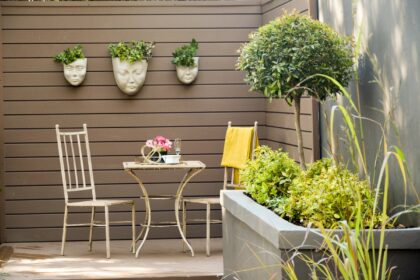
Indoor trees like Ficus benjamina add height and can also be used for shade. This tree (picture) works well in a planter and has been clipped to echo the shapes of the low growing foliage plants around it. If left untrimmed it has graceful arching stems. It can grow up to 2m and responds well to trimming.
Another Ficus for the patio is the Fiddle-leaf fig (Ficus lyrate) which has large leathery green leaves. It is a dramatic plant for large spaces. In winter, move it into a warm, sheltered space because it doesn’t like the cold. If it grows too high, cut off the top branches.
Everyone knows the rubber tree (Ficus elastica). It now comes in some colourful variations. Ficus Abidjan has dark greeen almost black leaves, Ficus Audrey has white-veined green leaves, Ficus Ruby has varigated red and dark green leaves and Ficus Tineke has variegated green, cream and pink leaves.
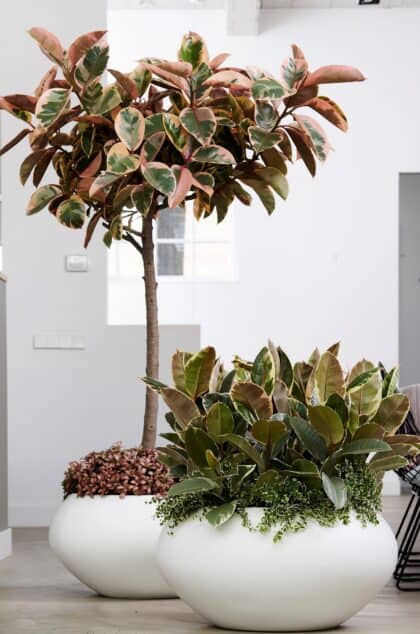
To Grow: Ficus trees do best in a position that receives bright, indirect light. Once you find its ‘happy space’ keep it there. Plants tend to drop their leaves when moved or if there is a change in temperature. It responds well to moderate watering, and liquid fertiliser once a month in summer.
Tropcal splendour
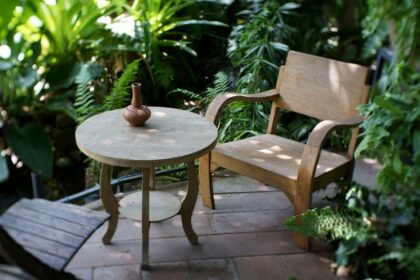
The jungle look that’s been popular for indoors, moves to the patio for summer. When combining foliage plants for year round good looks, consider colour, contrast, and texture as well as size.
A natural, informal style uses layers of leafy plants. For height there are Areca palms (Bamboo) and leafy plants like Monstera, Philodendron, Alocasia (elephant ears) and Spathiphyllum (peace lilies) for lushness. Calathea and Peperomia are good for foliage colour and texture. Tuck in ferns to soften. and fullness.
- Areca (bamboo) palm is a graceful indoor plant that likes bright, indirect light. Allow the soil to almost dry out between watering. In spring and summer, feed once a month with a nitrogen-based liquid fertiliser.
- Delicious monster (Monstera deliciosa) has the biggest leaves of all the houseplants and they are extremely decorative. They are undemanding plants and the can be trimmed to fit into smaller spaces.
- Maidenhair fern (Adiantum) is a particularly beautiful fern. As it grows its fronds cascade over the edge. It likes bright light, even filtered morning sun but not direct sunlight.
- Bird’s Nest Fern (Asplenium) produces lush yellowish-green fronds. It also cleans the air, releasing oxygen at night. Don’t water into the centre of the fern, but instead water around it.
Use space creatively
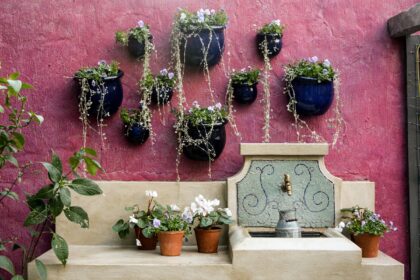
Maximise your outdoor space by using climbing or trailing plants or those that cascade from hanging baskets.
For cascading out of wall containers or hanging baskets, look out for ‘String of Beads’ (Senecio rowleyanus) as well as String of Bananas’ (Senecio radicans), “String of Hearts’ (Ceropegia Woodii) and ‘String of Turtles’ (Peperomia prostrata). They are succulents that need very little water. Snip off the leaves to keep the plants in shape.
To cover a wall, consider the mini monstera (Monstera adansonii) or Hoya carnosa that can be trained up a mossy pole or on a wall lattice. When hoya flower the blooms exude a sweet scent.
Add colour
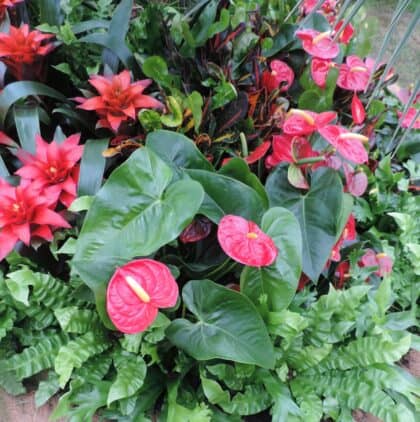
Indoor flowering plants like Phalaenopsis orchid, anthurium (flamingo flower), bromeliads, and even African violets, pot roses, and chrysanthemums provide long lasting colour and pleasure.
For more variety use seasonal flowers such as cyclamen in winter, Zantedeschia in spring and chrysanthemum in summer. Replace when flowering is over.
- African violets flower almost all year round. They take up very little space and do best with bright, indirect light. Don’t over water and cut off dead flowers to encourage more flowers.
- Phalaenopsis Orchids need very little water. Drench thoroughly and drain once a week or every two weeks. Place in bright indirect light (no sunlight).
- Anthurium are compact long flowering plants that thrive anywhere that is warm, with good light. They are forgiving of neglect. The wide range of flower colours includes soft flamingo pink, salmon-pink and pure white.
Easy edibles
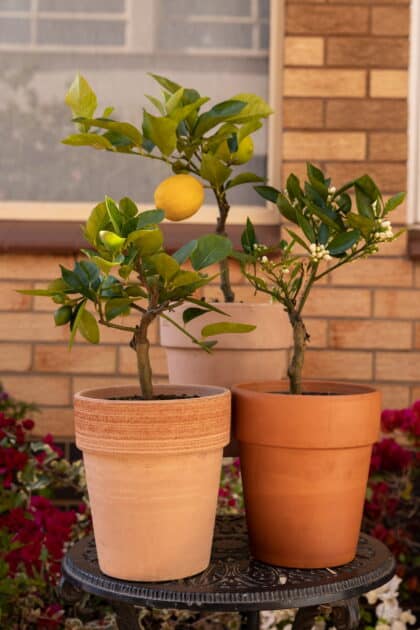
Mini–Me citrus is a range of dwarf citrus specially bred to grow in pots on patios There is naartjie, sweet naval orange, lemon and two different types of limes. They have normal sized fruit and bear prolifically. They can be pruned into the lollypop shape for an ornamental effect.
To grow: Like any other citrus they need a free-draining planting mix, regular fertilising during their active growing months and full sun. Let the soil dry out moderately between watering except when the trees are setting fruit and flowering when they need more water. In winter move pots indoors or into a sheltered sunny area. For more information visit: www.lvgplant.co.za
Article and images supplied by Alice Coetzee.
For more on gardening, visit Get It Magazine.