
Beware! Sassa is not offering food parcels on social media
Fact-checked: Sassa is not offering “free food parcels for December and January” through social media or dodgy links.
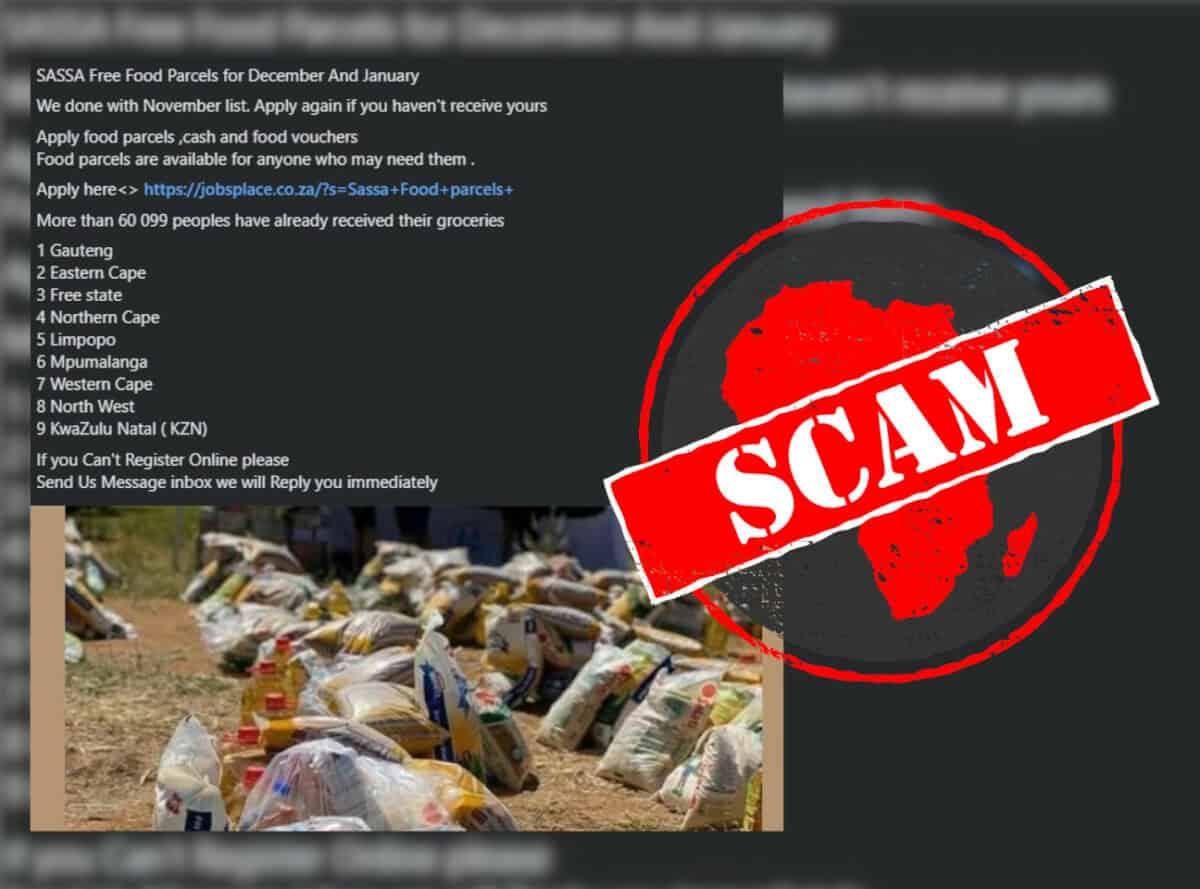
“SASSA Free Food Parcels for December And January,” starts a Facebook post shared to a group with over 600,000 followers.
The post is referring to the South African Social Security Agency (Sassa), a government body managing social grants, such as pensions, child support and disability grants, to protect the vulnerable from poverty.
“We done with November list. Apply again if you haven’t receive yours,” the post continues, saying that users can apply for food parcels, cash and food vouchers.
“Food parcels are available for anyone who may need them,” it says.
The post adds a link where social media users can apparently apply, adding that “more than 60 099 peoples have already received their groceries”.
After adding a list of South African provinces where “people have received their groceries”, the post claims that users should “Send Us Message inbox we will Reply you immediately” if they can’t register online.
The same claim has been shared elsewhere on Facebook, on groups with hundreds of thousands of followers.
Africa Check has debunked numerous Sassa claims over the years, and this claim is no different, so beware.
How do Sassa food parcels actually work?
The Sassa food parcel is an initiative which offers temporary assistance to South Africans facing serious hardship.
Applications for these parcels cannot be accessed through unverified third-party websites or social media posts.
They can only be submitted in person or via WhatsApp using Sassa’s official number.
Visit Sassa website or office for verified information
The first sign that the posts are a scam is the numerous grammar and punctuation errors. Phrases like “we done with November list” and “apply food parcels ,cash and food vouchers” would not normally be seen in communication from a government subsidiary like Sassa.
Then there’s the link, which takes social media users to a simple-looking WordPress site, a red flag for a scam. After navigating through the numerous pop-up adverts, users are left at an advert for the parcels with nowhere to actually apply.
Scammers will often do this to drive traffic and clicks to their website, which then earns them revenue.
The posts also end with the phrase: “Send Us Message inbox we will Reply you immediately.” This is a form of phishing we have seen before, a tactic to get users to reveal confidential information.
But the biggest red flag is the fact that these posts do not link to Sassa’s official website. Sassa has also debunked claims like these in the near past, warning those who may be uncertain about Sassa matters to visit its official website or go to their nearest office to verify the information.
Tips for debunking Sassa scams
Sassa claims scams have been online for years, often only slightly changed. Here are some tips to keep safe
- Remember the “5 Ws”: When it comes to government-related scams, think about whether you can answer the following: who, what, when, where and why? Scams are often short on these details.
- Look for the original source: Ask where the claim came from and compare it to what trusted news sources, like the official South African government website, have reported.
- Think before you share: Scammers often prey on those financially in need. Before you react to a claim, ask yourself: “Am I sure this isn’t false?”
This report was written by Africa Check, a non-partisan fact-checking organisation. View the original piece on their website.
Breaking news at your fingertips… Follow Caxton Network News on Facebook and join our WhatsApp channel.
Nuus wat saakmaak. Volg Caxton Netwerk-nuus op Facebook en sluit aan by ons WhatsApp-kanaal.
Read original story on www.citizen.co.za

