
Dark days as broken traffic lights take their toll across South Africa
From Kariega to Johannesburg and Polokwane, cable theft, vandalism and municipal responsibility disputes have left motorists facing congestion, crime risks and costly delays at faulty intersections.
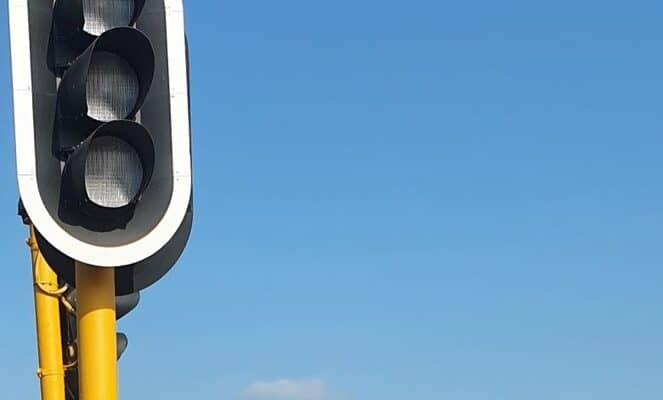
When businessman Jevon Dyer grew tired of near-misses and accidents piling up outside his shop in Caledon Street, Kariega (formerly Uitenhage), he loaded five broken traffic lights onto a trailer and offloaded them directly outside the Nelson Mandela Bay Municipality’s customer care office.
“I thought, why not? I was just tired,” Dyer said at the time, capturing a sense of profound civic exhaustion that has come to define South Africa’s nationwide infrastructure collapse.
As reported by the Parys Gazette, Dyer’s protest has become the defining symbol of a crisis that prompted the Automobile Association (AA) to launch an urgent national campaign demanding that every municipality in South Africa publicly publish lists of broken traffic lights and streetlights, complete with unique reference numbers and committed repair dates, before the local government elections on November 4.
Responding to mounting public outrage, Nelson Mandela Bay’s political head for roads and transport, Yolisa Pali-Jongilanga, conceded to a council committee that the metro can no longer justify the endless cycle of repairs when criminals strip newly laid cables within weeks.
‘Feeding the thieves’
Pointing to routes like the M17, where criminals stole copper cables just seven weeks after they were restored, Pali-Jongilanga told the Parys Gazette that it feels as though the city is continually ‘feeding the thieves’.
The crisis extends far beyond the Eastern Cape.
As reported by the Bedfordview Edenvale News, uncertainty over whether the Johannesburg Roads Agency or Gauteng’s Department of Roads and Transport is responsible has left traffic lights at the Van Riebeeck Avenue and Stoneridge Drive intersection out of order for weeks, causing congestion and increasing the risk of smash-and-grab robberies, according to Ward 19 councillor Bill Rundle.
Similarly, the Review Online reported that 21 intersections in Polokwane had non-functioning traffic lights, with cable theft and vandalism contributing to traffic disruption and safety concerns.
In Ekurhuleni, authorities spent about R120m on repairs in the financial year ending June 2022 before abandoning high-risk intersections altogether and replacing non-functioning traffic lights with stop signs.
Pedestrians left vulnerable
For the AA, leaving intersections dark is a direct assault on the freedom of movement.
“When a traffic light dies, the driver waits. The person on foot takes the gamble,” said AA CEO Bobby Ramagwede in a statement. “Mobility is not transport. It is the freedom to get to work, get your children to school, get home again and change your circumstances.
“Every dead intersection takes some of that freedom away, and it takes it first from the people who walk.”
Cost to motorists
Beyond road safety and crime risks, the AA says broken traffic lights are also costing motorists money.
With inland 95 unleaded petrol priced at R30.25 a litre, drivers trapped in stop-start queues at non-operational intersections burn up to two litres of fuel an hour while going nowhere.
“A driver idling at a broken robot is paying for fuel that takes them nowhere,” Ramagwede said. “Fix the light and that money stays in their pocket. It is a saving government can start delivering this week, and it starts with a list.”
While cash-strapped councils face staggering infrastructure deficits, such as the Johannesburg Roads Agency’s maintenance backlog exceeding R115b against an annual budget of R1.8b, innovative solutions are within reach.
Cities like Cape Town have successfully piloted buried, sensor-secured concrete chambers that protect signal wiring from excavation while utilising backup batteries during power outages.
Until transparent repair schedules and permanent physical safeguards roll out nationwide, the AA urges road users to treat all non-functioning traffic lights as four-way stops, keep windows up and valuables out of sight and drive with extreme caution on unlit streets.
Breaking news at your fingertips… Follow Caxton Network News on Facebook and join our WhatsApp channel.
Nuus wat saakmaak. Volg Caxton Netwerk-nuus op Facebook en sluit aan by ons WhatsApp-kanaal.
Read original story on www.citizen.co.za

