
Experts shed light on ‘unlikely’ Eskom blackout
Case studies from other countries indicate that a total electricity grid collapse does not happen because of generation capacity constraints but rather transmission issues.
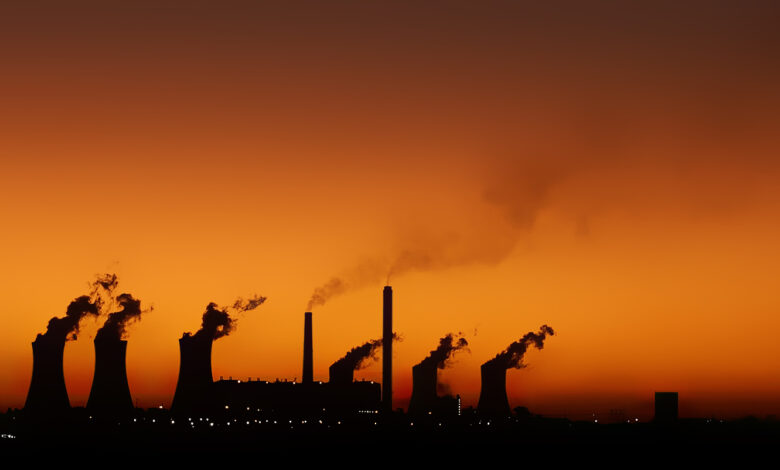
Advanced software, several ‘defensive barriers’, ongoing research as well as the involvement of industry leaders make a total Eskom grid collapse in South Africa highly unlikely.
This was the conclusion by experts during a webinar hosted by the Government Communication and Information System on the myths and facts about electricity grid stability yesterday.
Eskom’s general manager system operator Isabel Fick emphasised that although South Africa does have a capacity generation problem, global examples indicate that it has not caused system blackouts.
“The probability of a national blackout is extremely low. A number of other areas across the world did have national blackouts. Nowhere will you see that [these] were because of a lack of capacity. In all those cases it was a cascading event starting in the transmission space,” she said.
Fick said South Africa has had regional blackouts in the past, but that load-shedding played no role.
“We have never had a national blackout in South Africa. We have had two regional ones before. One was an event where we had a transfer limit issue to the Western Cape and the other was a snow event in KwaZulu-Natal.
“In the case of the Western Cape, we started load-shedding in 2006 which was the basis of the current load-shedding regime that we are using,” she said.
The system operator assured South Africans that Eskom has at least six ‘defensive barriers’ in place that can prevent a total blackout including a reserve margin of 2200MW available for emergencies.
“It starts from the building and design phase of our equipment, how we operate our equipment and the emergency response that we have. All of those must essentially fail before we get to a national blackout.”
Should the unlikely happen, a plan is in place to restore power to the grid.
Fick said they have flexible plans in place because their response will depend on the state of the network.
She said it will take six to 14 days to restore power in the case of a national blackout.
Expert consensus
Fellow of the South Africa Institute of Electrical Engineers Professor Jan de Kock agreed with Fick and added that Eskom’s system is improving on a daily basis.
“It’s fair to say that it’s highly unlikely that we’ll have a total grid collapse in South Africa. We can’t say it will never happen but it’s really unlikely.
“Our grid at this stage is well managed and we have excellent people investigating causes of small disturbances, multiple unit trips and in the process, we’re actually improving grid performance nearly on a daily basis,” he said.
Chairman of the Management Committee National Rationalised Specifications Association of South Africa (NRS SA), Vally Padayachee emphasised that as a key stakeholder, the association ‘will not allow’ any compromise of the system to the point of allowing a blackout.
The NRS SA members include eight metro municipalities, Eskom, the National Energy Regulator of South Africa (NERSA), and the Association of Municipal Electricity Utilities of Southern Africa.
“We are nowhere near a total grid collapse. [The association’s] mandate is to protect the national electricity grid of South Africa. We will not hesitate to exercise this mandate at a moment’s notice, especially during a power system emergency, to prevent the national grid from going to a total collapse,” said Padayachee.
Council for Scientific and Industrial Research (CSIR) senior researcher and electrical engineer, Monique le Roux explained that the institution and Eskom have been working closely together to ensure that the system is continuously as stable as possible.
“Studies are going on in the background with Eskom leading and us supporting.”
She said that ongoing studies check if safety margins are in place, if the system is ably run, and if mitigation is necessary.
Le Roux added that power system analysis software currently used by Eskom is a ‘very powerful tool’ that is used by other countries throughout the world to keep the lights. – SAnews.gov.za
Read original story on www.citizen.co.za

