
Freedom Day: From celebration to a call for accountability
More than three decades after the first democratic elections, South Africans are using their vote to demand service delivery and accountability.
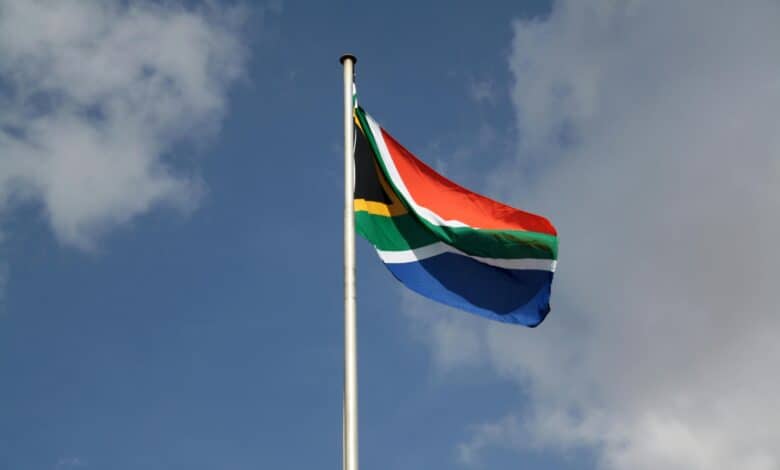
Freedom Day is shifting in meaning for many, from a celebration of liberation to a renewed call for accountability and an end to governance failures.
With local government elections approaching, citizens are reflecting not only on the hard-won right to vote, but on whether that right is being fully exercised in the face of rising frustration, inequality and voter apathy.
Louis du Preez from Pretoria says a few years ago, Freedom Day felt like a celebration of a historic victory, but today it feels like a heavy responsibility.
“As we mark 31 years of democracy, the honeymoon phase is over. Freedom no longer just means the end of apartheid. It must now mean the end of inequality and the beginning of accountability. It has evolved from a day of remembrance into a day of active commitment to the work that remains,” he explains.
Transformation
Du Preez adds that in 1994, voting was about liberation but in 2026, it is about transformation.
“The first election was about gaining the right to belong; today’s elections are about the right to prosper. The meaning has shifted from a symbolic act of dignity to a practical tool for survival and growth. We are no longer just marking a cross; we are signing a performance contract for the future of our country,” he adds.
Du Preez says the right to vote was bought with blood, yet today there is a dangerous rise in voter apathy.
“While the Constitution guarantees us this power, many have mistaken a holiday for freedom. We are not using our right to the fullest if we only complain in private but remain silent at the ballot box. To truly honour those who fought, we must move beyond being spectators of our own democracy and become active architects of its success.”
Local government
Du Preez says that over time, he has realised a vote is not a ‘favour’ to a politician, but a mandate of service.
“My sense of duty hasn’t faded; it has sharpened. In a world of shifting coalitions and political uncertainty, my vote is the only anchor I have to ensure the values of the Bill of Rights are actually felt in the lives of ordinary people,” he says.
Looking ahead to the local government elections, Du Preez adds that while national policy may set the vision, local government is where quality of life is decided.
“Your vote at the local level determines who manages your water, your roads and your community’s safety. It is the most direct form of power we have. If we want to see a thriving economy, it starts with fixing the streets we walk on and the schools our children attend. Real change is not a top-down miracle; it is a bottom-up demand,” he says.
Economic freedom
Patrick Ngoma from Mpumalanga says Freedom Day is not just a commemoration, but a call to action.
“Previously, it symbolised victory over oppression and the birth of a democratic state. Today, it must also represent the ongoing struggle for economic freedom, social justice and dignity. It reminds us that political freedom without meaningful socio-economic change is incomplete,” he says.
Ngoma adds that our forefathers paid a heavy price for the right to vote and that it must never be taken for granted. However, the reality is that voter participation is declining.
He says his sense of responsibility to vote has strengthened.
“Voting is not just a right; it is a revolutionary duty. It is how we safeguard democracy, defend the gains of our liberation and ensure that leadership remains accountable to the people,” he adds.
Ngoma believes his vote remains a powerful instrument for change, particularly at local government level.
Voting a central pillar of society
“Municipalities are the sphere of government closest to the people, and they are responsible for delivering basic services and driving local development. Through the ballot, communities can directly influence leadership, correct governance failures and mandate a developmental agenda that responds to their lived realities,” he explains.
He adds that trust in local government must be earned through visible delivery, ethical leadership and consistent engagement with communities.
“In 1994, the vote represented the defeat of apartheid. Today, it represents the power of citizens to shape policy direction, demand service delivery and influence socio-economic transformation. It remains a central pillar of our democracy,” he adds.
Apathy
KZN resident Sharon Satiya says she remembers the weight of being told that your voice didn’t matter because of the colour of your skin. Because of this, she will never take the privilege of walking into a voting booth lightly.
“My vote is not just political – it is an act of honour towards every soul who suffered so I could have that moment,” she says.
Satiya adds that she does not believe South Africans are using their right to vote to the fullest.
“It grieves me. Our parents and grandparents bled for this right. People died in the streets, were imprisoned on Robben Island and were exiled from their own soil – all so that we could walk into a voting booth with dignity. Yet today, we see voter apathy growing, especially among the youth. We have traded a hard-won right for a shrug. We cannot afford a lack of interest in exercising our rights,” she says.
An act of liberation
She adds that the meaning of voting has changed since 1994.
“In 1994, the vote was an act of liberation. It was emotional and historic. People queued for hours with tears streaming down their faces. It meant: I exist. I matter. I am free,” she explains.
Satiya adds that today, the vote has become more complex.
“It carries disillusionment for many. But I believe we must reclaim its meaning – not return to naivety, but move forward with wisdom. Voting in 2026 means: I refuse to be silent. I refuse to surrender my community to mismanagement. I am still here, and I still have a voice. That is worth fighting for.”
“It determines whether the water runs, whether the roads are fixed and whether the lights stay on. When we disengage from local elections, we hand power to those who may misuse it,” she says.
“I have seen what happens when communities become intentional; when they go beyond just voting, monitor how their municipalities are run, attend ward meetings and hold councillors accountable. Change is slow, but it is possible. I refuse to surrender my voice simply because the process has been disappointing,” she adds.
Your voice starts with registration
Although the date of the local government elections is still to be confirmed, they must take place between November 2 and the end of January 2027.
South Africans are encouraged to register during the Electoral Commission of South Africa (IEC) voter registration weekend on June 20 and 21. Alternatively, registrations can be done online on the IEC website or in person at one of its offices.
Breaking news at your fingertips… Follow Caxton Network News on Facebook and join our WhatsApp channel.
Nuus wat saakmaak. Volg Caxton Netwerk-nuus op Facebook en sluit aan by ons WhatsApp-kanaal.
Read original story on www.citizen.co.za

