
God’s Window lightning strike: Are you really safe in your car?
A freak storm at a tourist spot near Graskop damaged dozens of vehicles, prompting South Africans to question the belief that they are safe in their cars when lightning strikes.
When thunder roars, go indoors!
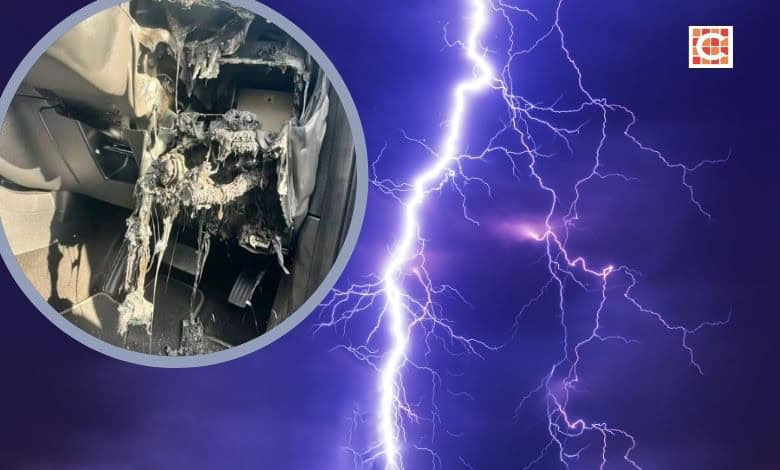
A sudden lightning storm at God’s Window on the Mpumalanga Panorama Route injured a curio seller and her daughter and damaged 25 vehicles, including one with a melted dashboard, raising questions on social media about how safe cars really are during lightning strikes.
An article about the severe lightning and the damage it caused, originally published by Lowvelder and shared by Caxton Network News across Caxton Local Media’s Facebook pages, resulted in numerous questions from members of the public – many of who believed that vehicles are safe during lightning strikes due to their rubber tyres.
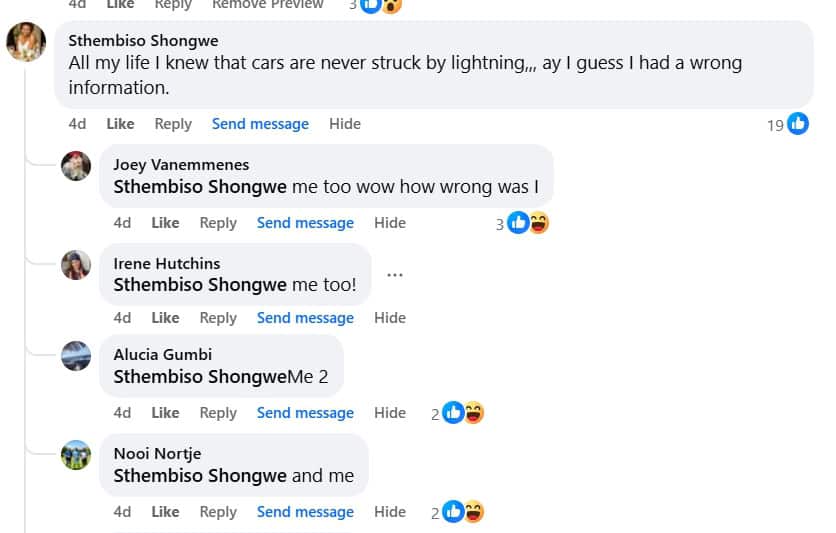
However, this is not true. It’s not the tyres that keep you safe.
In an interview with Caxton Network News, Hugh Hunt, a senior lecturer at the Johannesburg Lightning Research Laboratory at the School of Electrical and Information Engineering at the University of the Witwatersrand, stressed that being inside a vehicle during lightning is one of the safest places you can be.
This is due to the Faraday cage effect. A car’s metal frame acts as a Faraday cage, conducting the electricity around the outside of the vehicle to the ground. In essence, the tyres do not provide protection; it’s the metal shell that keeps you safe. That said, the vehicle can still sustain damage to its electronics and exterior.
“While being in a vehicle is one of the safest places to be, nowhere is 100% safe from lightning,” said Hunt.
A photograph of one of the vehicles damaged at God’s Window showed how the dashboard was melted by lightning.
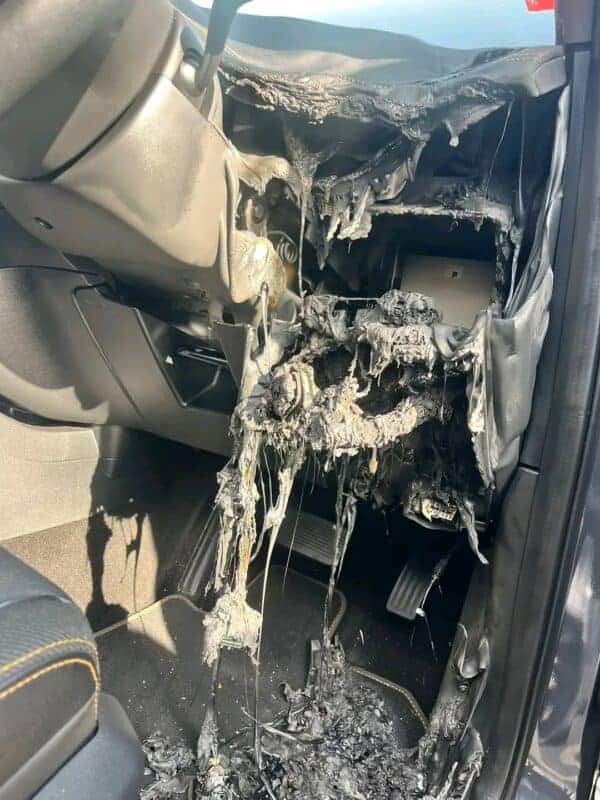
Hunt explained that modern cars, which often have more plastic and fewer metal components than older models, can sustain interior damage during a lightning strike. In rare cases, electrical surges caused by the strike can generate enough heat to melt parts such as the dashboard, even though the car’s metal frame generally protects passengers.
But whether lightning damage to cars is increasing due to how modern vehicles are made has not been proven.
Hunt explained that with more people being able to take photographs and videos and post them on social media, it could just be that more of these cases are being documented, and the public is becoming more aware.
People inside a vehicle can be harmed
Morne Gijben, lead scientist: remote sensing at the South African Weather Service, told Caxton Network News that you are not completely safe inside a car when there is lightning activity, but reiterated that you are much safer inside a car than you are outside.
In most cases, lightning discharges safely through the metal frame of a car and dissipates through the ground. However, there are instances where occupants can be harmed or the vehicle can be damaged, he said.
“Electrical components may be damaged or destroyed, external damage to the body of the car may occur, damage to windows and tyres, as well as burning or melting of the interior or engine compartment plastics or flammable materials can occur,” he added.
Gijben explained that occupants of vehicles could be harmed in several ways. “The most likely is by touching metal parts of the vehicle, such as the metal frames of the windows and doors. In addition, if an occupant comes into contact with electrical components, especially plugged-in electronics, it may result in electrical shock or burns.”
Gijben said the most likely damage to cars would be to the electrical components. “Lightning can result in enormous electrical surges through the car’s wiring, and this can damage or destroy components such as computers, sensors, batteries, alternators, lights, infotainment and various other components.”
In terms of external body damage, there could be some burn marks, pitting of the metal or melted paint. “This is due to the intense heat generated by the lightning discharge on the vehicle. The most common areas are where the lightning discharge entered or exited the vehicle, such as the roof, antenna and tyres,” he explained.
When it comes to the tyres, since the lightning discharge mostly exits to the ground through or near the wheels, the intense heat can result in the air inside the tyre rapidly heating up, causing a pressure spike that may result in a burst tyre, or the discharge may burn or melt the rubber.
“If a lightning discharge enters the wiring of a car, the surge may produce large currents that travel through the wires. Apart from damaging the electrical components, the large currents can also superheat the wires. These wires are often in the vicinity of various plastics or flammable materials. Plastics may melt and burn when exposed to high temperatures. This is especially true in the dashboards or engine bay of a vehicle where there is dense concentration of wiring,” said Gijben.
The windows could also crack or break. “Lightning strikes produce large shockwaves which may result in glass cracks or shattering, and even the rapid heating of metal frames.”
What likely happened to the cars at God’s Window?
Gijben said that during an intense thunderstorm, multiple lightning strikes can hit the same general area, such as a parking lot in the God’s Window case.
“Lightning can either directly strike a vehicle; there can be a side flash from a nearby object, such as a tree, pole or car; and through ground currents whereby the current propagates through the ground after the strike.
“In the case of ground current, lightning could affect multiple vehicles close together, especially when the ground is wet. As such, in this instance, lightning could have damaged the cars parked close together through a combination of the direct strike/s, side flash and ground currents,” he said.
The Faraday cage and Benjamin Franklin
While the Faraday cage is named after scientist Michael Faraday, the idea behind it came from Benjamin Franklin, the man famous for flying kites during thunderstorms.
Watch: What is a Faraday cage? Video: Radwell International/YouTube
Watch: Faraday Cage at the Spark Museum in Bellingham, Washington. Video: Mike Mullins/YouTube
What are the safest vehicles to be in during a lightning storm?
According to Gijben, fully metal-bodied vehicles are the safest, offering excellent protection to passengers.
“Convertible cars with soft tops (up or down) and motorbikes are very high-risk vehicles during lightning since this exposes occupants to direct lightning strikes, with no continuous enclosed metal structure.
“Vehicles made from carbon-fibre or fibreglass offer poor protection due to the non-conductive body, while partially metal vehicles with certain fibreglass, plastic or aluminium panels may also be vulnerable.”
Be safe during lightning
Lightning safety should always be practised, said Gijben.
“Although vehicles are not as safe as substantial shelters such as houses, offices or school buildings, they are much safer than being outside or in a location which is not safe.
“For vehicles, as with buildings such as houses, there are still risks. In buildings, there are also risks of damage to electrical equipment, fires or even physical damage, while people could also be at risk if they touch electrical components, take showers, etc. It is therefore important for the public to always adhere to lightning safety principles during thunderstorms to keep safe.”
Prof Ryan Blumenthal from the Department of Forensic Medicine at the University of Pretoria provided the following lightning precautions:
- All building structures (especially thatch structures) should have a lightning conductor near but not touching the building.
- Stay indoors during a thunderstorm, and if you are travelling, stay in the vehicle. Remember that a motorbike is not an enclosed area. Your open stoep with the metal roof is also not an enclosed area. Don’t continue the braai or keep chatting because you think you are safe under the open roof. When thunder roars, go indoors to a fully enclosed structure.
- When indoors, try to stay away from corded electrical appliances. It is a good idea to unplug electrical appliances when you hear thunder rumble. Surge protectors are advised for expensive electrical equipment.
- It is advised not to use a corded phone. Cellphones, iPods and cordless phones are safe.
- Bathing is considered marginally safer than taking a shower during a thunderstorm (the risk is touching running water or plumbing).
- If you are caught in the open, seek shelter in a fully enclosed building. Avoid hilltops and do not shelter under lone trees nor in isolated sheds.
- Avoid swimming or boating during a thunderstorm. Get out of the water immediately if thunder occurs – especially if lightning and thunder are 30 seconds apart or less. Wait at least 30 minutes after the last lightning or thunder before resuming activities.
- If you are in the open playing sports, fishing, playing golf, soccer or rugby, seek any fully enclosed shelter. Discontinue the match and go indoors until the storm is over.
Breaking news at your fingertips… Follow Caxton Network News on Facebook and join our WhatsApp channel.
Nuus wat saakmaak. Volg Caxton Netwerk-nuus op Facebook en sluit aan by ons WhatsApp-kanaal.
Read original story on www.citizen.co.za

