
Limpopo entrepreneur turns sanitary pads into a force for change
From making sanitary pads to helping rescue girls from child marriage and female genital mutilation, Lindiwe Nkuna-Kgopa is creating opportunities for women and girls across Africa.
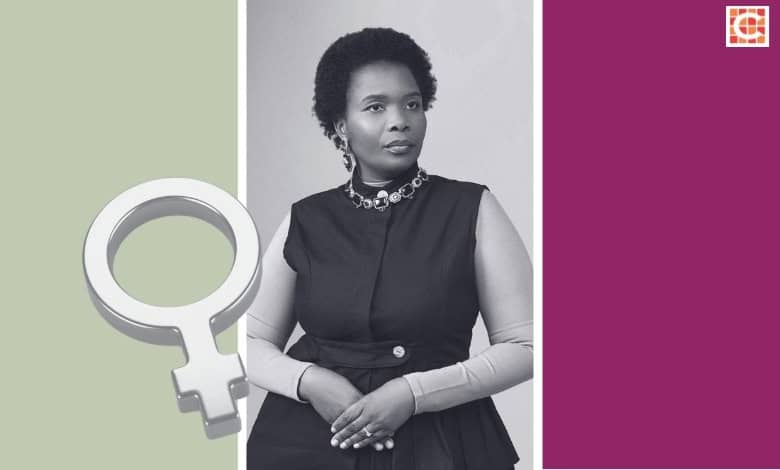
Inspired by a speech 11 years ago, Limpopo-born entrepreneur Lindiwe Nkuna-Kgopa set out to build Lindiwe Sanitary Pads (LSP) from her kitchen with no manufacturing experience, factory, capital, or clients.
Recalling the event, Nkuna-Kgopa says the speaker noted that South Africa had never had a female president and that no woman had ever owned a sanitary pad factory on an industrial scale.
“The room moved on. I never did. The only relationship I had with pads was the ones I wore. But I couldn’t unhear what she’d said: That an entire industry, built entirely on women’s bodies and sustained by women’s needs, was still closed to women’s ownership,” she explains.
Nkuna-Kgopa adds that she refused to leave that gap for someone else to fill and decided she would be the one to close it, learning manufacturing as she went.
Today, she has a 4 000m² production facility in Centurion. The business produces SABS-compliant sanitary products for retailers, wholesalers and South Africa’s National Sanitary Dignity Programme, which provides free sanitary products to indigent women and girls.
It is recognised as Africa’s first large-scale sanitary pad manufacturing facility owned and operated by women.
Breaking barriers and scaling across Africa
The company employs 36 full-time staff and an additional 93 workers during peak times.
“The majority of my employees are women from previously disadvantaged communities. We have a production capacity of 800 pads per minute; the facility combines advanced manufacturing technology, integrated quality control and a near-zero-waste production system,” Nkuna-Kgopa explains.
Under her leadership, LSP products are available in 11 other African countries, including Zimbabwe, Zambia, Mozambique and Tanzania through a partnership with Young Women of Africa (YWoA).
Through government partnerships and its ‘Buy to Donate’ initiative, the company provided more than 100 000 schoolgirls with a year’s supply of sanitary pads in 2026.
Her journey has not been an easy one, however.
“There was a time when our accounts were empty and suppliers were literally at the door. I sat in my car outside the factory I had built from nothing, watching my team watch me. Building through moments like that costs you something you don’t always show people.
“I have had to learn the hard way that you cannot build something unbreakable while you are breaking inside. So, alongside the business decisions, I built myself a personal board of advisors and started seeing a therapist, because resilience isn’t a performance, it’s a practice, and I needed support to keep leading well,” says Nkuna-Kgopa.
Securing capital on the factory floor
In that moment, Nkuna-Kgopa says she made a choice – not just to survive, but to win.
She explains that, rather than simply approaching Absa or the Industrial Development Corporation (IDC) for help, she invited senior representatives from both institutions to visit the factory.
“I stood on our factory floor with nothing but nerve and a strategic plan, and we walked away with working capital from Absa and both working capital and capital expenditure funding from the IDC. What kept me going was refusing to let that moment be my ending. I will always be grateful to our funders.”
For Nkuna-Kgopa, her greatest reward is seeing the impact of her work reach further than she had ever planned.
“Watching a woman on our production floor grow into a leader, watching a schoolgirl stay in class because of our Buy to Donate programme, watching women access our products through our partnership with YWoA… that reward means more to me than any award.”
She adds that through the partnership they have helped women launch and own their own sanitary pad brands in their countries.
“This shifts the entire economic relationship from dependency to ownership. With the YWoA partnership, we also participate in programmes that rescue girls from genital mutilation, pull child brides out of forced marriages and into safe shelters and schools and fight the school absenteeism caused by period poverty – country by country, girl by girl, community by community.”
Nkuna-Kgopa says they aim to get into every country where YWoA is active.
“History has been rewritten – and a woman held the pen. We were never meant to be anything more than consumers in this industry. We are now owners, innovators and industry leaders, and that was never an accident. It was a choice that was made deliberately by myself, the stakeholders and all the women that walked the journey with me in making this vision a reality.”
Transforming the market and sector
She adds that access to funding is one of the biggest barriers women entrepreneurs still face in South Africa.
“Access to funding that actually fits how women-led businesses grow – patient, appropriately structured capital, not just short-term loans. Manufacturing in particular is capital-intensive, and 95% of South Africa’s menstrual economy is still controlled by multinational corporations, with most of the remaining locally-owned factories run by men.
“A woman I admire once told me, ‘You are not free until every woman behind you is free, so climb and pull.’ That’s the barrier and the responsibility in one sentence: We still have to fight for the table, and then work to widen it for the next woman,” Nkuna-Kgopa explains.
She adds that when she launched her businesses, the idea of a woman owning a large-scale sanitary pad factory in Africa wasn’t even on the table. Instead, it was a sentence a room could hear and move on from.
“Today it’s a reality, and government procurement budgets are now specifically earmarked for female-owned suppliers. That shift is real. But attitudes on the factory floor and in supplier negotiations haven’t moved at the same pace as the public recognition has. We still have to prove ourselves twice over in rooms where our male counterparts are assumed capable by default.”
Nkuna-Kgopa adds that most retailers are still not transformed when it comes to localising the procurement of sanitary pads.
“We need retailers to prioritise sourcing sanitary pads from local manufacturers.”
Accolades
She has been recognised by platforms including Forbes Africa and the Presidential Black Industrialist Excellence Awards, and most recently she received the 2026 Veuve Clicquot Bold Woman Award.
As Women’s Month is celebrated, Nkuna-Kgopa wants to remind women that history doesn’t wait for permission.
“Eleven years ago, a room full of women heard that we didn’t exist in this industry. Today we do. Women’s Month is a challenge to keep widening the door for the woman coming after me, the way it was widened for me.”
Breaking news at your fingertips… Follow Caxton Network News on Facebook and join our WhatsApp channel.
Nuus wat saakmaak. Volg Caxton Netwerk-nuus op Facebook en sluit aan by ons WhatsApp-kanaal.
Read original story on www.citizen.co.za