
Most provinces in the grip of the fourth wave
Nine provinces in South Africa have essentially reached the fourth wave of the Covid-19 pandemic, as travel is expected to increase this festive season.

This according to Minister of Health, Dr Joe Phaahla, while updating the media on South Africa’s Covid-19 fight as the country heads towards the second Christmas and New Year festive period, while in the middle of the pandemic.
“We hope that today’s (Friday) briefing will provide all of us with a context of the extent of the challenges we face, how government is trying to make sure that we can help those who will require medical assistance as a result of the pandemic. But more importantly, how we can work together to make sure that we have a safe festive season under pandemic conditions.”
He said the country’s fourth wave was driven by the Omicron variant, which had continued to spread rapidly across the world.
“Last week we mentioned that the variant had been detected in 57 countries, and today the World Health Organisation reports detection in 76 countries.
“In our country, all nine provinces are essentially in the fourth wave, although the Northern Cape is technically just about to enter fully.”
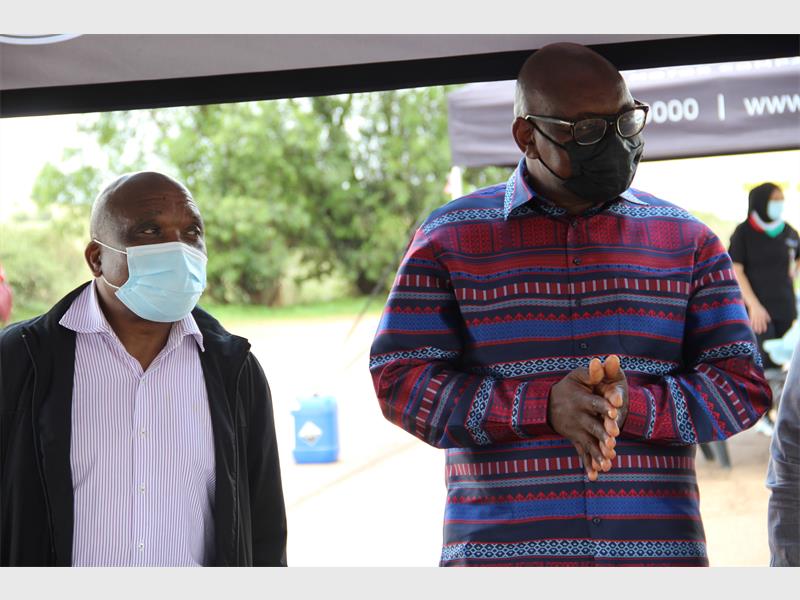
He said Gauteng was still reporting the highest number of new cases per day.
“The numbers have risen rapidly in the coastal provinces and in all nine provinces resulting in Gauteng accounting for 25% of new infections yesterday compared to 70-80% of cases 7-10 days ago.”
He said the number of cases in the fourth wave had exceeded the peaks of the 3rd, 2nd and 1st waves with a weekly average new infections of more than 37/100 000 of population while the peak of 3rd wave was about 33/100 000, 2nd wave 32/100 000 and 1st wave 21/100 000.
“The positivity rate has also risen steeply across the country with yesterday’s average of 31% positive.”
Phaahla said eight provinces recorded positivity of 30% and above, with only Gauteng below 30% at 25%.
“In the last seven days, new cases have increased by 36,6%. Eastern Cape, Free State, KwaZulu-Natal, Western Cape, and Northern Cape have shown more than 100% increase in daily new cases compared to seven days earlier which confirms a rapid increase nationwide.”
Phaahla said hospitalisation were also seeing a significant rise.
“Over the last seven days there has been a 70% rise in admissions, even though total admissions as of yesterday were still low at 7 614.”
He said although there was a rapid rise in hospitalisation, majority were mild.
“In terms of case numbers and percentage of testing positive, we are seeing a decrease in Gauteng, and early indications suggest that the peak has been reached, but there is rapid increase in the other provinces.”
He said however, the mildness of disease may not necessarily mean that the virus is less virulent, but could also be due to the significant vaccine coverage of over 60s at 66% and over 50s at 61% and national adult coverage of 44%.
“We are very worried about the drastic decline in uptake of vaccines, especially in the last 7-10 days, with daily doses average between 100 000 to 130 000.
“The Covid-19 virus is still going to be with us for a long time and the only way to reduce its power with a possibility of permanent defeat and a return to normal life is vaccination and compliance with prevention and treatment protocols at all times.”
Read original story on rekord.co.za

