
SA anti-apartheid hero honoured in Wales
The city of Cardiff, Wales, recently paid tribute to a Pietermaritzburg struggle stalwart, for his continued commitment to South Africa's liberation struggle, even after fleeing his homeland.
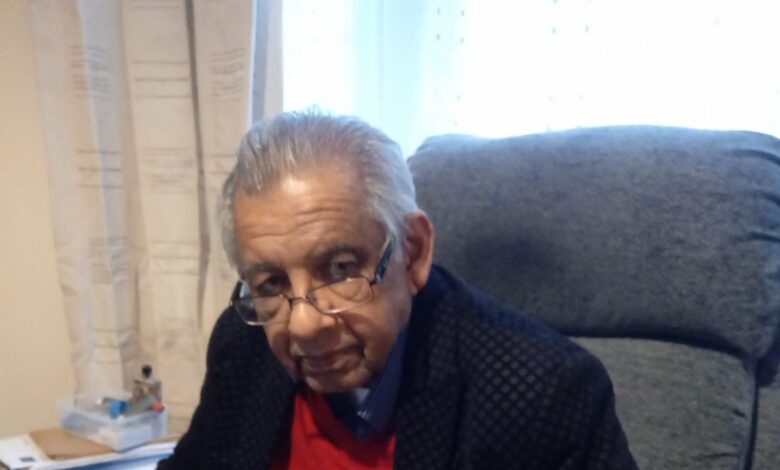
Considered a ‘giant’ of the struggle, Mohamed Hanef Bhamjee, who died in January this year, was honoured as an anti-apartheid hero with a memorial event in the capital city of Wales, where he lived for the remainder of his days after fleeing South Africa in the 1960s, due to his involvement in the ANC’s student wing.
Even 10 000 kilometres from home, Bhamjee continued to fight for the freedom of his homeland, setting up anti-apartheid movements in Cardiff, leading the city to acknowledge his immense contribution to the fight against apartheid. The memorial, organised by the Wales Anti-Apartheid Movement, was attended by over 100 people, with an address given by the First Minister of Wales, Mark Drakeford, at the Welsh Parliament building.
The British government had previously, in June 2003, awarded him an Order of British Empire (OBE) for race relations in recognition of his fight against apartheid.
Speaking at the memorial event, his younger brother, the former mayor of Umgungundlovu District Municipality, Yusuf Bhamjee, said, as a teenager, Bhamjee started political classes and study groups to educate people about the evils of apartheid.
“He inspired so many young people to campaign for the cause of justice and that, I think, is his legacy,” said Bhamjee’s younger brother.
He added that his brother had carved himself into the history of Wales, and South Africa, dubbing him a “true internationalist”.
Yusuf told Public Eye his family was ‘moved and deeply appreciative’ of the way his brother was recognised for championing social justice.
Born in Marikana, his family had to move to Wolmaranstad because racist policies prevented the Bhamjee siblings from attending school in the town. The Bhamjees then moved to Pietermaritzburg and opened a family-run business in the lower CBD. Exposed to injustices from an early age, Bhamjee campaigned vigorously against the whites-only rule from as early as the age of ten.
He attended Nizamia Primary School and later Woodlands High School. He was one of the youngest legal activists at the time and was the leader and organiser of a strike against the principal of the school. He had the ability to influence colleagues and peers and recruited activists to join the struggle against white dominance.
His political activism did not escape the attention of the apartheid state and he was monitored and harassed by the Special Branch. In 1966, he was forced to flee the country because of his involvement in the student wing of the ANC. He initially went to London, then to Birmingham and, finally, settled in Cardiff.
In 1982, he established the Wales Anti-Apartheid Movement in Cardiff, which he ran from his home with the help of volunteers. After many years, the movement was succeeded by Action for Southern Africa Wales. These movements campaigned strongly for an end to racism, colonialism and apartheid in South Africa.
Kapil Maharaj, who was one of the members of Bhamjee’s study group, said Bhamjee held study groups every Sunday morning.
“We were all about 13 and 14 years old and I was the only one from M L Sultan School to join the recruits from Woodlands High School. What we didn’t know was that Hanef was also involved in different cells at Sobantu, Albert Falls and Eddels Sports Club,” Maharaj said.
Maharaj added that Bhamjee insisted they read newspapers everyday to keep up with national and international news. “Before the start of each study group meeting, we discussed the news, followed by discourses on policies such as socialism and communism,” Maharaj recalled.
He recalled the last meeting he attended before Bhamjee fled the country, wherein Bhamjee had encouraged them to carry on with the struggle.
Another member of the study group, Dr. K V Moodley, told Public Eye he and Bhamjee had been friends since Standard 4 (Grade 6). Moodley said that in 1960, they established the Natal Indian Youth Congress (NIYC), with Bhamjee elected as chairperson, while he served as the secretary.
Besides the study groups, Moodley said they embarked on pamphlet drives at schools and painted slogans on billboards. After one of the pamphlet drives, Bhamjee was detained and was closely monitored by the Special Branch on his release. This is what forced him to leave the country.
Read original story on capitalnewspapers.co.za

