
Seal attacks in Plettenberg Bay
Several bathers, kayakers and other water users have reported attacks by seals this month.
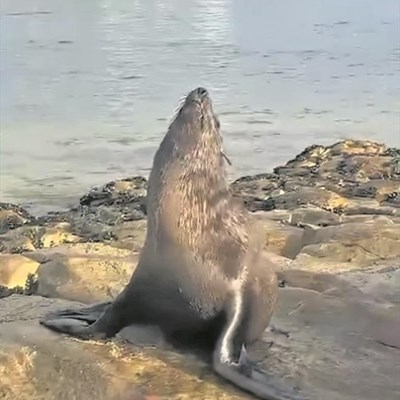
A thorough prevention plan has been put in place in Plettenberg Bay in the Western Cape by various role players following several seal attacks on beachgoers along local beaches.
Although there is no certainty at this stage, the animals’ behavioural issues are believed to have been caused by marine conditions.
Experts have urged beachgoers not to panic and to heed the warnings of authorities.
“We have good systems in place to keep people safe, which is a priority,” says marine scientist Dr Gwenith Penry.
In the week leading up to January 13, several bathers, kayakers and other water users reported attacks by seals.
One incident was quite severe and involved a man who suffered lacerations to his leg after being bitten by a seal near Central Beach. Other reports came from along Robberg beaches.
There were also reports of an adult female seal acting strangely – hitting its head on the rocks – just before it died. It has not yet been confirmed if the incidents are related.
CapeNature’s senior marine ranger Chanel Visser says it was initially thought that the animal was in distress after swallowing a fishing lure or had become entangled in fishing gear.
Upon closer inspection, some fishing line was loosely bound around one of its flippers. Visser later did a necropsy and no evidence was found that she had swallowed a fishing lure.
There were also no obvious signs as to why the seal died.
Algal bloom
Penry says the seals’ unusual behaviour could be related to an algal bloom.
Algal blooms are quite common at this time of the year – some of them harmful, others not.
“It could be that the seals are consuming fish carrying a toxin from an algal bloom, which is causing a behavioural response,” she says.
Most of the algal blooms along our coast are not toxic or harmful.
Penry explains that it is similar to shellfish poisoning in humans. “If we eat lobster or mussels and other shellfish that have been exposed to a harmful algal bloom, we get sick.”
She says in animals, the algal bloom could cause the animal to feel unwell, stop eating and die of toxicity.
“We haven’t confirmed that these recent incidents are definitely from a harmful algal bloom, but evidence is pointing that way.
“It is very difficult to test for and requires analysis of fresh brain and urine samples, which we only get if the animal dies.”
Penry says the algal bloom will pass.
“We often have them, especially during upwelling [when deeper, colder ocean water rises to the surface] caused by easterly winds.”
Precautionary measures
Penry says that as a precautionary measure, local lifeguards and shark spotters will be monitoring the areas for seals ‘overlapping’ with bathers. “Swimmers will be pulled out of the water should seals be spotted in the vicinity.”
Over and above these authorities, the National Sea Rescue Institute, Bitou Municipality and medical professionals know about the incidents and are ready to assist where necessary.
Visser says that should anyone be bitten by a seal, it cannot be treated with normal antibiotics.
“There is a lot of bacteria in their teeth and mouths and [a seal bite] requires treatment from a medical professional.”
Local seal diving operators also have strict protocols in place before allowing anyone in the water, including assessing seal behaviour.
“From the research community, we will be sampling dead seals that wash up and ensure that the correct samples are taken. This is to test for any possible toxins in their bodies relating to this unusual behaviour.”
Old video of seal attack at Cape Town’s Clifton Fourth Beach
The Knysna-Plett Herald reported on January 5, 2023, that a seal bit beachgoers at Clifton Fourth Beach earlier that week.
A video of the attack was widely circulated on social media following the incident – and has again resurfaced on social media platforms.
One of the people bitten during the attack was American actress Loulou Taylor, who posted on Instagram that ‘the ocean and its marine life need our protection’.
View this post on Instagram
At the time, the City of Cape Town’s Eddie Andrews urged residents to keep their distance from marine mammals and to not interfere with them.
“Residents and visitors are encouraged to treat all marine and coastal wildlife with respect and to remove their pets from areas where wildlife may be present.
“In the interest of the safety of beach users, as well as the animals, I want to kindly request residents and visitors to keep a safe and respectful distance from these animals,” he said.
Read original story on www.knysnaplettherald.com

