
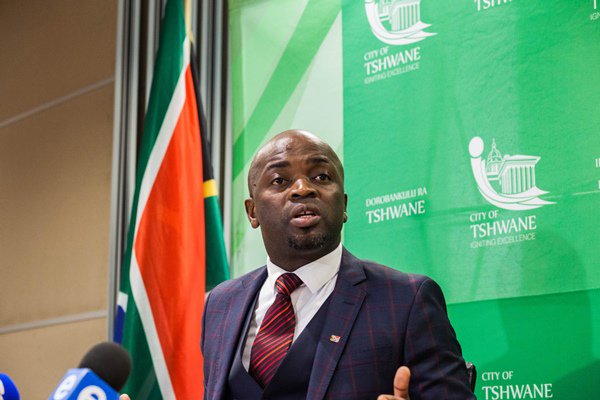
Solly Msimanga embraces scathing report blaming foreigners for lack of Gauteng resources
The Tshwane mayor’s spokesperson expressed concerns based on a report into the impact of migration on service delivery in Gauteng.
Compounding its problem of limited resources, Gauteng province continued to feel the strain on its public social services due to an influx of international migrants who entered the country’s economic hub through the country’s porous borders.
A new report found that Gauteng was not only saddled with having to accommodate internal migrants from the rest of the country, but it was getting overwhelmed by an influx of international migrants who have to depend on its health and education resources.
The scathing report is a joint investigation by the National Council of Provinces (NCOP) and Gauteng Provincial Legislature (GPL) into the impact of migration on service delivery in Gauteng.
The probe found that 47% of international migrants settled in the city of Johannesburg without valid documentation and placed a strain on its limited resources. Gauteng’s population is known to increase at the highest rate in the other country due to an influx of migrants from other provinces and foreign immigrants into the urban areas including squatter camps.
The contents of the investigation were revealed by Charity Moyo, spokesperson for the DAs Gauteng premier candidate Solly Msimanga’s campaign.
“This is placing a huge strain on the city’s infrastructure, as well as services such as Education and Healthcare,” Moyo said.
She said the influx of foreign migrants resulted in the province’s schools struggling to absorb the increasing number of applicants yearly. Moyo further revealed that Gauteng needed approximately 142 new schools to deal with the current demand – a number which does not take into consideration the yearly influx of new students into the province.
The report, which followed a joint visit by a group from the two institutions, found that Charlotte Maxeke Academic Hospital was the worst affected by the situation. The problem was attributed to the porous borders where illegal migrants crossed and when they got sick inside the country, they became the burden on the Gauteng health system – which was already crippled.
Moyo said uncontrolled immigration was putting strain on Gauteng resources like Maxeke because migrants were unable to pay for their bills while the health-care facilities were not enough to cater for additional patients.
“The hospital is forced to house undocumented foreign patients that have nowhere to go when they are discharged at a cost of R4,500 a day. Most of these patients are also unable to pay their outstanding bills; in the 2017/18 financial year, the Charlotte Maxeke Academic Hospital had to write off R1 billion due to unsettled debt,” Moyo said.
“It is clear that South Africa can ill afford not to secure its borders as uncontrolled immigration is violating the rights of the ordinary residents of this province who have to compete for services. This problem has been compounded by the widespread corruption within the department of home affairs which has led to a complete immigration system failure.”
Moyo accused the ANC government of being incapable of ensuring law and order, rooting out corruption and managing the real problems that Gauteng faced, instead only caring about enriching themselves.
“This is not what we were promised. We need leadership and change capable of ensuring equal access to opportunities for all South Africans,” Moyo said.
“The DA will fight corruption, fix the police force to be honest and professional, create fair access to real and long-term jobs, secure our borders and speed up the delivery of basic services.”
Read original story on citizen.co.za

