
Tshwane metro set for new direction after years of ‘chaos’
Political analysts weigh in on the political leadership of the Capital City over the past five years with just six months away from the local government elections.
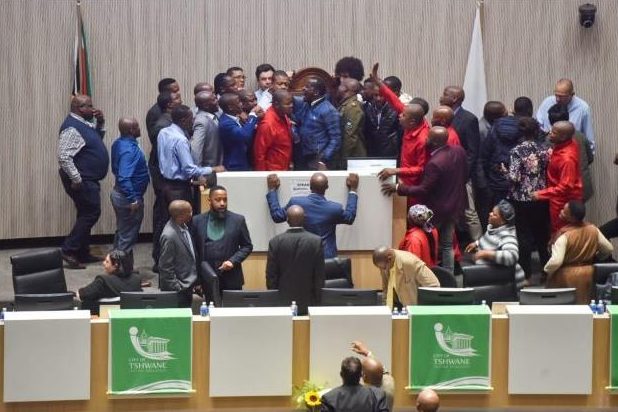
Tshwane metro, which was under the rule of the ANC for 22 years before a DA-led coalition took over in 2016, was set for new a political direction.
With failed coalitions, three different mayors and a seven-month-long administration, the political leadership in the metro have over the last five years been disruptive and chaotic.
Analysing the last five years of political leadership in the capital city, University of Pretoria’s Professor Tinyiko Maluleke said the instability in the metro’s politics could be attributed to several factors.
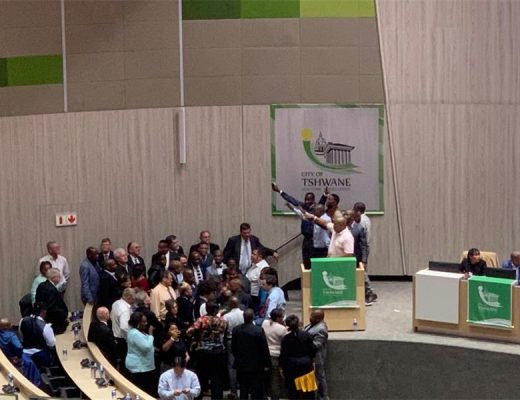
One factor was the battle over power and since the ANC lost power in the 2016 elections, no party received a clear majority votes.
Ahead of the local government elections, which President Cyril Ramaphosa scheduled for October 27, Maluleke said: “Had it been that the ANC lost and replaced (electorally) by one party obtaining a clear victory maybe the disruption could have been minimal.”
He said having no clear winner birthed chaos in the political landscape of Tshwane, leaving the metro in the hands of a coalition government for the first time in its history.
“While the voters may have hoped for the best by entrusting politicians to work together, I am not convinced that the parties were able to effectively work together for long to put the residents first.”
In 2019 and 2020, the metro saw several council meetings collapsing soon after the EFF national leadership withdrew from its informal coalition with the DA.
The collapsed meetings left the metro leadership in a state of limbo, with no city manager and mayor. This after DA’s second mayor Stevens Mokgalapa resigned in early 2020, following an alleged sex scandal.
“The experiment of (coalition governance between EFF and DA) soon floundered. The voters found themselves without any representation because there was so much in-fighting among the parties.”
Maluleke said the clashes in the metro which saw several council meetings collapsing had elements of the fight for control.
“The coalition eventually collapsed. The reasons for its collapse included issues around sexual misconduct, allegations that people were getting jobs without qualifications and calls for ousting of the mayor (Stephens Mokgalapa).”
Maluleke said the collapsed meetings led to the municipality’s main agenda of service delivery coming to a halt.
“They were supposed to pass ordinances but instead they were fighting. That is one disruption that was quite tragic.
“Tshwane needed leadership that could navigate the new territory of the coalition government having power and control handled by different parties,” Maluleke said.
“Each party wanted to get into power. It was no longer about service delivery – that’s what it felt like.”
Adding to the metro’s woes, Maluleke said, was the provincial government that also played a hand in the instability of the metro by dissolving it and appointing administrators in March 2020.
The DA opposed and fought the move in courts for months.
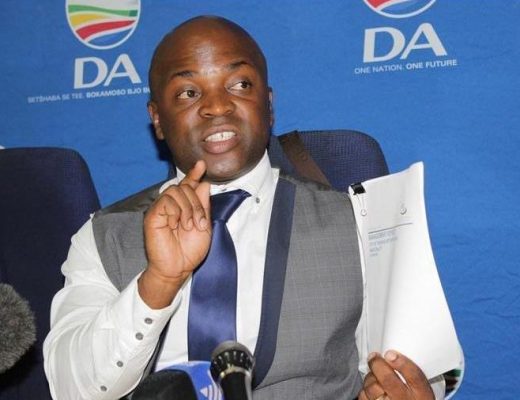
“The cost of the court battles and all on taxpayers were just too much,” he said.
Maluleke said both actions of the local government MEC (Lebogang Maile) and the different metro parties, showed that political parties only looked after their interests, hence the fight over control.
Maluleke said the seven months of administration created a gap in the metro’s accountability at a time government departments were engulfed in allegations of mismanagement over Covid-19 funds and supply chain procurements.
“Residents had no political leadership to help them manoeuvre this time due to the administration process. Political parties, administrators and MEC for Cogta were found wanting in this period.”
While things seem to have calmed down in the metro ahead of the local government poll set for October 27, Maluleke said the elections were important for Tshwane.
“Voters have learnt that a political party that wins an election is not immune to corruption and nepotism and coalition governance is not immune to political instability while wrestling for power.”
Maluleke described the Tshwane metro as a decaying city that needed prioritisation of service delivery.
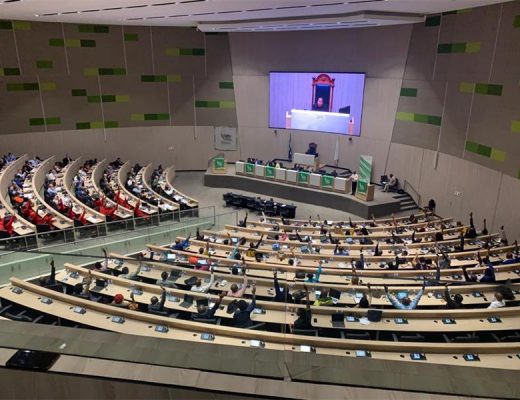
“This city is dying at the edges. Service delivery is pathetic for a capital city. The roads have potholes, there is lack of water and electricity in informal settlements, demolition of houses because of encroachment in the suburbs, and street lights have not worked for over two year.
“If you want to see the death of the city go to places like Olievenhoutbosch, Mabopane and Hammanskraal.”
Echoing Maluleke’s views, another political science professor at Unisa Dirk Kotze described the last five years of leadership in Tshwane as one full of “ups and downs… full of turbulence”.
Kotze said from its initial formation, the DA-EFF marriage had shown signs that there would be instability as the EFF did not want to formalise the coalition with the DA.
Kotze said the ANC was unable to convert itself to a new position of being an opposition party and through the years fought to get back in power.
“We saw the destabilisation of coalition governance through several motions of no-confidence, to see if they (ANC) could not take the power back.”
Kotze said the vacating of office by two DA mayors, Solly Msimanga and Stephens Mokgalapa, played a part in the instability in leadership.
“Because there was no majority party, each time they needed to vote for a new mayor, votes were sort of a trade-off (EFF and DA). The last one happened after Mokgalapa vacated office. That system failed, leading to the implementation of an interim administration.
“It has not been a good experience in Tshwane for political leadership.”
Kotze said the administration period was the worst experience for residents.
“I hope the province has learnt that this was the worst option and was detrimental to Tshwane residents who had no one locally to rely on during the seven months (under administration).”
Kotze said the councillors had little time to re-establish themselves.
He said the next elections were crucial for Tshwane residents to try and get more stable leadership.
“It is likely that we might have a coalition government again, hopefully, a more stable one.”
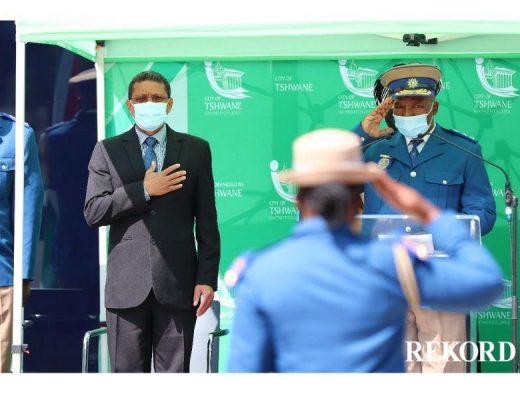
Kotze attributed this to the ANC having lost voting support over the last two years while the DA remains the biggest opposition.
“It will be interesting to see if this pattern will change but I doubt there will be dramatic changes.”
Following the “disastrous tenure” of the administrators, the DA’s Randall Williams took office as mayor.
Since 2018, the Tshwane metro has not had a permanent city manager following the cutting of ties with former city manager Dr Moeketsi Mosola after an alleged irregular R12-billion tender awarded to an engineering firm, Glad Africa which was later cancelled.
Read original story on rekord.co.za

