
WATCH: All eyes on Mboweni’s emergency budget speech at 3pm
Cigarettes and alcohol could be taxed further to make up for losses due to the Covid-19 crisis.
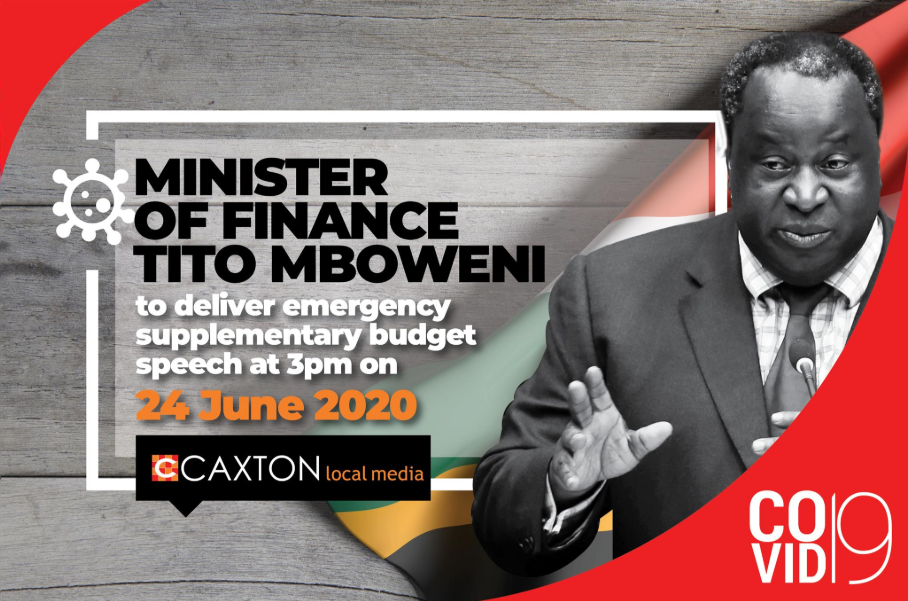
Finance Minister Tito Mboweni this afternoon will deliver his emergency supplementary budget which will focus on cutting back government spending because of the effects of the Covid-19 crisis.
It’s likely new taxes will be levied to make up for lost revenue, and government has a lot of gaps to plug.
President Cyril Ramaphosa, in his weekly letter to the nation on Monday, has already warned that South Africans should brace themselves for a tough new budget.
Speaking to the economic devastation that is following in the wake of the Covid-19 pandemic and the resultant lockdowns, the president acknowledged that there “are tough times ahead”.
Referring specifically to Mboweni’s budget, Ramaphosa said: “Revenue has plummeted and difficult decisions will be made in the coming weeks and months as we seek to reprioritise our programmes, manage public spending and scale back on projects where necessary.”
Speaking to Moneyweb’s Nompu Siziba on the SAfm Market Update last night, Bernard Sacks of Mazars, said that it would be difficult for the minister to raise taxes across the board in light of the severe strain the lockdown has placed on businesses and individual income.
Sacks previously served as Deputy Director in the Cape Town office of the South African Revenue Service (SARS).
With an expected tax shortfall for the year of R285 billion and counting, the income derived from sin taxes has been placed squarely in the spotlight with the banning of alcohol and cigarettes during the country’s lockdown.
“By my calculations – and I may be out a little – the government is losing about R1.2 billion per month on the excise duties related to tobacco products alone, as well as a further R300 to R330 million in VAT on those tobacco products.
“So, collectively, in excess of R1.5 billion per month is being foregone by the fiscus. We know that many smokers are finding their cigarettes somewhere else,” Sacks said.
The somewhere else – the informal sector – generally operates outside of the tax net and so the likelihood of taxes on the profits being paid is low.
“So the ordinary trading income that the cigarette manufacturers would pay tax on, and that the cigarette retailers would pay tax on is, is simply not being taxed.
“Apart from the R1.5 billion, there is the taxable income that’s most unlikely to be accounted for to SARS.
“On the alcohol side, it’s probably about double that for the period during the total ban. We don’t yet know to what extent sales will take place on the retail side, because we know that the on-site consumption is still not permitted, and that of course was also a big money spinner both for the excise duty and VAT, as well as for the corporate profits,” he said.
Looking at the budget, Sacks said it likely that the minister would be revising his income downwards and certain expenditures, such as healthcare for example, upwards.
“There are going to be enormous increases in the healthcare expenditure. We’re only almost at the beginning stage of many provinces’ upward curve. And so there’s going to be a lot of healthcare expenditure still to come.
“There’s going to be a lot of expenditure in the water and sanitation area. I believe in education there’s going to be a lot more expenditure to enable and facilitate learners to be able to complete their year with a minimum of disruption. And there’s going to be a whole new way in which learning will have to take place.”
You can watch the minister’s speech here or on the following channels:
DSTV: Parliamentary channel 408
Twitter: https://twitter.com/ParliamentofRSA
Facebook: https://facebook.com/ParliamentofRSA
YouTube: https://www.youtube.com/ParliamentofRSA
Notice: Coronavirus reporting at Caxton Local Media aims to combat fake news
Dear reader,
As your local news provider, we have the duty of keeping you factually informed on Covid-19 developments. As you may have noticed, mis- and disinformation (also known as “fake news”) is circulating online. Caxton Local Media is determined to filter through the masses of information doing the rounds and to separate truth from untruth in order to keep you adequately informed. Local newsrooms follow a strict pre-publication fact-checking protocol. A national task team has been established to assist in bringing you credible news reports on Covid-19.
Readers with any comments or queries may contact National Group Editor Irma Green (irma@caxton.co.za) or Legal Adviser Helene Eloff (helene@caxton.co.za).
Read original story on citizen.co.za

