
Welcome to the wonderful world of books
World Book and Copyright Day – celebrated on April 23 – is an annual event organised by the United Nations Educational, Scientific and Cultural Organisation to promote the enjoyment of books and reading.
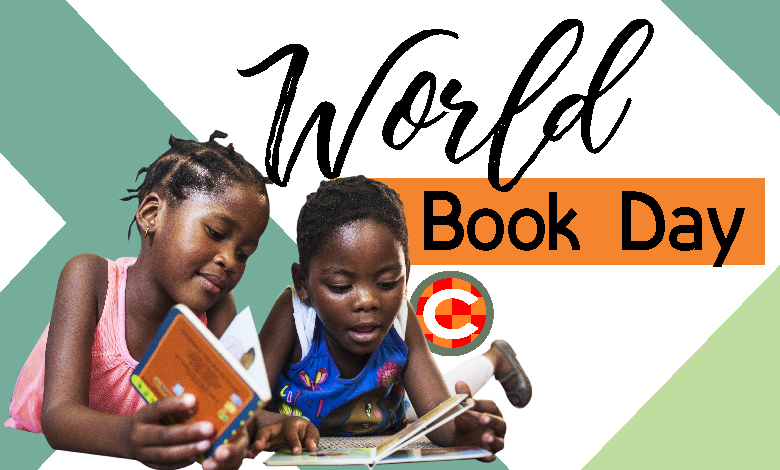
Reading opens up new worlds. It gives us power – to learn new things, tell our own stories, and shape our futures.
“As parents and caregivers, we all want to see our children succeed,” says Sally du Preez, the communications manager at Nal’ibali, a national reading-for-enjoyment campaign for children.
“We want to see them doing well in school and, ultimately, having fulfilling, lucrative careers. But did you know that if you want to give your children a great head start in life and properly unlock their potential, you need to start early, and with stories?”
More than just a story
The evidence is overwhelming: When children are exposed to well-told stories in languages they understand, they are more motivated and better equipped to learn to read and write for themselves. “Children who read regularly for pleasure, perform better in the classroom, not just in languages, but in all subjects,” Du Preez says.
Starting early
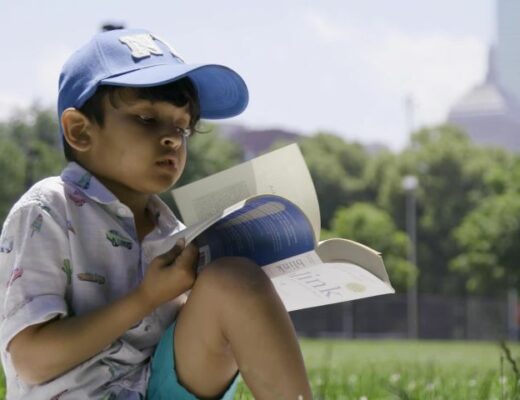
“We know from research, that the first five years of life are the most significant for brain development. This is the time when the majority of children’s language and other development takes place. Laying a strong foundation of language – especially in the mother tongue – is essential to children’s success in school,” she says.
Du Preez says the ability to think and reason is cemented in language, and this goes for maths too. People tend to think of mathematics as numbers and forms that are separate from language, but maths taps into the same pathways in our brains that enable us to talk and read.
It stands to reason then that if language is weak, so too is the ability to learn. And, she says, because the foundation of language is set before children reach Grade R, caregivers need to start regularly reading and sharing stories with children as early as possible.
The importance of mother tongue
By building a solid foundation of language in a child’s mother tongue, caregivers are providing their children with a strong base from which to learn another language and to better understand complicated school concepts later on.
Children who know their mother tongue well are better able to manage the transition to English as the language of instruction in Grade 4.

How to read with young children
You don’t have to be a good reader to read with young children: Just do it!
- Choose the same time each day to read, such as bedtime. Snuggle up close and enjoy the bonding experience.
- Make it fun: Use different voices and get your child to participate.
- Let your child be the leader, and you follow: Talk about the pictures that interest him/her and ask questions.
- It’s never too early to start reading with your child; you can read with babies too!
Why children need books in the home
- Research shows that the more books children own, the better their chances of academic success later.
- Books at home provide opportunities for families to read and continue the literacy practices started at school and reading clubs.
- Research shows that it’s good to give children choice when it’s time to read, because it helps them love reading when they can choose which book to read.
Read these kids’ books, say Nal’ibali!
- Free children’s stories in different African languages can be accessed on Nal’ibali’s website, www.nalibali.org, or by WhatsApping ‘stories’ to 060 044 2254. Or build your own mini-library with your children by collecting the cut-out-and-keep story books inside Nal’ibali’s reading-for-enjoyment newspaper supplements, available at select Post Offices. Find out more on the Nal’ibali website.
- Project Gutenberg is a library of over 60 000 free eBooks: www.gutenberg.org
Stories for reading aloud to young children:
- Snails have feelings too! by Lori-Ann Preston
- The big mistake by Desirée Botha
- Timi and the barber by Ndidi Chiazor-Enenmor
Stories to read together:
- The mirror in the Bushveld by Melody Ngomane
- Malusi and the bath monster by Leo Daly
Stories for independent readers:
- The magic paintbrush by Wendy Hartmann
- Prince Sugar and Awande the baker by Ayanda Hlatshwayo
* These books are available online, free of charge: www.nalibali.org/story-resources/multilingual-stories
When parents cannot read
Parents and grandparents who cannot or do not read themselves have an equally important role to play as those who do: Stories that are told orally contribute in a different but essential way to the growth of language and literacy, says Nal’ibali’s Sally du Preez.
Listening to stories grows children’s imaginations, curiosity, attention spans and vocabularies!
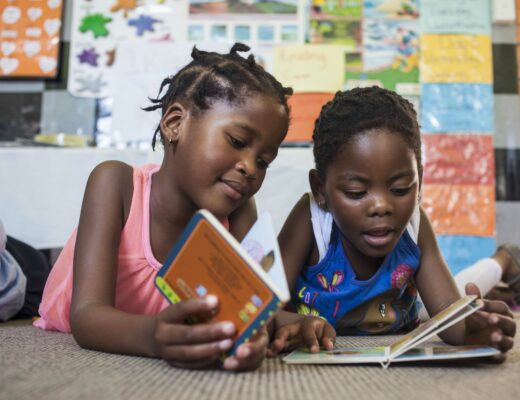
The state of literacy in SA
Nal’ibali says research show that:
- Only 14% of South Africans are active readers of books.
- Only 5% of parents read to their children.
- Around 85% of the population lives beyond the reach of a public library.
- 51% of households in South Africa have no leisure books.
- 78% of Grade 4 learners cannot read for meaning in any South African language.
How a reading culture could change the trajectory of our country
Nali’bali believes that when children can read, they can understand. When they can understand, they can learn. And when they can learn, they can do well in school, pass Matric and get a decent job – which grows our economy and lifts families out of poverty. A fully literate nation could boost the size of our GDP by 25%.
The positive effects of words, books and stories are so strong that they have a bigger effect on success than parents’ education level or income. Money-poor families can be language rich, and reading can change the life chances of a child born into poverty – and her entire family.
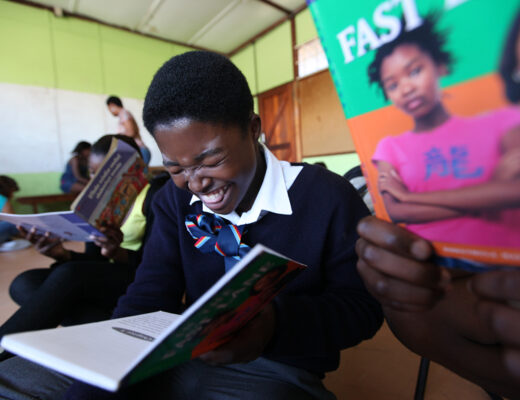
History of books
Before books, oral storytelling entertained and educated people. The earliest examples of ‘writing’ were impressions made on stone or bark to record numbers and other information.
The ancient Egyptians wove and flattened papyrus stems to create ‘pages’, which were used to make scrolls. This technique soon spread to other cultures and remained in use until the 8th century AD. Parchment from animal hides gained popularity too, because it was more durable. Messages were also scratched into wax layered on wood by the Greeks and Romans.
Around 600 AD, illustrations began appearing on parchment, and this was the beginning of picture books.
It is thought primitive paper was created in China in the 2nd century before common era (BCE), largely from hemp.
The oldest known fictional story that we know of is The Epic of Gilgamesh: a mythic poem from the early 3rd or late 2nd millennium BCE.
The Jikji: a collection of Buddhist Zen teachings, was printed in Korea in movable metal type a century before Johannes Gutenberg invented the printing press in 1454, which spread literature to the masses.
Record breakers
The best-selling book of all time is the Christian Bible. In the roughly 1 500 years since its contents were standardised, it is thought that between 5 and 7 billion copies have been sold.
The best-selling novel with independently verified sales is Fifty Shades of Grey by EL James. Combined sales for all editions tracked by the NPD Group and Nielsen Book Research was just short of 17 million copies as of November 2021.
The best-selling children’s book series is Harry Potter by JK Rowling, with sales of more than 500 million copies as of February 2018.
The most expensive book (private sale) ever sold is the 8th-century pocket gospel book St Cuthbert Gospel. Believed to be the oldest intact book produced in Europe, it was sold in 2012 for roughly R184m to the British Library.
The oldest publisher is Cambridge University Press, which has a continuous history of printing and publishing since 1584.
* Courtesy: Guinness World Records
Read original story on eyethunews.co.za

