
Young conservationist finds her calling among Kgalagadi’s lions
Driven by a lifelong passion for wildlife, a young conservationist is building hands-on experience in one of South Africa’s most remote and demanding conservation landscapes.
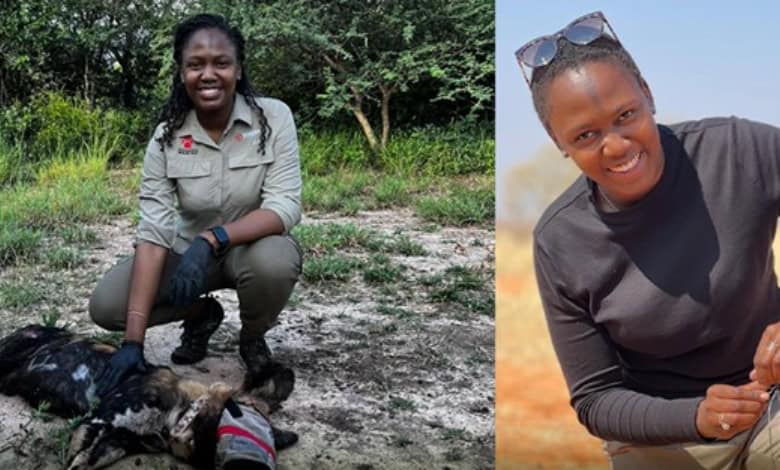
As Women’s Month highlights the contribution of women across South Africa, Endangered Wildlife Trust (EWT) field technician and Tshwane University of Technology (TUT) student Nonkululeko Makobong is monitoring free-roaming lions in the Kalahari Desert.
The EWT team returned to the Kgalagadi Transfrontier Park on August 1 for this year’s lion population census, a three-month project running until October 31, reports Pretoria Rekord.
The project is being conducted in partnership with SANParks, with support from the Lion Recovery Fund and private donors.
The Kgalagadi Transfrontier Park spans South Africa and Botswana. The monitoring project aims to determine the number of lions in the South African section of the Transfrontier Conservation Area, as well as their demographics and distribution.
According to EWT spokesperson Eleanor Momberg, the current team comprises four women and two men. It is led by EWT Carnivore Conservation Unit data analyst Alison Govaerts and project manager Marnus Roodbol, with field technicians Makobong, Lesedi Leope, Sabelo Mahlangu and Lizaene Cornwell.
Combining study with field practice
For Makobong, the work brings together her academic training, practical experience and passion for wildlife.
“I am constantly in Pretoria for a week every three months for my contact week at TUT, as I am currently enrolled for my Advanced Diploma in Nature Conservation,” she says.
Her path into conservation included practical training that gave her first-hand experience of working with wildlife in the field.
“My undergraduate education at TUT really gave me everything except a Leatherman knife that I had to get on my own. The diploma was the right intro into proper species and reserve management,” she says.
“For the last year of my undergraduate studies, I had to work a full year on a reserve to gain practical experience. That is when I worked with camera traps for the first time and conducted predator surveys. It really enabled me to become a great EWT field officer in the Kgalagadi,” she says.
Her work now extends across the Carnivore Conservation and Birds of Prey Units. Her field activities include collecting wildlife data, monitoring populations and contributing to landscape restoration efforts with local landowners.
Technology aids individual identification
The lion census relies heavily on technology and careful identification of individual animals.
In previous counts, teams used two methods to identify individual lions. They drove along narrow tracks through the veld while recording the kilometres travelled using a mobile tracking application on their smartphones, while looking for lions close enough to identify.
Because individual lions could be identified, researchers were able to avoid double-counting and build catalogues of prides and coalitions based on lions observed together.
The annual surveys are intended to provide a strong foundation for long-term monitoring.
Apex predators maintain ecosystem health
Momberg explains that understanding the population’s status and trends is central to national lion conservation planning and the management of the wider transboundary ecosystem.
“Lions play an important ecological role as apex predators. Monitoring their populations can help identify changes and potential threats while supporting management decisions. Their presence also helps maintain a healthy prey base and keeps medium-sized predator populations in check. Without lions, prey populations could risk overgrazing the landscape,” she says.
Beyond their ecological importance, lions also have economic and cultural significance, she says.
“They are a flagship species and a popular Big Five sighting for safari visitors. They also symbolise power, strength and leadership and are embedded in practices ranging from totems and clans to sports teams and spiritual and traditional customs.”
For Makobong, however, lions hold a more personal significance.
“Lions are a very powerful and mighty entity in the wild. I love how they naturally have a lot of respect from other animals in the ecosystem. They are incredibly beautiful animals and there is nothing more peaceful than listening to a lion’s roar outside camp when you are trying to fall asleep at night in the bush,” she says.
Breaking news at your fingertips… Follow Caxton Network News on Facebook and join our WhatsApp channel.
Nuus wat saakmaak. Volg Caxton Netwerk-nuus op Facebook en sluit aan by ons WhatsApp-kanaal.
Read original story on www.citizen.co.za

