Is your go-to automotive workshop accredited? Here’s how to tell
Always look for accreditation signs displayed when choosing a vehicle workshop, which tell you a great deal about the business standards.
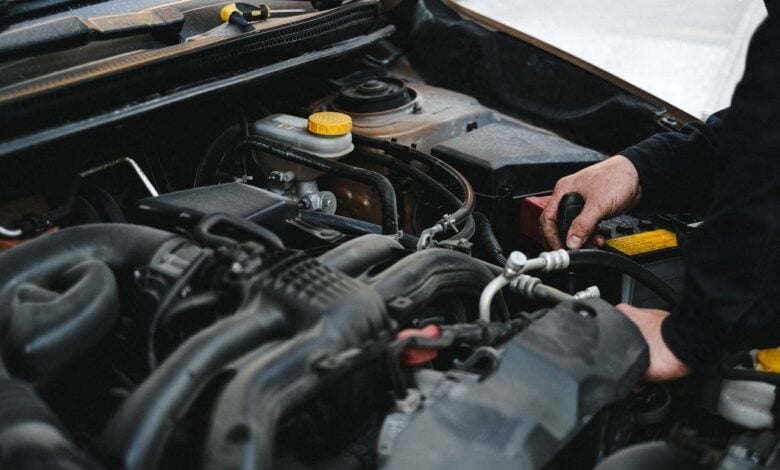
As a motorist, you invest a lot in your car, so choosing the right workshop should be simple and stress-free.
In an increasingly complex vehicle repair environment, accreditation provides motorists with reassurance that workshops meet recognised industry standards.
Most motorists give little thought to the signs displayed outside automotive workshops. Yet those signs can tell consumers a great deal about the standards a business operates under.
As vehicles become more technologically advanced and remain on South African roads for longer, choosing a workshop that meets verified standards is becoming increasingly important.
Why accreditation matters
Accreditation provides reassurance that the business servicing or repairing a vehicle operates within recognised industry guidelines and is accountable to an industry body. In a sector where quality workmanship directly affects safety and reliability, that small sign outside a workshop can offer motorists an important measure of confidence.
“Asking what accreditation really means is an important question consumers should be asking,” says Dewald Ranft, the chairperson of the Motor Industry Workshop Association (MIWA).
“When a workshop displays the insignia of MIWA, for example, it indicates that the business has met a defined set of industry requirements designed to protect both motorists and service providers.”
Ranft says this really becomes important when you consider MIWA’s independent workshops carry out in excess of 160 000 services monthly across the country.
“Trust is not something that should simply be assumed in our industry,” he says.
He explains that when a workshop displays the MIWA and Retail Motor Industry Organisation sign, it means the business has undergone a rigorous accreditation process. It operates according to strict industry standards, adheres to a very clear code of conduct and ethics and has signed a pledge to do business ethically and fairly.
Accreditation must be earned
Before any one of the 2 600 accredited workshops across South Africa can display the association’s MIWA insignia, it must first pass a detailed evaluation that examines every aspect of the business.
The assessment covers areas such as workshop premises, tools and diagnostic equipment, administrative systems, waste removal processes, occupational health and safety compliance and staffing qualifications.
Even elements like lighting, ventilation, parking facilities and general housekeeping are inspected.
“It is a comprehensive process because a professional workshop is about far more than mechanical skill alone,” Ranft explains.
Technical competence forms a critical part of the evaluation. Workshops must demonstrate that their technicians have the appropriate training, qualifications and practical experience to work on modern vehicles, many of which rely heavily on sophisticated electronics and advanced diagnostics.
Insurance and consumer protection also form part of the criteria. Accredited workshops must have guarantees and warranties in place and carry appropriate insurance, including cover for defective workmanship, to provide customers with additional peace of mind.
Importantly, accreditation is not a once-off achievement.
All MIWA members participate in an independent grading programme where workshops are assessed and awarded star ratings based on operational standards and service delivery. The system evaluates aspects such as tooling, administration, business facilities, housekeeping and occupational health and safety compliance.
“Grading creates a culture of continuous improvement within our network,” says Ranft.
Peace of mind for motorists
Most importantly, accreditation provides motorists with recourse should something go wrong. “If a customer has a problem with workmanship or service, they are not left to deal with it alone,” Ranft explains.
“The association provides a structure to assist with resolving disputes. The sign ultimately represents accountability,” concludes Ranft.
“It tells motorists that the workshop has been assessed, recognised and is committed to maintaining professional standards.”
Breaking news at your fingertips… Follow Caxton Network News on Facebook and join our WhatsApp channel.
Nuus wat saakmaak. Volg Caxton Netwerk-nuus op Facebook en sluit aan by ons WhatsApp-kanaal.