


Tiyani Hlungwani was responsible for overseeing transactions linked to the covert fund.
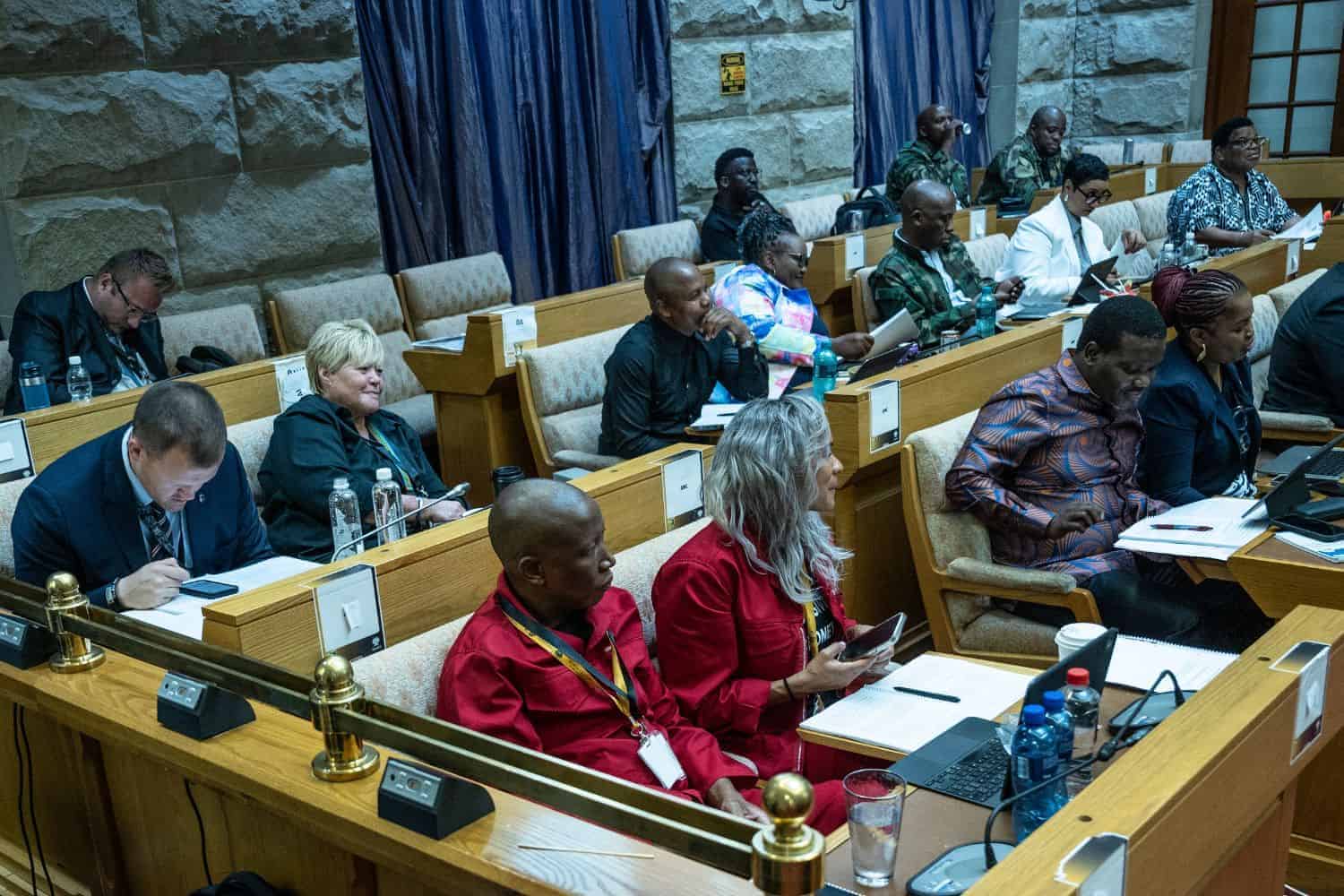
MPs during the parliamentary ad hoc committee inquiry at the Good Hope Chambers in Cape Town on 23 October 2025. Picture: Gallo Images/Brenton Geach


Former Crime Intelligence brigadier Tiyani Hlungwani returned to parliament on Thursday for his second day of testimony before the ad hoc committee investigating allegations by KwaZulu-Natal Police Commissioner Nhlanhla Mkhwanazi.
The hearings are being held at the Good Hope Chambers in Cape Town.
Crime Intelligence slush fund in the spotlight
Hlungwani told MPs on Wednesday that he believed he was forced out of Crime Intelligence in 2024 because he was an “obstacle” and stood in the way of those seeking access to the division’s secret service account, commonly referred to as the slush fund.
He previously served as the section head of finance and administration services within Crime Intelligence and was responsible for overseeing transactions linked to the account.
Central to Hlungwani’s testimony is his refusal to authorise an alleged request from former national police commissioner Khehla Sitole to withdraw R45 million from the secret fund.
The funds were allegedly intended for the South African Police Service (Saps) to acquire a surveillance “grabber” device.
Hlungwani claimed he declined to authorise the withdrawal after determining that the cost estimate for the equipment did not justify the R45 million sought.
He further alleged that Sitole had promised politicians that a portion of the money would be used to finance a faction at the ANC’s December 2017 national elective conference.
According to Hlungwani, former police minister Fikile Mbalula was the individual who allegedly asked Sitole to procure the grabber.
‘Occupational detriment’
Hlungwani testified that prior to his refusal to approve the withdrawal, “everything was fine”.
The former brigadier told the committee he has suffered “occupational detriment” post the ANC conference as he faced arrest and a fraud charge concerning a R50 000 payment from the slush fund.
In November 2023, Hlungwani was acquitted after applying for a discharge in terms of Section 174 of the Criminal Procedure Act.
READ MORE: Crime Intelligence boss explains why investigations into organised crime need to be different
That acquittal was later overturned when the Gauteng High Court in Pretoria upheld an appeal by the state in June 2025.
The matter was referred back to the Pretoria Specialised Commercial Crime Court for trial.
Hlungwani is reportedly appealing the judgment.
MPs probe timeline of criminal case
During Thursday’s hearing, MK Party MP Sibonelo Nomvalo questioned the sequence of events presented by Hlungwani.
Nomvalo pointed out that criminal charges had been laid against Hlungwani by former acting head of the Crime Intelligence secret fund, Obed Nemutanzhela, in September 2017.
“You have said you experienced problems after your refusal and that was in December 2017, but here a case was opened against you in September before the ANC conference,” Nomvalo said.
READ MORE: ‘Most of us are working 24/7’: Khumalo says Mchunu’s letter hurt Crime Intelligence
Hlungwani insisted that he was not initially treated as a suspect.
“It was only after the Nasrec conference where now I was being included as a suspect.”
He also claimed Saps counter-intelligence had ruled there was no wrongdoing on his part.
He added that the complaint was lodged on the exact day Nemutanzhela faced suspension.
Watch the ad hoc committee below:
Hlungwani further told the committee that documentation existed to support his claim that the R45 million was intended to fund the ANC conference.
He also noted that former Independent Police Investigative Directorate (Ipid) head Robert McBride had testified on the matter.
He referenced Sitole’s Constitutional Court challenge, in which the former national police commissioner sought to block the release of documents related to the R45 million while Ipid was investigating.
“[Sitole’s statement] says he was approached by minister Mbalula and then he goes on and on.”
Crime Intelligence ‘cronyism’
Beyond his own challenges, Hlungwani also raised concerns about the leadership of Crime Intelligence.
He criticised the appointment of current head Dumisani Khumalo, describing it as “irregular and corrupt”.
Hlungwani alleged the role had not been advertised and that Khumalo did not meet the senior management experience requirements.
An investigation had determined Khumalo’s security clearance should be withdrawn, he revealed.
When asked how such abuses could be prevented, Hlungwani said the first step was appointing the right people to leadership positions.
He added that cronyism was entrenched within the police, using Khumalo as an example of senior officials appointing loyalists.
He warned that the weakening of Crime Intelligence had serious consequences for national security.
“I believe there is an effort to cripple Crime Intelligence so that organised crime can flourish in this country.”
Support Local Journalism
Add The Citizen as a Preferred Source on Google and follow us on Google News to see more of our trusted reporting in Google News and Top Stories.

