Early childhood development movement says 26 000 vulnerable children currently fall outside the state nutrition net
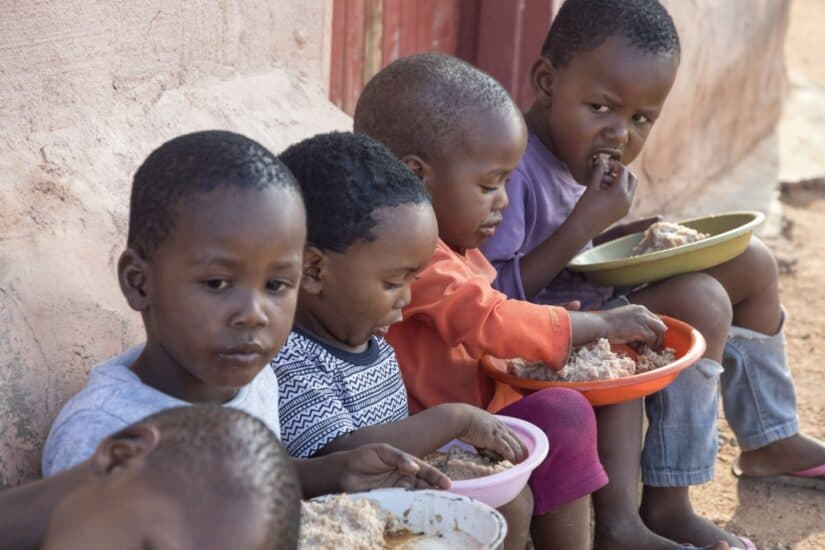
Picture: iStock


Early childhood development movement, Real Reform for ECD, has called on the Department of Basic Education (DBE) to urgently roll out a long-delayed nutrition programme for vulnerable ECD centres despite hundreds of millions of rand being allocated over the past three years to combat child hunger.
The movement said the department must move swiftly to implement a pilot nutrition programme targeting more than 1 000 ECD centres in the Eastern Cape that currently receive no nutritional support from government.
Real Reform for ECD said the tender process for the pilot programme closed recently, more than two years after government first earmarked R197 million for the initiative in the 2024/25 budget.
Funding for the pilot programme has steadily increased, with allocations rising to R336 million in 2025/26 and reaching R772 million in the 2026/27 financial year.
The pilot project will focus on 1 035 ‘bronze’-status ECD centres operating in impoverished communities, informal settlements and deep rural areas.
ECD facilities ‘excluded’ from government subsidies
These types of centres make up an about 60% of all ECD facilities nationally but the organisation said it remained excluded from the government’s existing subsidy system.
Under the current subsidy model, qualifying centres receive R24 per child per day, with only R9 allocated for nutrition.
According to the movement’s ECD coordinator, Tshepo Mantjé, the pilot programme could provide critical relief to about 26 000 vulnerable children who currently fall outside the state nutrition net.
The movement warned that SA’s child malnutrition crisis remained severe, with more than one in four children under five suffering from stunting, while nearly half are affected by Vitamin A deficiency.
Although children attending ECD centres generally fare better than those outside the system, major regional disparities persist.
‘Child hunger is policy failure’
In the Eastern Cape and Limpopo, almost 10% of children enrolled in ECD programmes are stunted.
Mantjé said the continued normalisation of child hunger reflected a major policy failure.
“There is plenty of food in South Africa. The normalisation of child hunger represents a profound policy failure and violation of children’s constitutional rights,” Mantjé said.
The movement argued that the current subsidy system fails both in coverage and value, particularly because most entry-level centres do not qualify for assistance.
Real Reform for ECD is now calling on the DBE to ensure the Eastern Cape pilot tests different food delivery approaches suited to varying local conditions and to use the findings to develop a sustainable national nutrition programme.
Call for ECD subsidy to increase
The group also wants government to progressively increase the ECD subsidy to reflect the actual cost of feeding children nutritious meals, estimated at R31.61 per child per day – significantly higher than the current R9 nutrition allocation.
The Citizen has recently revealed that despite billions allocated to ECD, evidence suggests funding was failing to reach centres, leaving practitioners unpaid and children at risk.
In KwaZulu-Natal, the Legal Resources Centre is currently locked in a legal tussle over widespread failure to pay ECD subsidies.
In May last year, the court ordered the department to settle outstanding payments owed to three centres.
Mantjé said “the court case was important in addressing not only the immediate issue of subsidy non-payment but also in addressing systemic issues in the sector, especially persistent maladministration of the subsidy by provincial education departments”.
He said while the transfer of ECD functions from social development to basic education has resulted in more streamlined, more supportive registration processes, spearheaded by the national department, access to funding remained uneven and hampered by administrative inefficiencies at the provincial level.
The DBE had not replied to questions at the time of publishing.