
The committee will convene an urgent meeting to interrogate the implementation of the Constitutional Court judgment on asylum applications.
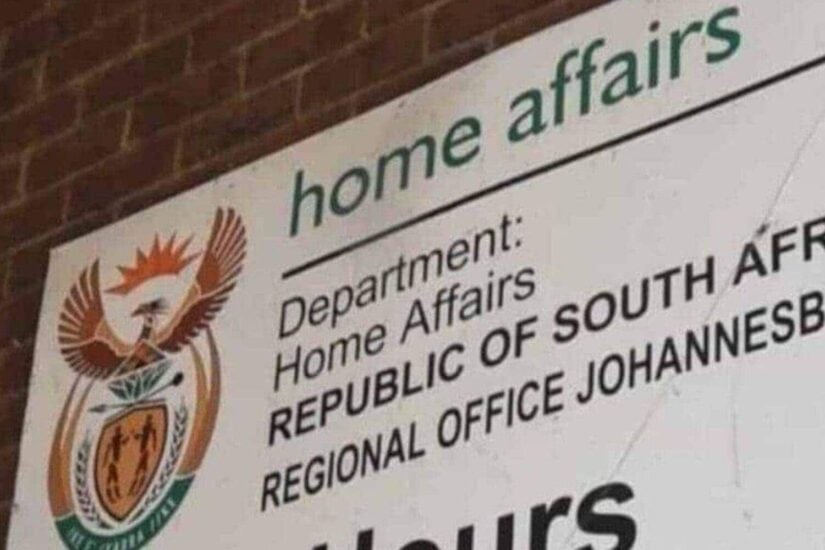
Picture: Carlos Muchave / The Citizen


The Portfolio Committee on Home Affairs has resolved to convene an urgent, in-person meeting to interrogate further the implementation of the Constitutional Court judgment on asylum applications.
This after the Director-General of the Department of Home Affairs withdrew the directive his office issued on 28 September regarding the intake of asylum seeker applications.
In July, the Constitutional Court ruled that refugees and asylum seekers must be given the opportunity to access processing centres, regardless of whether they entered South Africa illegally.
On 28 September, Home Affairs issued the directive regarding the intake of asylum seeker applications.
However, it withdrew the directive on Friday, citing the fact that RRO operations were overwhelmed within a matter of days, Home Affairs officials being placed at risk and serious threats to public safety and order.
The withdrawal of the directive has not stopped South Africans from protesting, and some protests have turned violent. Police have arrested 30 suspects since Thursday.
Urgent meeting
During its meeting on Friday, the portfolio committee welcomed the withdrawal of Home Affairs’ directive. It further directed the department, led by the Director-General, to evaluate and provide the broader operational plan for implementing the Constitutional Court judgment.
This meeting must be attended by the Ministers of Home Affairs and Employment and Labour, relevant parliamentary committees, the department’s immigration branch, the Border Management Authority (BMA) and the Refugee Appeals Authority of South Africa (RAASA).
The committee said it would also consider an oversight visit to refugee reception centres, and civil society organisations will have an opportunity to engage the committee on the subject.
Home Affairs committee of SA’s immigration and refugee legislation
Although the Home Affairs committee is seeking an operational plan to implement the judgment, it says the concerns of South Africans should not be dismissed.
“The committee has always maintained that South Africans come first, and their concerns are legitimate; hence, during the sixth administration, it initiated a review of migration laws, which led to the then Minister, Dr Aaron Motsoaledi, carrying out the recommendations,” said committee chairperson Mosa Chabane.
However, the committee expressed concern about the pace of this reform of South Africa’s citizenship, immigration and refugee legislation.
“It is time that Cabinet must demonstrate urgency on their part and speed up the draft bill to allow South Africans an opportunity to contribute to determining the path the country must take. We require a proper account of the process and clear timeframes for when the draft bill will reach Parliament,” Chabane said.
The White Paper on Citizenship, Immigration and Refugee Protection introduces a merit-based system for citizenship and naturalisation.
It also introduces a first safe country principle for asylum seekers. This means an asylum seeker will not be eligible in South Africa if it is established that they passed through a safe country before reaching South Africa.
‘Detailed information’
The committee has called for detailed information on the capacity of refugee reception offices, asylum and appeals caseloads and staffing constraints. The meeting also raised concerns about asylum applicants who may be sought for prosecution in their countries of origin. It also reiterated concerns about an individual who serves both on the immigration board advising the minister and the Scalabrini Centre.
The Scalabrini Centre of Cape Town is the party that took Home Affairs to court over certain provisions of the Refugees Act relating to the asylum application process.
“The committee further noted that the judgment does not mean that a person automatically acquires refugee status simply by expressing an intention to seek asylum. Applicants must still go through the prescribed process to determine refugee status.”