Concerns over the health of former president Jacob Zuma have intensified
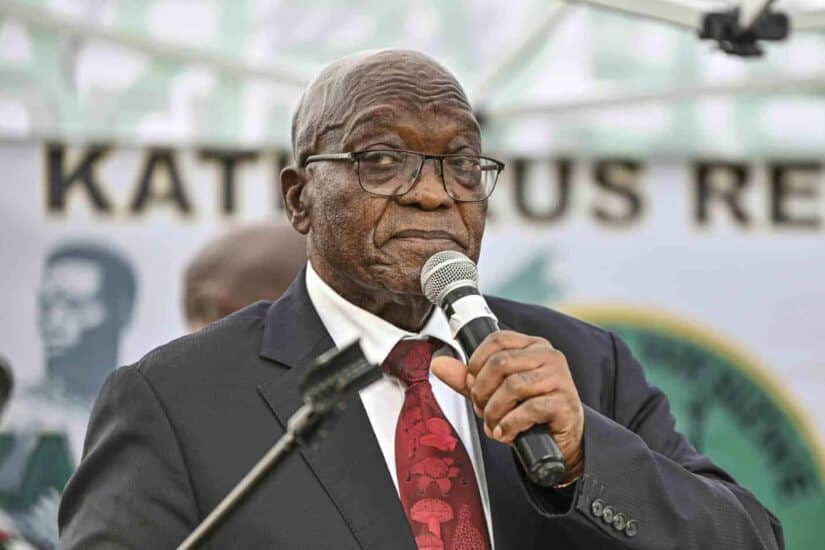
Jacob Zuma. Picture: Gallo


Concerns over the health of former president Jacob Zuma have intensified after sources close to the MK party leader reportedly described his condition as “very critical”, raising fresh uncertainty over the future of a party that has built much of its political identity around him.
The 84-year-old Zuma is reportedly receiving treatment at the Netcare St Anne’s Hospital in Pietermaritzburg, with sources claiming his health has deteriorated significantly and remains at a “very concerning stage”.
MK party turmoil
The developments have sent shockwaves through political circles less than a month before local government elections, triggering questions about the MK party’s ability to sustain its electoral momentum should its most influential figure be sidelined.
The reports have also reignited scrutiny over internal turmoil within the party, with sources suggesting that ongoing infighting may have contributed to the stress Zuma is allegedly experiencing.
For a movement that stormed onto South Africa’s political stage during the 2024 general elections and reshaped KwaZulu-Natal’s political map, Zuma’s ill health presents more than a personal challenge. It threatens to test the strength, stability and future direction of the organisation he helped create.
If Zuma dies?
Political analyst and North-West University professor André Duvenhage believes the implications of Zuma’s absence could be profound.
“There is no clarity about this position. We don’t know the seriousness of it, and we aren’t sure if it’s only a regular process,” Duvenhage said.
However, he noted that his assessment of the political environment suggests the situation may be more serious than publicly stated.
“My reading of the political environment, the body language of the situation, is telling me that this is most probably more serious.”
MK’s rise
Since its formation, the MK party’s meteoric rise has been closely linked to Zuma’s personal popularity, particularly in KwaZulu-Natal, where he remains one of the country’s most influential political figures.
Duvenhage argues that despite no longer occupying public office, Zuma continues to wield enormous influence.
“If we must try to identify the most influential politicians in the country, Jacob Zuma is most likely coming up number one or number two, at least among the top three politicians,” Duvenhage said.
“There are some people openly arguing that he is stronger and more popular than President Cyril Ramaphosa and some of the other leaders within the ANC.”
Zuma’s influence
That influence, Duvenhage said, helped transform the MK party from a newly formed political movement into one of South Africa’s most formidable opposition forces within months.
But it has also created a challenge: the party’s fortunes are deeply intertwined with Zuma himself.
Questions over Zuma’s health come at a time when the MK party is already battling internal divisions and leadership instability.
“We know that the MK party, as a party, is in trouble. There are a lot of problems. We have seen five or six secretaries-general over the last year, and it is an unstable environment,” Duvenhage said.
“It is closely aligned to Jacob Zuma himself. The dynamics this may create within the MK party can have an impact on the party and the party’s performance towards the November elections.”
Uncertainty
The uncertainty has inevitably fuelled speculation about succession plans and whether the party is prepared for a future without its founder at the helm.
Should Zuma be unable to campaign, the challenge facing the MK party would be immense: reassuring supporters, managing internal disputes and maintaining momentum during one of the most important election periods in its short history.
Zuma’s departure from politics
Duvenhage warned that Zuma’s departure from active politics would not only affect the MK party, but could reshape the broader political landscape.
“If he is removed from politics in South Africa, this will bring a huge gap. It will also have major influences on other parties.”
He believes rival parties such as the ANC and the IFP could stand to benefit, particularly in KwaZulu-Natal, where the battle for political dominance remains fiercely contested.
Health fears
Despite the growing speculation, the MK party has publicly denied reports that Zuma is seriously ill.
Earlier this week, party spokesperson Sifiso Mahlangu said the former president had completed a routine medical examination on 7 October.
“The president gets a full routine check-up twice a year. We hereby confirm that he is healthy and in good spirits. His campaign programme will continue accordingly,” Mahlangu said.
He did not provide further details about the examination or directly address reports surrounding Zuma’s hospitalisation.
The latest concerns also revive longstanding questions surrounding Zuma’s health. In 2023, the former president travelled to Moscow, Russia, for treatment of an undisclosed illness, prompting widespread speculation about his condition.
Neither Zuma’s family nor senior MK party officials nor the Jacob Zuma Foundation officials had issued any further official update on his health at the time of publication, while hospital authorities had also not publicly commented on the reports.
The Citizen has reached out to them.
Uncertainty
For now, uncertainty remains.
But with election day drawing ever closer, the issue confronting the MK party extends beyond the condition of its leader. The real question is whether South Africa’s newest political powerhouse can withstand the loss, or prolonged absence, of the man whose name, influence and popularity fuelled its rise.
Duvenhage believes Zuma’s absence would reverberate far beyond the MK party.
“If he is removed from politics in South Africa, this will bring a huge gap. It will also have major influences on other parties,” he said, warning that the MK party could face its toughest test yet without the man who remains its most influential figure.