



Jackson was one of the scientists brought in to help read the ancient evidence, and it was not the bodies that interested him most.


It’s been frozen in time for almost 2 000 years and every rock, street, nook, cranny and remnant tells its own story. In fact, said geoscientist Chris Jackson, it almost felt as though every part of the ancient Roman city of Pompeii whispered to you.
Jackson consulted the team that created National Geographic’s spectacular series Pompeii: Out Of Time on the ancient tragedy.
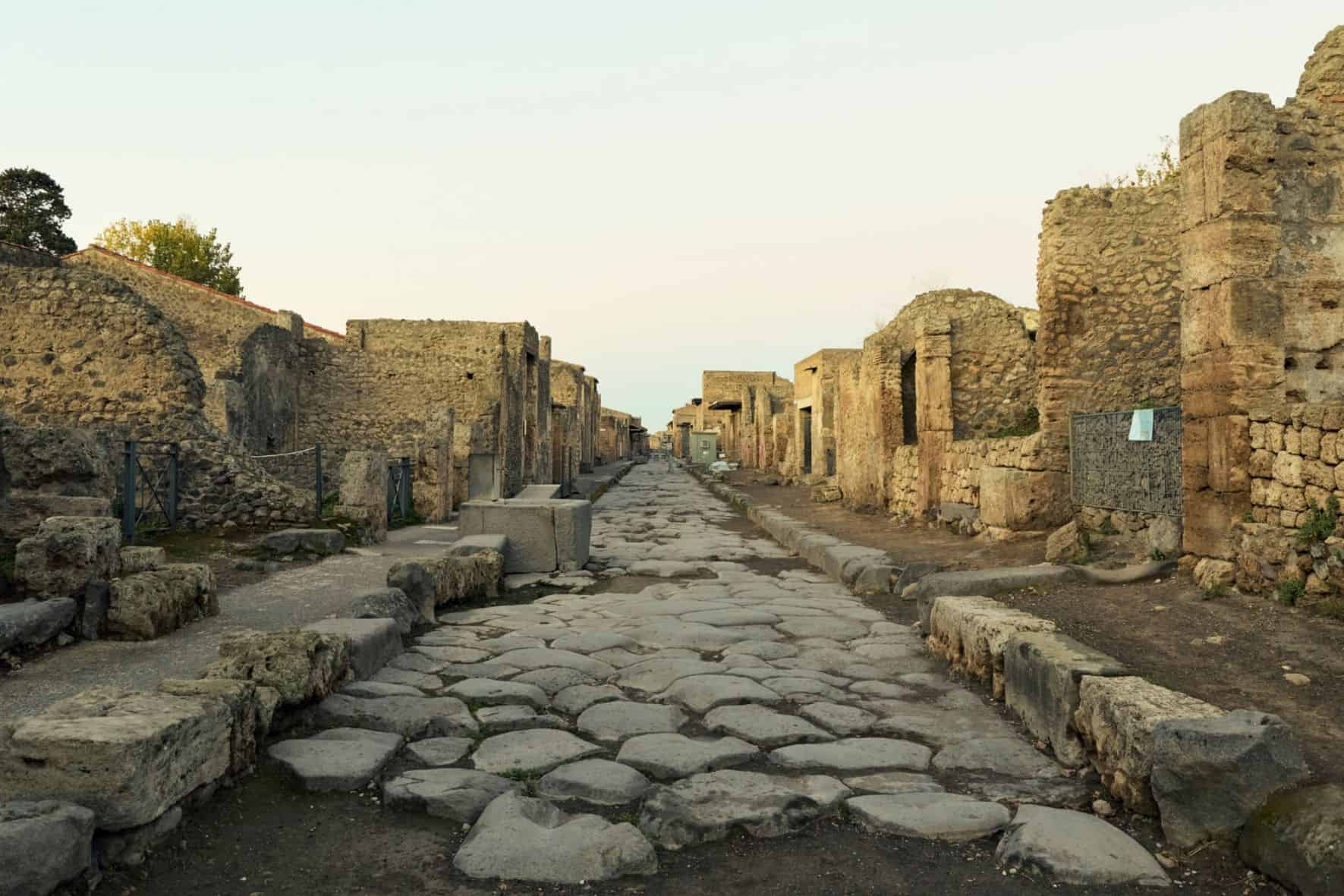
“It didn’t feel like a film set,” he said. “And it didn’t feel like this kind of make-believe world. It was clearly like a modern-day city.”
Among the ruins, he could walk to the bakery. He could go to the baths. The voices in the street belonged to other tourists, but the illusion held. “It felt like you were actually in a city which was still a hive of activity.”
An entire city was destroyed in less than a day. In AD 79, Mount Vesuvius erupted above the Bay of Naples and buried Pompeii and its neighbour Herculaneum under metres of ash and rock.
There was no lava. What came instead were pyroclastic flows, avalanches of superheated gas and volcanic debris that raced down the mountainside faster than anything on the ground could move. Thousands died, and the hot ash sealed them where they fell, preserving their streets, kitchens and even ancient graffiti.
‘It’s like the city whispers’
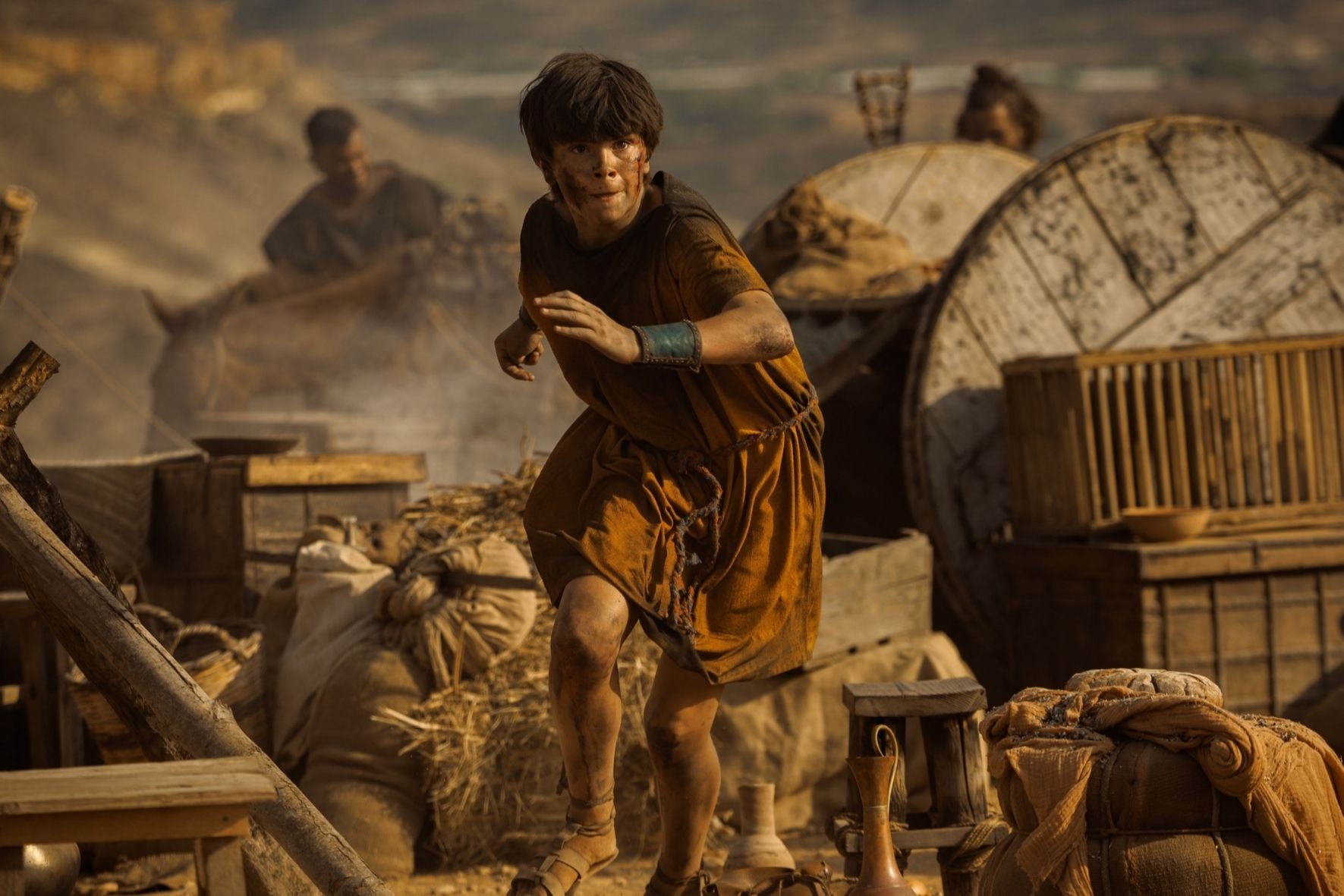
Loki star Tom Hiddleston hosts the three-part series, now streaming on Disney+. The dramatised documentary follows three real Romans through their final hours: a teenage apprentice, a wealthy businesswoman and a member of the Praetorian Guard, the elite soldiers who acted as the Roman emperor’s personal bodyguard.
Its central argument is an uncomfortable one: that many of the people who died that day could have lived.
Jackson was one of the scientists brought in to help read the ancient evidence and it was not the bodies that interested him most. It was the ground beneath their feet.
“If you want to go and not just go around looking at bodies frozen in time in a really macabre sense, there’s a bit more richness scientifically to taking those learnings,” he said, “and in some ways filling out the last moments of those people’s lives. I’d like to think that’s a respectful activity for a geoscientist to undertake.”
“Start with what we tend to get wrong about the Romans,” he said. “We picture them as clever with roads and clueless with everything else.”
But there was far more to Roman civilisation than that.
“They put up buildings meant to survive earthquakes, an early manifestation of earthquake engineering because of what they’d experienced before and they brought water down off the high ground into their towns with real sophistication. Every single day and every single week, there’s more and more being found out about these civilisations.”
Romans were clever with roads but clueless about everything else – wrong
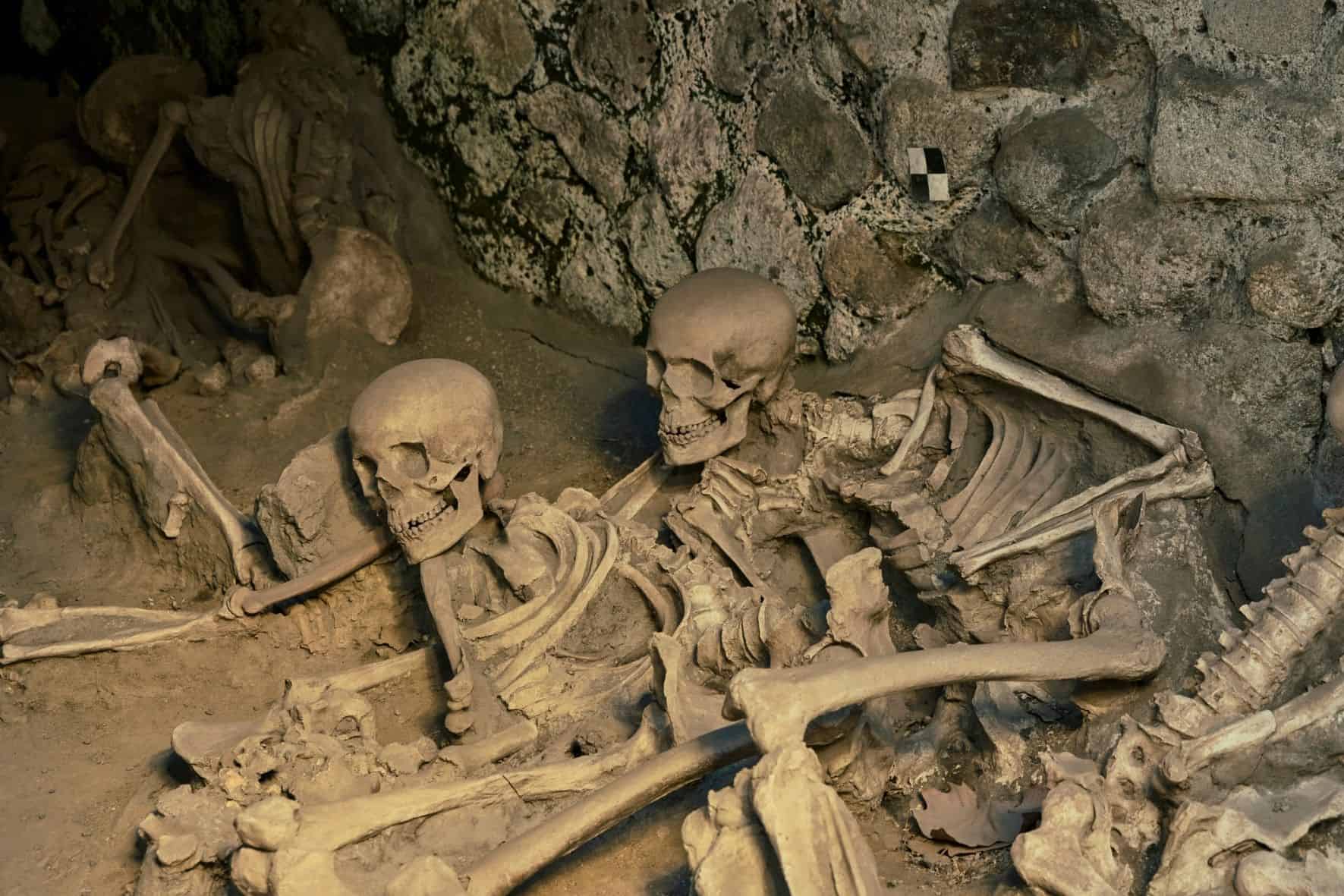
The casts of the dead, the image most people associate with Pompeii, are only a small part of the story, Jackson argued. They capture the city’s final seconds and little of what came before.
“If we go and look at the rocks themselves, we can actually start to reconstruct a lot more about those processes,” he said. By studying the layers left behind by the eruption, away from the bodies and courtyards, scientists can work out how fast the pyroclastic flows travelled, how hot they were and even which gases they carried. They moved at somewhere between 100 and 200 kilometres an hour.
“There’s no way you can outrun these things.” People were struck almost immediately, carbonised where they stood and buried before anything could disturb them.
Reading the rocks and sediment left behind by the eruption is a specialised skill.
“That’s why geologists study hard to develop what we often refer to as superpowers,” he said.
Arrive at a site, and you start with colour. Then texture, whether the rock is soft or hard. Then structure, the lines and features that tell you whether it was laid down by water, wind or lava. Out of that you assemble a world that no longer exists.
“Despite the fact you’re standing on a beach today, behind you there might be rocks which tell you about the fact there used to be an ancient mountain where you’re standing,” he said.
He thinks of those layers as pages in a book stretching back through millennia.
“The rock record is this beautiful record of the changing climate, of life on Earth, of different physical states of the Earth, where there were mountains, there’s now a sea.”
Sediment is like pages of a book
At Pompeii, the pages of history turn faster than anywhere else he has worked. Geology normally moves in millions of years, a centimetre of sediment every 10 000 years, patience measured out in ice ages.
Standing in Herculaneum, he found a wall of volcanic material towering above him all the way up to the level of the modern road and all of it had been deposited within about a day.
“As soon as you appreciate the scale of it, you suddenly then start to appreciate the devastating nature of the event,” he said. “This is a lot of material.”
Geological evidence and written history almost never line up, yet at Pompeii they tell the same story of catastrophe unfolding over a single day. Jackson said the rock record is the closest thing humanity has to a manual for understanding how the Earth behaves when it turns violent.
With the climate changing and natural hazards continuing to threaten communities around the world, those ancient layers have become far more than a record of the past.
“Understand what’s happened in the past,” he said, “so that you can make changes now to protect yourself and preserve yourself in the future.”


