Johannesburg municipal officials have been on an advertising non-compliance drive this week based on public safety concerns.
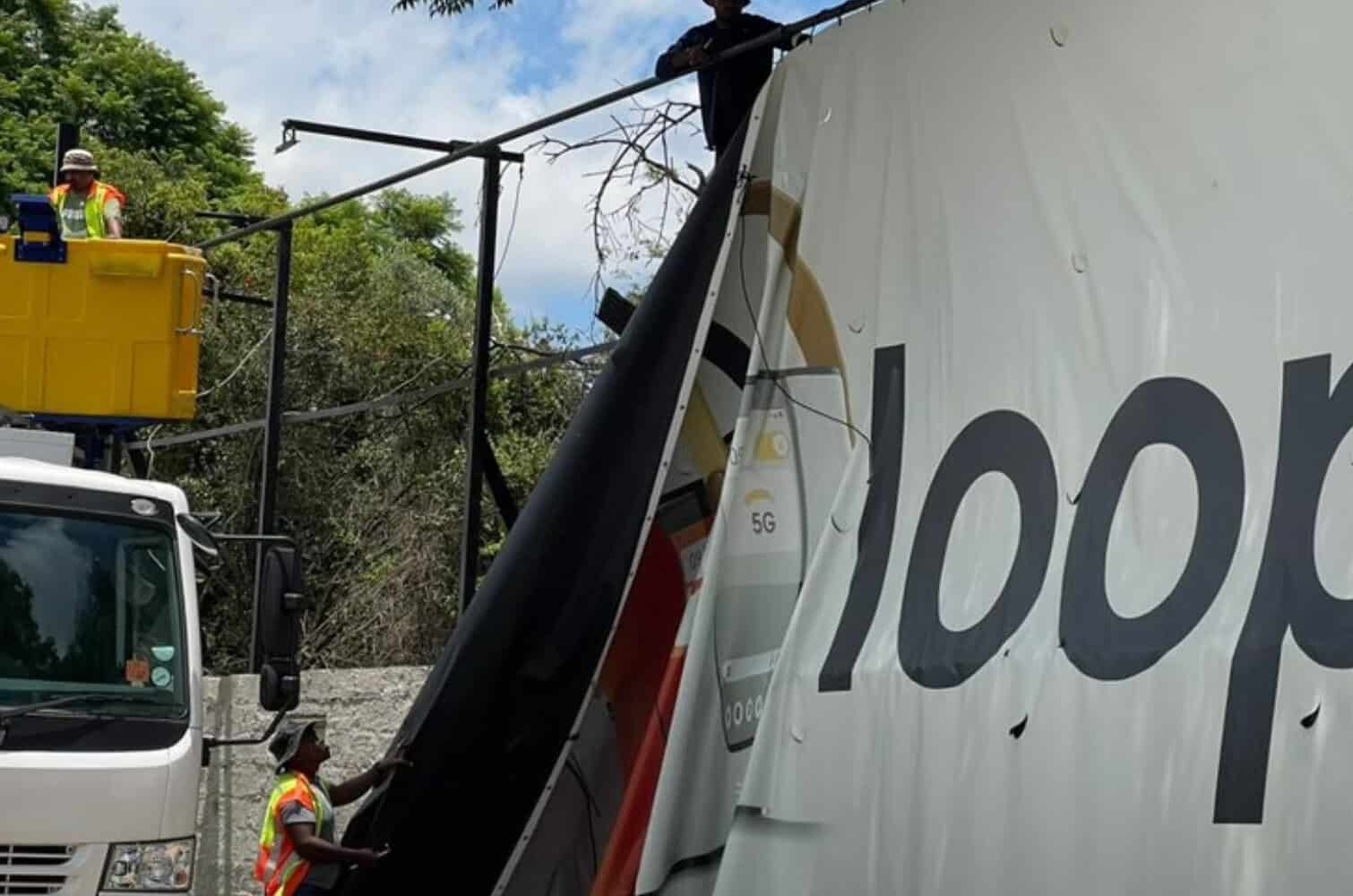
Crews removing illegal advertising banners in Johannesburg, 13 January. Picture: X / @PublicSafetyMMC


Johannesburg municipal officials have torn down multiple public-facing advertising banners across the city.
The municipality has been on a compliance drive this week, dealing with by-law infringements and hijacked residential properties.
Outward-facing structures built on private property, advertising trailers, and billboards erected without approval were subject to the city’s confiscation crews.
Advertising revenue shortfall
The city stated that the compliance drive was prompted by concerns over public safety.
The city’s approval processes for outdoor advertising consider size, location and potential dangers, with unauthorised advertising banners posing potential harm to road users.
“Illegally erected signage can obstruct roadways and impede visibility, creating dangerous conditions for drivers and pedestrians alike,” the city stated on Tuesday.
Stricter enforcement of outdoor advertising bylaws led to revenue rising from R5 million in 2024 to roughly R50 million in 2025, but it remains short of the city’s target.
“Compliance could generate an estimated R300 million annually. This revenue plays a paramount role in sustaining essential municipal services, including electricity, roads, and water,” the city stated.
City Manager Floyd Brink has been on the ground this week overseeing operations, and he urged businesses and residents to work with the city.
“The illegal outdoor advertising landscape in Johannesburg is not just a compliance issue; it directly affects the safety and well-being of our residents,” said Brink.
‘Cannot simply erect a billboard’
While all advertising boards, whether erected on public or private land, require city approval, the Johannesburg Property Company (JPC) oversees all advertising on city land.
The entity stated that JPC was the only entity with the mandate to lease city land for advertising purposes and the process was regulated by city by-laws and the Department of Development Planning (DPC).
“These by-laws cover everything from the size and placement of billboards to the types of advertisements allowed,” JPC spokesperson Lucky Sindane previously told The Citizen.
“Lessees cannot simply erect a billboard and start generating income. Any advertising must be approved by both the city as the lessor and the DPC for by-law compliance,” Sindane added.
Hijacked homes
Hijacked properties are mostly associated with the inner city, but the municipality cracked down on two hijacked properties in Bryanston this week.
One was deemed to be in violation of land-use and overcrowding by-laws, while the municipality is still investigating the legitimacy of the utilities account.
The second had accumulated a utility account of more than R1.1 million in arrears after being hijacked.
“Information received suggests that the premises may have been unlawfully taken over and operated without the consent of the lawful owner.
“Residents are encouraged to report suspected property hijacking, illegal conversions, or unsafe living conditions through official municipal and law-enforcement channels,” the city concluded.
NOW READ: Joburg’s residents fuming as city aims to cash in on public parks and sports clubs