63-year-old mother Masetumo Marago says she is literally dying in her home as sewage has been seeping in for past two years in Boipatong.
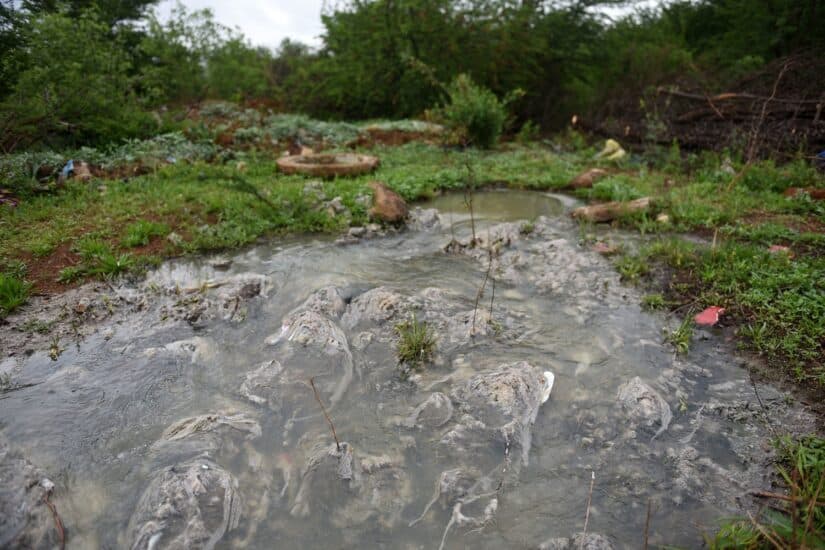
Sewer overflows from a manhole from Boipatong town to the France section in Gauteng, 30 September 2026. Raw sewage floods streets, yards, and local schools in Boipatong within the Emfuleni Local Municipality. Picture: Nigel Sibanda/ The Citizen


One can only imagine how impossible it is to live with sewage seeping into where you live…
But that’s exactly what 63-year-old mother Masetumo Marago, her 25-year-old daughter and 93-year-old father encounter every day at their home in Gauteng’s Boipatong township – at least for the past two years after living there for the majority of her life.
Her health is now at risk, having been battling with bronchitis after experiencing various breathing ailments.
She said: “I am literally dying in my home… and nobody cares. For me to step out of my house, I have to put on four face masks and a handkerchief.”
Before the sewage, a medical report shows she had a clean bill of health.
Marago is not alone. A botched repair of a manhole at a nearby school saw sewage spill into about 10 residential properties after a blockage of the line.
She said: “All our efforts to be rescued have been in vain… Recently, I went to the municipality, desperate for help, but all I got was an admission that this was a serious problem but nothing has been done.”
Again, Marago is not alone. Almost half of the country’s wastewater treatment systems are in a critical state, with data showing a sharp deterioration in municipal wastewater management and growing risks to the country’s rivers and public health.
A 2025 Green Drop Assessment found 396 systems of the 848 wastewater treatment systems audited were in a critical state. That’s almost half.
Mention a township, village, suburb, town or city and there will be similar stories. Maybe not as bad as Marago’s, but equally devastating for the people that have to endure the stench and discomfort every day.
The question remains: how can government – local and provincial – allow people to suffer like this when it’s all they have?