Real GDP expanded 85% since 1994 from R2.5 trillion to R4.6 trillion as inflation controlled and rand actively traded despite shocks.
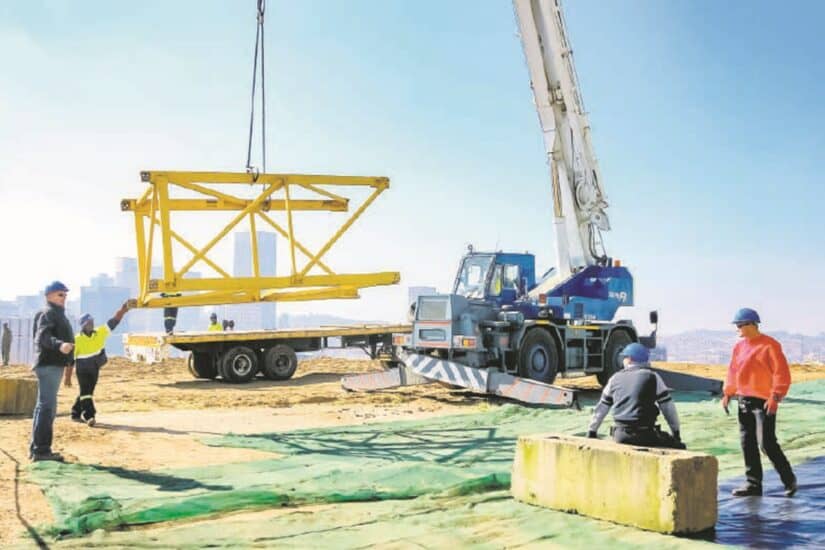
Since 1994, real gross domestic product has expanded from about R2.5 trillion to more than R4.6 trillion in constant prices – that is an increase of about 85%. Pictures: iStock


South Africans often judge the health of the economy by looking at unemployment, poverty and inequality. Those are the realities people live with every day.
But they are not measures of economic performance. They are the consequences. If we confuse symptoms with causes, we risk misunderstanding both the problem and the solution.
That distinction lies at the heart of the Inclusive Society Institute’s latest True South Africa report on the economy. The evidence paints a more nuanced picture than either the optimists, or the pessimists would have us believe.
SA’s economy has not collapsed. But neither has it grown nearly fast enough to create the jobs, incomes and opportunities that South Africans rightly expect. The difference matters.
Much of the public debate proceeds from the assumption that SA is experiencing economic free fall. The data tells a different story.
Since 1994, real gross domestic product (GDP) has expanded from about R2.5 trillion to more than R4.6 trillion in constant prices – that is an increase of about 85%.
That is not the trajectory of a collapsing economy. Inflation has remained broadly under control within a credible monetary framework, the country’s financial system continues to function effectively and the rand remains one of the most actively traded emerging-market currencies in the world.
These are not the hallmarks of an economy in collapse. They are the characteristics of an economy that has remained remarkably resilient, despite repeated domestic and global shocks.
But many readers will respond: if the economy is not collapsing, why does it feel as though it is? That is precisely the right question.
The answer lies in a statistic that receives far less attention than headline GDP, that measures the size of the economy. It does not measure how much of that economy is available to each person. For that, we need to look at GDP per capita.
Here the picture becomes more nuanced. Between 1995 and around 2014, real GDP per capita rose from about R62 000 to almost R80 000 (in constant prices), reflecting a period in which economic growth consistently outpaced population growth and living standards improved.
But that momentum was not sustained. And over the same period, SA’s population increased by more than 50%.
As the number of people sharing in the economy continued to grow rapidly, increasingly modest economic growth was no longer sufficient to sustain rising living standards for the average citizen.
Over the past decade, real GDP per capita has stagnated and then declined to around R75 548 in 2023.
In other words, South Africans remain materially better off than they were three decades ago, but the steady gains that characterised the first two decades of democracy have largely come to an end.
That prolonged loss of momentum helps explain why so many people feel the economy has stopped working for them, even though it has not collapsed.
This is the central insight of the report.
An economy can grow while its people experience stagnation. That happens whenever economic growth barely keeps pace with population growth. The economy becomes larger, but not enough larger for each citizen to enjoy a meaningfully greater share of its output.
Growth is continually diluted across an expanding population. The result is what economists describe as a per-capita squeeze.
An economy growing at around 2% a year cannot absorb new entrants into the labour market at the pace required. Jobs are created, but not quickly enough. New opportunities emerge, but not in sufficient numbers.
The economy keeps moving forward, yet unemployment remains painfully high, because growth consistently falls short of what the labour market demands.
The institute’s own modelling reinforces this point. Holding employment creation constant, it shows that, had SA’s population grown more in line with the upper-middle-income average, today’s expanded unemployment rate would have been several percentage points lower.
Demography alone would not have solved SA’s unemployment crisis. But it demonstrates that the challenge is not simply one of too few jobs; it is also one of too many people competing for those jobs.
Seen in this light, unemployment is not proof that the economy has stopped functioning. It is evidence that it has failed to grow fast enough.
The international evidence reinforces this conclusion.
SA is an underperformer. Among upper-middle-income economies, it has consistently grown more slowly than many of its peers. But neither is it the exceptional outlier that public debate often suggests.
SA’s economy has grown by roughly 2% a year since 2000, compared with about 3.2% across upper-middle-income economies.
That difference may sound modest, but compounded over two decades, it represents a substantial loss of national income, investment and employment opportunities. The gap is significant, but it is a gap of underperformance, not one of systemic economic collapse.
If we diagnose collapse where there is stagnation, we will prescribe the wrong remedies. Conversely, if we celebrate the fact that the economy continues to grow, we risk overlooking the profound social consequences of growth that remains too weak.
Avoiding crisis is not the same as achieving prosperity.
This distinction carries implications far beyond economics, in that persistent unemployment, stagnant incomes and limited opportunities do not only constrain growth, over time they also erode trust, weaken social cohesion and undermine confidence in institutions.
No economy, however resilient its macroeconomic foundations, can indefinitely sustain high levels of exclusion without consequences.
If SA fails to convert economic resilience into broader prosperity, today’s social pressures risk becoming tomorrow’s economic constraints, discouraging investment, weakening confidence and slowing growth even further.
Economic resilience and social cohesion are, therefore, not competing objectives. They are mutually reinforcing, and each ultimately depends on the other.
Indeed, one of the most important findings of the report is that SA’s greatest economic challenge is not macroeconomic instability. Inflation remains contained.
The financial system remains resilient. The real constraint lies elsewhere: SA has not attracted sufficient investment, grown fast enough or expanded productive capacity sufficiently to lift living standards and reduce unemployment on the scale required.
That is why describing South Africa as either a thriving economy or a failed economy misses the point entirely. The country finds itself trapped in an economy of insufficiency.
Growth has been sufficient to preserve macroeconomic stability, but insufficient to generate the employment, incomes and opportunities needed to sustain rising prosperity.
Growth has been sufficient to avoid collapse. It has not been sufficient to create prosperity.
That is both the challenge and the opportunity before us. SA does not need to rescue a broken economy. It needs to unlock a faster-growing one. Only sustained, investment-led growth can generate the jobs, incomes and opportunities needed for rising living standards.
That is the real economic story of South Africa. Not collapse. Insufficient growth.