
SA has Scorpions, Hawks, and SIU, yet debate lingers since 2009 whether another bureaucracy solves corruption or simply administers it.
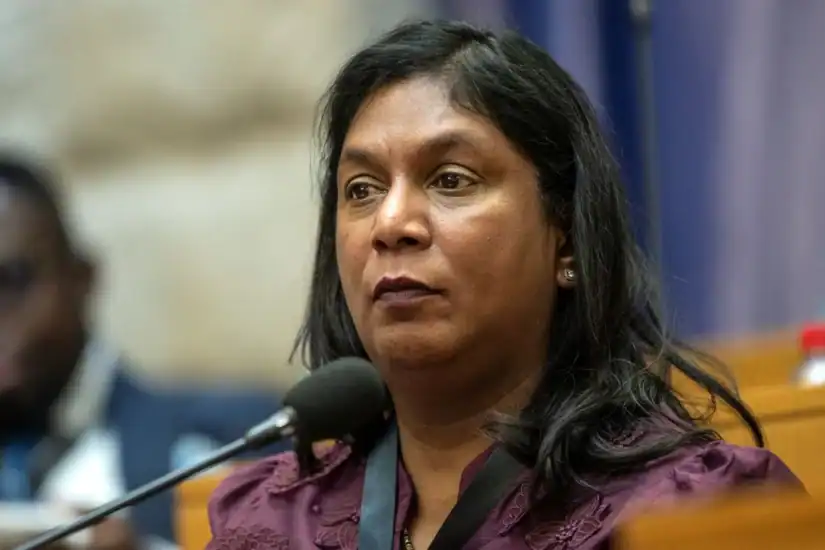
Andrea Johnson testifies at the Parliamentary Ad Hoc Committee inquiry into alleged corruption and political interference in the criminal justice system at Good Hope Chambers on 6 November 2025 in Cape Town, South Africa. Picture: Gallo Images/Brenton Geach.


Andrea Johnson’s resignation as head of the Independent Directorate Against Corruption (Idac) was not merely a career decision. It was a political statement. It was an admission that the walls were closing in.
After a week of damaging testimony and explosive revelations before the Madlanga Commission of Inquiry, Johnson did what many had expected suspended police minister Senzo Mchunu to have done long ago: she stepped down as the pressure became unbearable.
However, the timing is impossible to ignore.
Resigning before formal removal should never become a convenient escape route from accountability.
SA has developed a dangerous culture where public officials leave office before institutions can determine whether they abused that office. Resignation should mark the beginning of accountability.
Johnson’s departure raises a far bigger question than her future.
Can South Africans still trust Idac to investigate corruption at the highest levels when allegations of unethical conduct have reached its own leadership?
The irony is painful. The institution created to restore confidence in anticorruption investigations now finds itself battling a crisis of legitimacy.
Public confidence is not built through impressive legislation. It is earned through ethical leadership, transparency and consistency. Once those pillars crack, every investigation risks being viewed with suspicion.
This is why Johnson’s resignation cannot be the final chapter.
If the Madlanga commission uncovers evidence of misconduct, disciplinary, civil, or even criminal processes must continue, regardless of whether she still occupies the office.
Accountability should follow conduct, not employment status. Otherwise, resignation simply becomes an elegant exit strategy.
Equally important is the question of succession. SA does not need another politically connected “superhero” with questionable loyalties.
The next Idac head must have unquestionable integrity, independence from political influence and the courage to pursue the eradication of corruption without fear or favour.
Above all, the appointment process itself must be transparent enough to convince the public that competence – not political convenience – has prevailed.
Johnson’s resignation may also reopen a debate that has lingered since the dissolution of the Scorpions in 2009. How many anticorruption bodies does South Africa need?
The country already has the Special Investigating Unit, the Directorate for Priority Crime Investigation, or Hawks, and several oversight bodies. Every new scandal seems to produce another agency, rather than better governance.
If Idac merely duplicates existing mandates while developing the same institutional weaknesses that plagued its predecessors, South Africans are entitled to ask whether another bureaucracy is solving corruption or simply administering it.
Perhaps the issue has never been the institutions themselves.
South Africa has repeatedly built new anticorruption bodies while failing to protect them from political interference, weak leadership and ethical decay.
Replace the nameplate on the building, and the same problems eventually walk through the front door.
Johnson may have resigned, but the real trial has just begun.
The Madlanga commission must continue its work without fear or favour. More resignations within Idac may yet follow if the evidence demands it.
But South Africans should settle for nothing less than full accountability, institutional reform and a leadership renewal capable of restoring public trust.
Corruption is not defeated by changing faces. It is defeated by changing cultures.