



Choosing the right reaction depends on awareness of what may happen during a potential head-on collision.
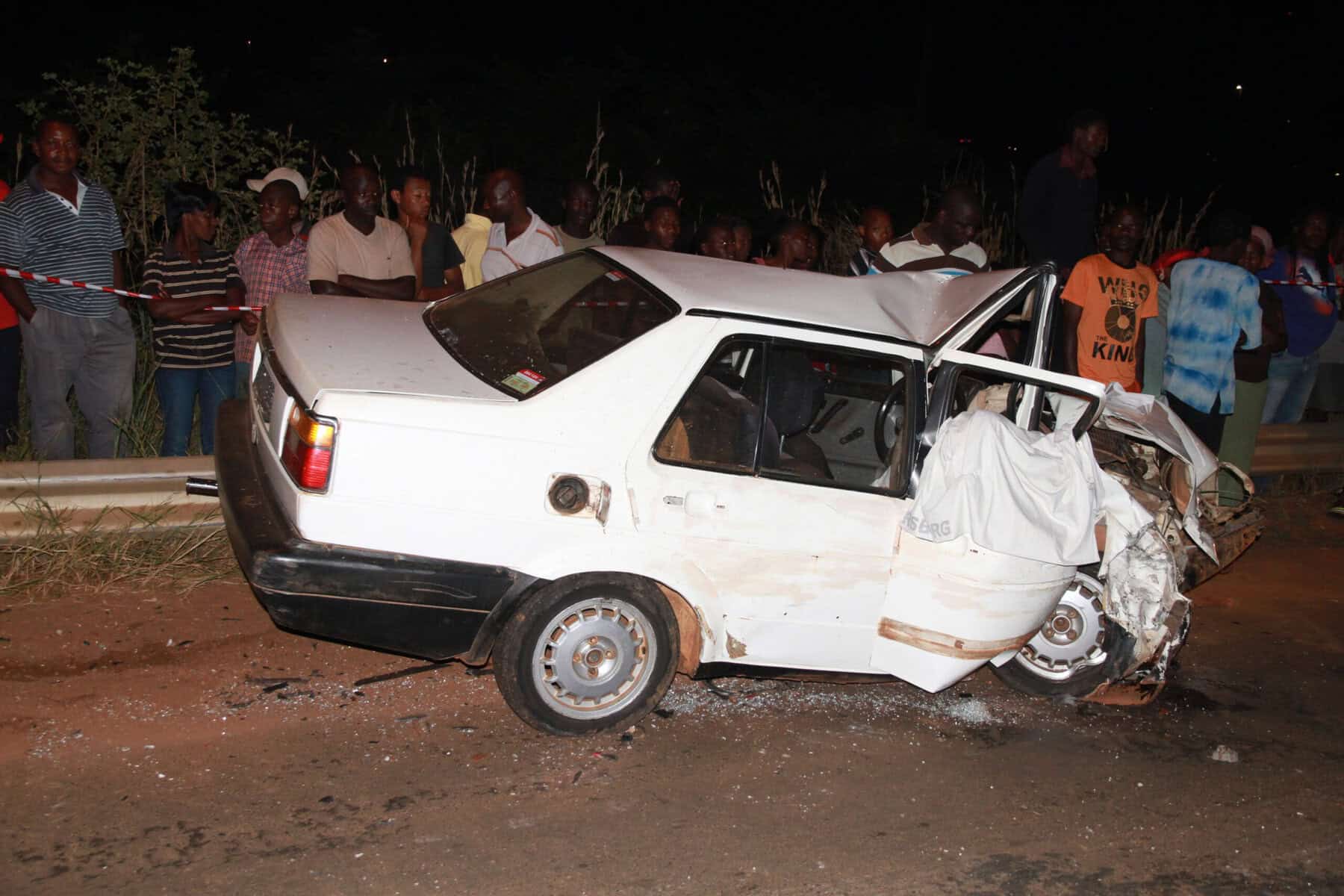
The aftermath of an accident in Thohoyandou, Limpopo. The driver died at the scene after a head-on collision with a bakkie. Picture: Gallo Images/ Sowetan/Elijar Mushian


Dashcam footage of the Vanderbijlpark crash that took the lives of 14 school children was released last week amid much speculation.
A question many should be asking is what would they do should they found themselves in a similar situation?
A possible head-on collision is something every defensive driver should always expect and, consequently, be prepared for.
Understand and accept mistakes or bad decisions will be made on the road by others.
Drivers must always be prepared for a potential head-on collision and respond in a way that minimises risk for all road users.
While nothing can guarantee complete safety, there are recommended steps that can reduce harm in the critical moments before such a collision.
There are techniques that can either reduce impact or help minimise injuries and death if a head-on collision is imminent.
These, however, are often at war with your instinctual reaction, which is often not the safest course of action.
Choosing the right reaction depends on awareness of what may happen during a potential head-on collision and how to respond appropriately.
ALSO READ: Nine schoolchildren injured in Durban scholar transport crash
This will make a war between instinct and a trained reaction significantly less.
Instinctual v trained reactions
- Scenario: A vehicle is overtaking ahead and is now in your lane, on a direct collision course (this scenario is in reference to the recent video).
Instinct: drivers tend to swerve away from the danger in the context of the video, both the truck and taxi driver’s instinct is to swerve to safety on the left shoulder of the roadway. Often referred to as a “faked left”.
Trained reaction: as the non-overtaking driver in the left-hand lane, never move into the right-hand lane. While every scenario varies, in most instances, the safest choice is to move left onto the shoulder or side of the road.
- Scenario: you fixate on the oncoming vehicle.
Instinct: drivers naturally steer toward the object they are staring at.
Trained reaction: after identifying the risk and potential head-on collision, look away from the oncoming vehicle and in the direction you want to safely navigate to.
ALSO READ: WATCH: Scholar transport: One killed, over 100 children injured in Thabazimbi crash
- Scenario: you need to reduce your speed to safely make your next move.
Instinct: you slam on brakes causing them to lock (if you do not have ABS) or lose control because of the sudden and extreme change in speed.
Trained reaction: stop accelerating and gradually apply brakes. Once speed is safely reduced you can start manoeuvring into a safe position. Often, drivers in the left lane will most likely allow a gap for the oncoming driver to move back into the left lane avoiding the need to make hasty, poor decisions.
- Scenario: there are obstacles such as trees or ditches on the left of the road where you need to move your vehicle.
Instinct: slam on the brakes, freeze, or make a sudden and last-minute overcorrection.
Trained reaction: it is still recommended to steer toward the left shoulder to avoid a direct head-on collision. Aim to hit obstacles from the side in a glancing blow rather than a full-frontal crash.
We extend our heartfelt condolences to the families and loved ones affected by the tragic head-on collision involving the scholar transport vehicle.
MasterDrive supports the calls from society and proposals from government for scholar transport drivers to undertake greater training.
This is the first step in preventing needless loss of young, innocent lives on our roads.
NOW READ: Sad twist after motorist drove 100m off Chapman’s Peak cliff
Support Local Journalism
Add The Citizen as a Preferred Source on Google and follow us on Google News to see more of our trusted reporting in Google News and Top Stories.

