


The suspicion is that Musk assumed throwing money and talent at the project could overcome the constraints of the ‘rocket equation’.
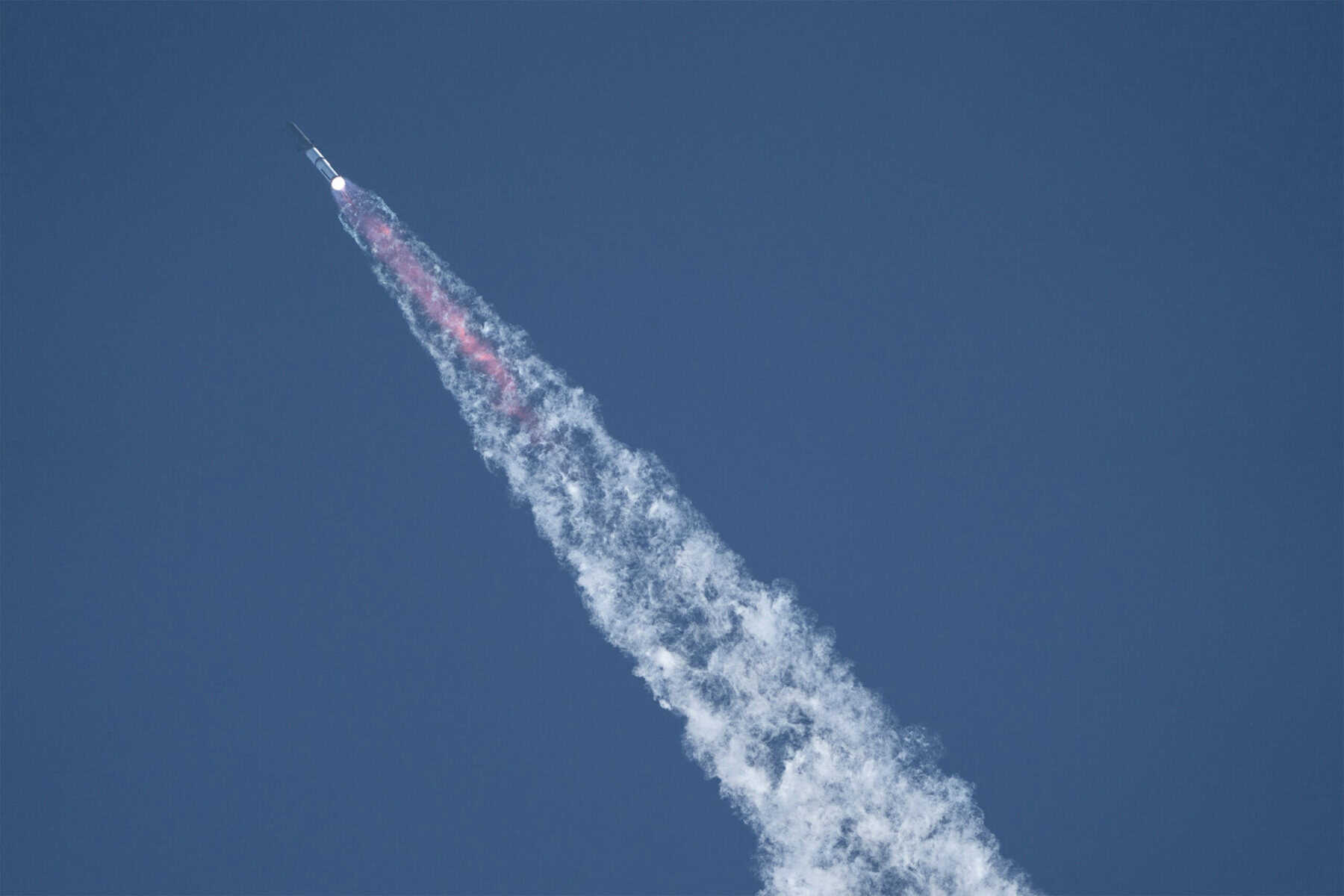
SpaceX’s Starship rocket 38 launches during the 11th test flight on October 13, 2025 as seen from South Padre Island in Texas. Picture: Gabriel V. Cardenas / AFP


Elon Musk promised to build a spaceship that would put people and cargo into earth orbit at one-hundredth of the current cost per kilogram and even enable human beings to create a colony on Mars.
A great many people were seduced by the idea, including me.
His project is well behind schedule, however, and now British freelance journalist Will Lockett, writing on the website, Medium, has called Musk out as a failure and a fraud.
Lockett says that Starship, the heavy-lift two-stage rocket alleged by Musk to be a revolutionary advance in space flight, is a badly engineered, overhyped machine that can never work well.
His latest article, titled “SpaceX Keeps Proving My Little Starship Theory Right”, is about the accident at Musk’s Starbase last weekend that destroyed Super Heavy Booster 18.
It was meant to lift the first Version 3 Starship off the pad next month, but they are now removing the wreckage of that booster.
And here’s the thing. The reports said Booster 18 had “exploded”, but it was just a pressure test of the composite overwrapped pressure vessels that store gases or liquids in the rocket (not fuel for the main engines).
But the pressure they put on the tanks ruptured them. You would obviously test the tanks with a higher pressure than they normally run at – but not with pressure that bursts them.
ALSO READ: SpaceX makes history with first spacewalks by private citizens
It would be maybe 1.5 times the designed maximum pressure. But this time – bang.
Actually, there have been a lot of bangs. Musk’s original pitch said Starship could lift 100 tons to low earth orbit, but five of the 11 launches ended in explosions and none went into orbit.
SpaceX has blown through an unplanned Version 2 of the rocket and January will see the first flight of Version 3.
Each version is lighter Friday 12 5 December 2025 and more powerful than its predecessor, suggesting someone got the original calculations wrong.
As Lockett put it: “Musk ignorantly overstated how much thrust their rockets could generate (to comical levels) and grossly underestimated how much a rocket this giant would need to weigh.”
The excuse for all those explosions is Musk’s preference for the “iterative testing method”, in which you test your best guess of a design, learn why it failed, test a modified design, and so on until you arrive at a version that doesn’t fail.
But he’s not there yet, and all his “fixes” involve making the rocket both lighter and more powerful.
The suspicion, therefore, is that Musk assumed throwing enough money and talent at the project could overcome the constraints of Russian scientist Konstantin Tsiolkovsky’s classic “rocket equation” of 1903.
ALSO READ: WATCH: Liftoff! Jeff Bezos Blue Origin’s New Glenn rocket blasts into orbit
It says 90% of a rocket’s launch weight has to be fuel to put it into earth orbit. This means the vehicle’s body, engines, cargo and people have to amount to no more than 10% of the rocket’s launch weight.
It’s not impossible Starship could work, although the promise of 100 tons of cargo seems far out of reach.
But the only way Musk can try to fix things is to make the ship even lighter and the engines more powerful.
Those two fixes work against each other. More and bigger engines use more fuel and add more weight, while the hull, tanks and pipes get more fragile with every kilogram cut.
The doubts about SpaceX’s basic engineering competence are accumulating.
Nasa gave the job of building the Artemis III lunar lander to SpaceX in 2021, but in October it reopened the contract to rival companies as well.
We will probably still see humans back on the moon by the end of this decade (Americans or Chinese), but if the promise of $10 (about R170) a kilogram to orbit turns out to be false, there won’t be much happening beyond lunar orbit in the next decade.
NOW READ: Will SA finally get Starlink? Vodacom gets into bed with Elon Musk
Support Local Journalism
Add The Citizen as a Preferred Source on Google and follow us on Google News to see more of our trusted reporting in Google News and Top Stories.

