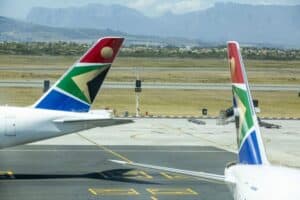
Groundhog Day? SAA received a new R1 billion state guarantee despite earlier assurances of financial independence and profitability.
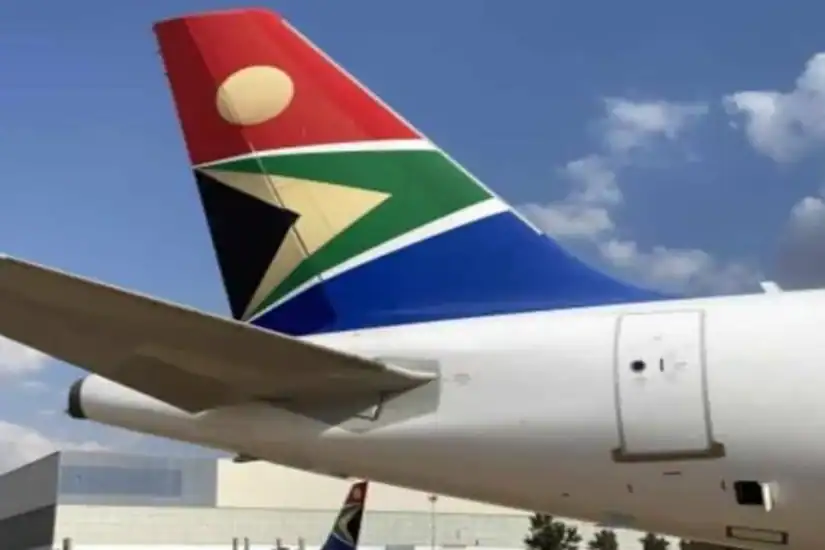
South African Airways (SAA). Picture: Moneyweb


South African Airways (SAA) has received a R1 billion government guarantee just over a year after Transport Minister Barbara Creecy declared it financially independent.
She told Parliament the airline no longer relied on state guarantees.
The latest financial backing, underwritten by taxpayers, was disclosed in this week’s Medium-Term Budget Policy Statement (MTBPS).
It follows SAA’s heavily criticised 2025 annual report and raises fresh concerns about the national carrier’s much-publicised turnaround. It also casts doubt on repeated assurances that taxpayers would no longer have to support its operations.
The guarantee was granted in August to support SAA’s working capital requirements. It was disclosed in the MTBPS tabled by Finance Minister Enoch Godongwana on Wednesday. National Treasury director-general Duncan Pieterse subsequently confirmed the arrangement.
Moneyweb reported that further financial assistance to the airline could not be ruled out.
Although not a direct cash bailout, the guarantee exposes taxpayers to potential liabilities should SAA default on its borrowing.
The Citizen has contacted the Minister of Transport, SAA and National Treasury for an explanation. Their responses will be published once received.
Fresh billion Rand guarantee
OUTA chief executive Wayne Duvenage said little had changed at SAA despite repeated political promises that taxpayers would no longer carry the burden.
He accused government of failing to address the airline’s management problems.
“It’s leaderless now. It’s rudderless,” he said. “We were told and promised by the politicians that it wouldn’t become a burden or a drain on the fiscus. And now, what do we see? Another billion-rand government-backed financing arrangement. That is just unacceptable.”
In her July 2025 budget vote speech, Creecy told Parliament that SAA was “now operating independently and no longer reliant on government guarantees”.
She also said it was “self-funding its operations and fleet growth”.
Former SAA chief executive John Lamola made similar assurances in March last year. He said SAA would no longer depend on shareholder contributions or bailouts. Its business plan, he added, would fund operations through revenue for the following two to three years.
However, SAA’s financial difficulties became apparent during a parliamentary briefing in May this year. Board chair Sedzani Mudau acknowledged that commercial banks were reluctant to extend financing without government guarantees.
Parliament also heard that SAA had approached its shareholder and National Treasury for guarantees and working capital assistance.
The Citizen reported in July that SAA was pursuing a R1 billion government-backed commercial banking facility. On 9 July, group corporate affairs executive Mphilo Dlamini issued a statement rejecting reports that SAA had received a bailout.
“SAA states unequivocally that it has not applied for, nor received, a government bailout,” the statement said.
Is SAA in trouble or not?
SAA acknowledged engaging commercial banks over working capital, liquidity management, and operational requirements.
However, Dlamini warned against treating speculation as fact. He said unverified claims about government support created misleading narratives that unfairly prejudiced the airline and its stakeholders.
Acting group chief executive Matshela Seshibe promised that material developments would be communicated through appropriate statutory, shareholder and regulatory channels.
The August guarantee now raises the question of whether Treasury ultimately backed the same R1 billion facility The Citizen reported in July.
The Department of Transport previously told The Citizen that SAA last received state funding in April 2023. It also said Treasury had provided no money since Creecy became minister. The response did not address government guarantees.
Duvenage said the distinction between bailouts and government-backed borrowing amounted to semantics when taxpayers carried the financial risk.
“It is a bailout, whether it’s a backing,” he said. “Whichever way you want to couch it, it is money that’s going to come out of the public.”
He also accused government of failing to professionalise state-owned enterprises. He said political interference in executive appointments continued to undermine their financial stability.
‘The Citizen’ asked SAA, Creecy and Treasury to explain
Government-guaranteed loans made to SAA prior to its business rescue were honoured at the expense of the taxpayer.
SAA’s 2025 accounts also recorded a R1 billion share issue involving its government shareholder. Lamola previously said the transaction reflected the settlement of legacy obligations rather than a fresh operational bailout.
Questions remain about SAA’s underlying financial performance. Its reported profitability has benefited from extraordinary transactions, including asset disposals such as its Heathrow slot sale and the revaluation, northward, of its properties and assets. The extent to which the airline can sustain operations without further government backing remains unresolved.
“If SAA was solvent, it would not need a government guarantee now, would it?” a concerned SAA pilot said.