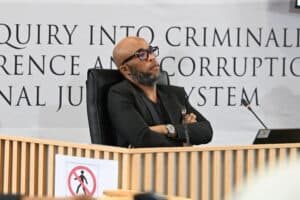
Saftu has rejected President Ramaphosa's decision to increase salaries of public office-bearers by 3.5% and 4%.
Ramaphosa approved 3.5% increase for national executive, MPs, premiers, MECs and provincial legislators. Picture: iStock


The South African Federation of Trade Unions (Saftu) has rejected President Cyril Ramaphosa’s decision to increase the salaries of public office-bearers by 3.5% and 4%, calling it “indefensible” while millions struggle with unemployment and poverty.
Ramaphosa has determined salary increases for public office-bearers for the 2026-27 financial year, effective from 1 April 2026.
3.5% increase for national executive and 4% increase for judges
He approved a 3.5% increase for the national executive, members of parliament (MPs), premiers, MECs and provincial legislators, and 4% for judges, magistrates, traditional leaders and institutions.
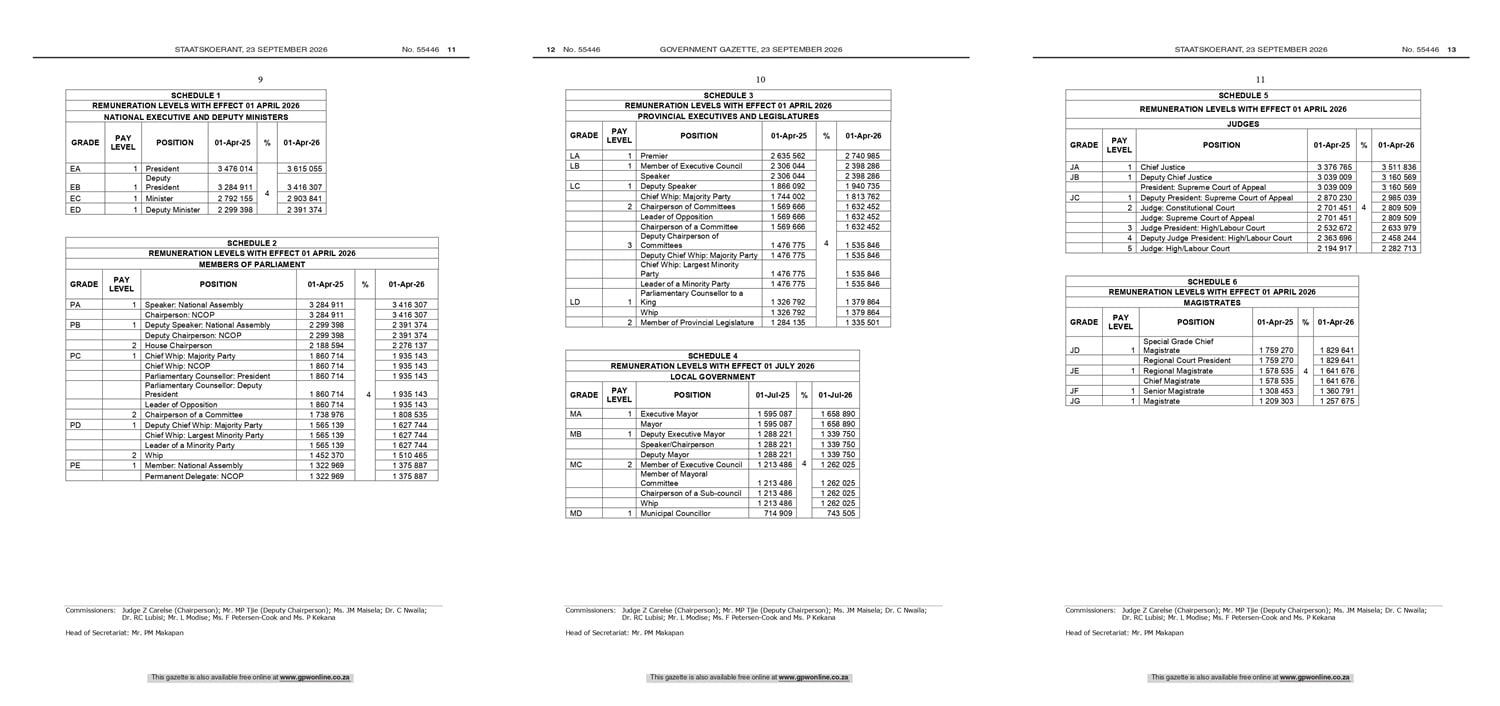
The president’s decision comes after recommendations by the Independent Commission for the Remuneration of Public Office-Bearers. He also considered economic challenges facing South Africa.
The commission took into account the following factors, among others, when making its decision:
- Comments and inputs from stakeholders
- The role, status, duties, functions and responsibilities of the public office bearers concerned
- Economic variables including fiscal affordability, historic inflation, future inflation forecasts, wage settlement data, and the commission’s prior recommendations
- The president’s determination for the previous financial year
- Average annual wage increments
“President Ramaphosa thanks the commission for its diligence and careful scrutiny in preparing its recommendations,” the president’s spokesperson Vincent Magwenya said on Tuesday.
“He urges public office-bearers to uphold their mandates and honour the public trust and expectations associated with their varied responsibilities.”
Saftu calls salary hike indefensible
Responding to the announcement, Saftu rejected the 3.5% salary increase for national executive, MPs, premiers, MECs and provincial legislators but accepted the separate 4% increase for judges.
“This decision is indefensible in a country where, in the second quarter of 2026, 8.5 million people were officially unemployed and another 4.6 million formed part of the potential labour force. That means 13.1 million people were unemployed or part of the potential labour force,” Saftu general-secretary Zwelinzima Vavi said.
The union also highlighted devastating poverty, inequality and the crushing living costs.
Saftu said the increase adds R97 725 a year for a minister and R46 304 for an ordinary MP. The union called on Ramaphosa and parliament to reverse the 3.5% increase.
“At a time when millions are unemployed, and households are being pushed deeper into hardship, leadership must be measured by service to the people, not by higher pay for those already entrusted with governing them,” Vavi said.