


According to the defence, Cholota was extradited despite being 'never a fugitive to begin with'.
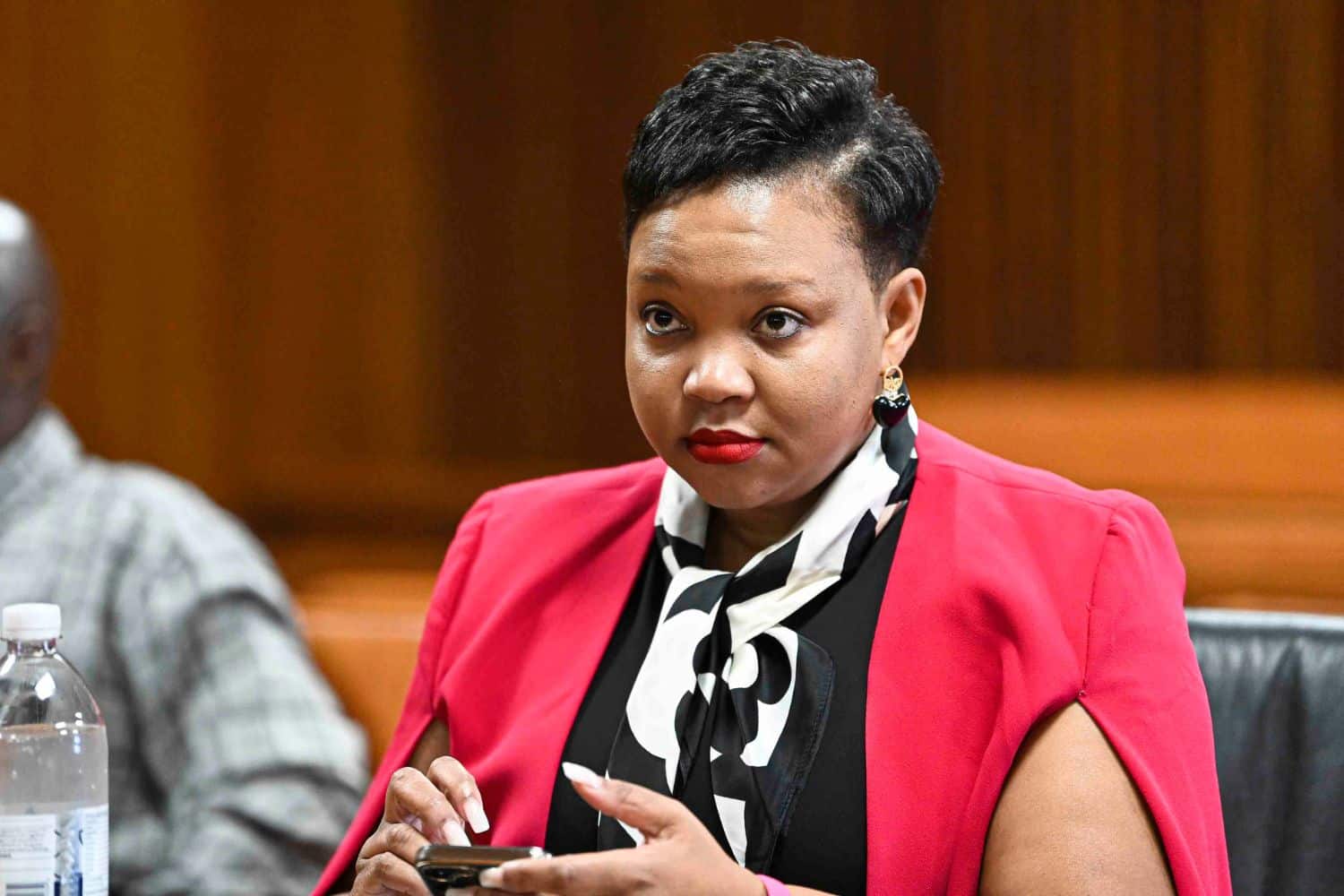
Ace Magashule’s former personal assistant, Moroadi Cholota, at Bloemfontein High Court on 23 April 2025. Picture: Gallo Images/Mlungisi Louw


The legality of Moroadi Cholota’s extradition has come under renewed scrutiny, with her legal team maintaining that South African authorities misled United States (US) officials to secure her return to face charges in the R255-million Free State asbestos corruption case.
Cholota, a former personal assistant to ex-Free State premier Ace Magashule, was extradited in August 2024 following a request by the National Prosecuting Authority (NPA).
It was later established that the NPA had no authority to initiate the extradition, according to a 23 January 2026 ruling by the Constitutional Court (ConCourt).
The ConCourt had concluded that the extradition was unlawful, but referred the matter back to the Free State High Court in Bloemfontein for further argument.
The high court had previously dealt with Cholota’s special plea during a trial-within-a-trial, ultimately leading to her release after Judge Phillip Loubser ruled, in June 2025, that the court did not have jurisdiction to prosecute the case.
Trial-within-a-trial over Moroadi Cholota’s extradition
Arguing before the court on Tuesday, Cholota’s legal representative, Loyiso Makapela, highlighted the state’s own evidence contradicted its case.
She referred to an affidavit by Hawks investigator and state witness Benjamin Calitz, in which he conceded that Cholota was charged after she declined to implicate Magashule in the asbestos scandal.
However, the NPA disputes this in its application.
“The state cannot call into question the evidence that was presented by its own witnesses without having to call those witnesses either unreliable or untruthful because both things cannot be true at the same time,” she told the court.
Makapela argued that the state falsely portrayed Cholota as a fugitive in its communications with US authorities.
She contended that Cholota was living openly while studying at a university and was never attempting to evade law enforcement.
“She had changed addresses, not because she was on the run,” Makapela said.
According to the defence, Cholota was extradited despite being “never a fugitive to begin with”.
“That is central to this case.”
Watch the proceedings below:
Makapela emphasised that Cholota, who was initially treated as a state witness, never refused to return to South Africa.
“We showed on the papers that when Ms Cholota was called by the Zondo commission, when she was in the USA, not only did she attend the commission, she did so by paying for her own flights.”
She added that there was never any need for an extradition process, given that she was detained for a long period both in the US and South Africa.
“There was never any need for this woman to suffer the way that she was made to suffer. No need whatsoever.”
‘Flight risk’ disputed
Makapela also dealt with the initial claim that Cholota posed a flight risk due to alleged connections in Kenya.
She told the court that Cholota had merely been in transit while waiting for a connecting flight.
The defence criticised the state’s assertion that references to Kenya in communications with the US were the result of an innocent error.
She argued that the explanation that it was a “bona fide mistake” was implausible.
“They knew what they were doing. They knew what they were saying. They knew the implications and if they did not know because they are the state and are the National Prosecuting Authority, they ought to have known.”
READ MORE: Magashule unhappy as Free State asbestos trial delayed amid Moroadi Cholota saga
Makapela added that the extradition would not have been authorised had US authorities been aware of the alleged misrepresentations.
Turning to events at the South African Embassy in Washington, DC, in September 2021, Makapela said Cholota’s rights were violated when officials continued to question her after she requested legal representation.
She told the court that Cholota left the interview viewed as a suspect because of her refusal to implicate her former boss.
State responds
For the state, advocate Tammy McPherson highlighted that Cholota was warned during two days of interviews in September 2021 that she could become a suspect if she refused to answer questions.
“It has been the state’s submission from the very onset that at the point, there had already been evidence linking accused 17 to the crimes and offences that are before the court.
“However, she indicated that she was happy to help the country, yet when questioned to obtain the actual evidence that would help the country, mum became the word, and the assistance was no longer provided,” the prosecutor argued.
Loubser is expected to deliver his ruling on 18 February.
Support Local Journalism
Add The Citizen as a Preferred Source on Google and follow us on Google News to see more of our trusted reporting in Google News and Top Stories.

