Sibonakaliso Simon Zwane was fired by Eagle Spring Manufacturers over a decade ago without pre-dismissal hearing.
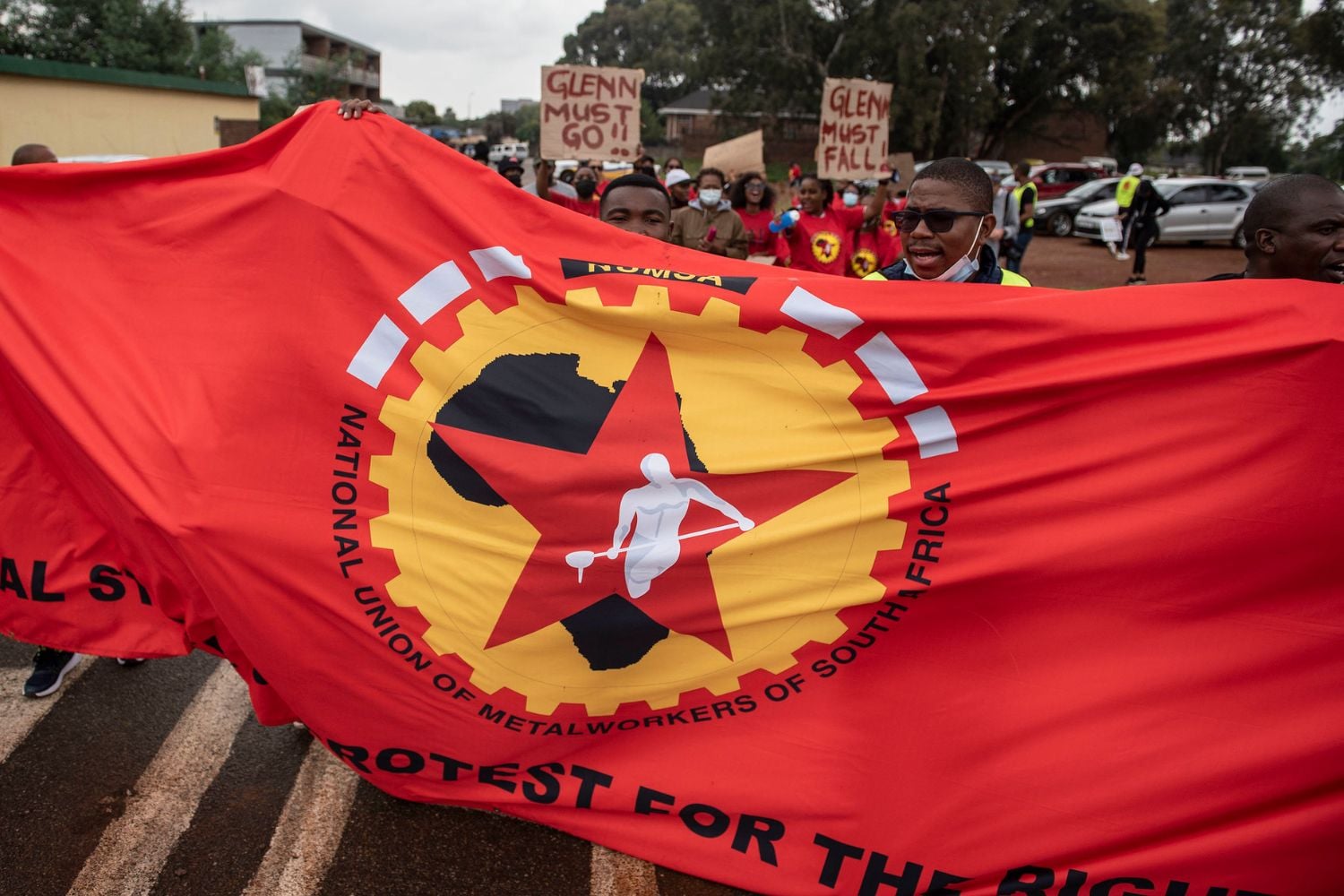
National Union of Metalworkers of South Africa (Numsa) members march to Comair offices in Kempton Park on 15 March 2022. Picture: Michel Bega / The Citizen


The National Union of Metalworkers of South Africa (Numsa) has been ordered to compensate a former factory worker due to the union failing to properly pursue his challenge against the termination of his employment.
The Gauteng High Court in Johannesburg ordered Numsa to pay Sibonakaliso Simon Zwane 12 months’ salary with interest, after finding that the union had breached its mandate in the way it handled his case.
The judgment, delivered on 11 September 2026 by Judge Stuart Wilson, centred on Numsa’s decision to withdraw a Labour Court review application that Zwane had relied on to challenge the outcome of an arbitration concerning his unfair dismissal.
Long-serving employee loses job
Zwane had spent at least three decades working for Eagle Spring Manufacturers, a motor vehicle parts manufacturer in Soweto, before his employment came to an end in 2016.
His dismissal followed a dispute over the recording of employees’ working hours.
The dispute escalated into a confrontation involving Zwane, another employee and Eagle Spring’s management.
The two workers were accused of threatening the managing director with expulsion from the workplace and suggesting that the factory could thereafter be operated by workers themselves.
Zwane was dismissed on 30 May 2016.
Among the allegations against him were intimidation, verbal abuse and encouraging other employees not to clock in or out when they arrived late.
He challenged the decision internally, but his appeal was unsuccessful.
Dispute moves to arbitration
The matter was subsequently taken to arbitration at the relevant bargaining council.
The proceedings lasted 18 days in total and took about three years to conclude.
During the arbitration, Eagle Spring made an offer to compensate Zwane with an amount equivalent to 12 months of his salary.
The company did not, however, offer to reinstate him, leading to Zwane to reject it.
The arbitrator ultimately found in September 2019 that the dismissal was fair.
Although the arbitrator accepted that there had been procedural unfairness, it found that the problem had been remedied by the internal appeal process that followed Zwane’s dismissal.
Numsa then took the matter to the Labour Court on Zwane’s behalf, filing a review application in November 2019 in an effort to have the arbitration outcome overturned.
Numsa fails to oppose review application withdrawal
The Labour Court proceedings did not reach their conclusion.
The review application was withdrawn in July 2020 after difficulties arose in obtaining the record of the arbitration proceedings.
Numsa did not oppose the withdrawal.
Zwane subsequently instituted proceedings against the union in the high court, arguing that Numsa had failed to fulfil its obligations to him.
According to Zwane, he only learned of the application’s withdrawal after it had already been deemed withdrawn.
Numsa rejected this version, arguing that Zwane had been kept informed through its regional and branch structures.
High Court criticises Numsa’s handling of case
Wilson found that Numsa had not handled Zwane’s case in accordance with the mandate it had undertaken.
The judge pointed out the union had failed to act “faithfully, honestly and with care and diligence”.
The high court noted that Numsa itself accepted that there were further steps it could have taken to continue with the review application, despite the problems concerning the arbitration record.
Instead, the union “simply chose not to do so”.
“In its plea, Numsa frankly admits that it allowed to the review to fail. It was not forced to do so,” the judgment reads.
According to Wilson, the missing arbitration documents did not automatically bring Zwane’s Labour Court challenge to an end.
Zwane awarded 12 months’ salary
The court went further, finding that the review application would probably have succeeded.
Wilson highlighted that the arbitrator had failed to properly consider an important aspect of Zwane’s case – that he had not been given an opportunity to present his case in a disciplinary hearing before he was dismissed.
This was “grossly unfair”.
The judge also rejected the idea that the subsequent appeal had corrected that defect.
“The internal appeal did not cure the absence of a pre-dismissal hearing.”
Wilson added that evidence before the court showed that the procedural unfairness of Zwane’s dismissal was “manifest and egregious”.
As a result, the former Eagle Spring worker was entitled to be compensated.
In determining the appropriate compensation, the judge took into account the circumstances surrounding Zwane’s sacking, including 30 year employment history and the shortcomings in the disciplinary process.
“Zwane’s payslip for June 2016 reveals that he was remunerated at an hourly rate of R60.8022 for working a 45-hour week.
“That yields a notional annual remuneration of just over R142 000.
“This is in excess of R132 000 he claims in these proceedings, which is the amount I intend to award.”
The court, therefore, ordered Numsa to pay Zwane 12 months’ salary, together with interest at the prescribed rate from March 2023 until the amount is paid in full.