
Action was taken against illegal schools in 2025, when the department visited 57 illegally operating schools and served 31 with letters.
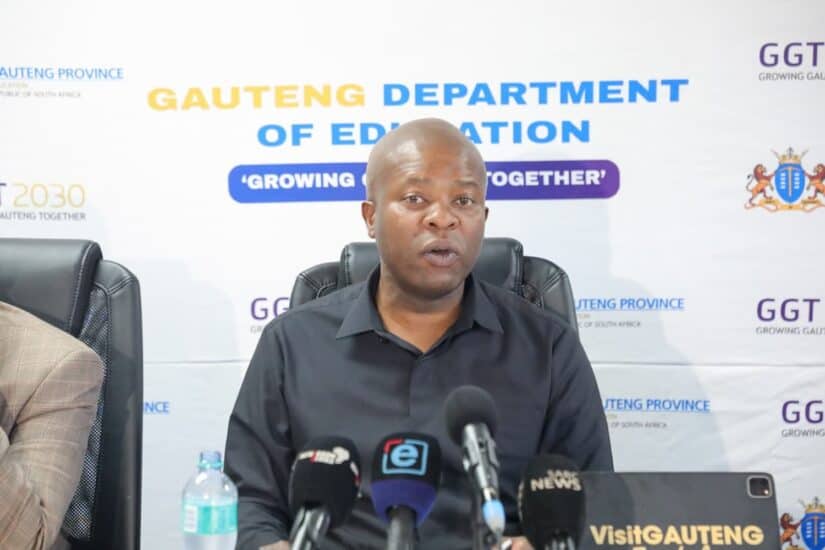
Gauteng MEC for Education Lebogang Maile. Picture: Supplied


The Gauteng education department has investigated 61 schools suspected of operating illegally since January, with 32 served closure letters as the province tightens its oversight of independent schools.
Speaking at a media briefing on Sunday, Gauteng MEC for education Lebogang Maile said the investigations were prompted by information received from parents, community members and other government institutions.
Officials visited the schools to verify their registration and compliance documents, with institutions found to be operating unlawfully instructed to stop operating.
“Where an institution is found to be operating unlawfully, it is instructed to cease operating and the relevant closure process is followed,” Maile said.
He further added that seven of the schools dealt with in 2026 had subsequently ceased operating, while four had applied for registration.
Two school directors were also arrested.
Students to be placed in lawful schools
The latest figures follow action taken against illegal schools in 2025, when the department visited 57 illegally operating schools and served 31 with letters.
The department said closing an illegal school did not end its responsibility towards the affected children.
“The department does not regard the closure of an illegal school as the end of the matter because the learners still require education,” the MEC said.
The relevant district must therefore work with parents to place affected learners in lawful schools to ensure they do not lose access to education.
Gauteng has 1 083 operational independent schools registered across the province, compared with 961 in 2021.
R1.13bn for independent schools
Furthermore, crackdown on illegal schools comes as the department prepares to allocate approximately R1.13 billion in subsidies to qualifying independent schools during the 2026/27 financial year.
Of the allocation, about R621 million is earmarked for the primary phase, while R508 million will go towards the secondary phase.
Maile said it had allocated approximately R4.3 billion in transfers and subsidies to qualifying independent schools between the 2022-23 and 2025-26 financial years.
In the 2025-26 financial year, the allocation was close to R1.1 billion.
279 independent schools receive subsidies
Gauteng has 279 subsidised independent schools, while 804 independent schools do not receive government subsidies.
The department stressed that subsidised schools remain independently owned and managed, despite receiving public funding.
“A subsidy does not mean that the government owns the school,” he said.
The funding is aimed at qualifying institutions and is determined by the applicable funding framework, with lower-fee independent schools potentially receiving higher levels of government support than schools charging significantly higher fees.
The MEC explained public funding also required schools to account for how the money was used.
“The department therefore monitors financial planning, budgets, annual financial statements, banking and cash controls, payroll, assets and other financial requirements.”
The department said the growth of the independent-school sector made registration and oversight increasingly important, particularly for parents deciding where to enrol their children.
It urged parents to verify that an independent school was properly registered before paying fees or enrolling their children.